What Are the Common Mistakes in Building Habits?
TL;DR
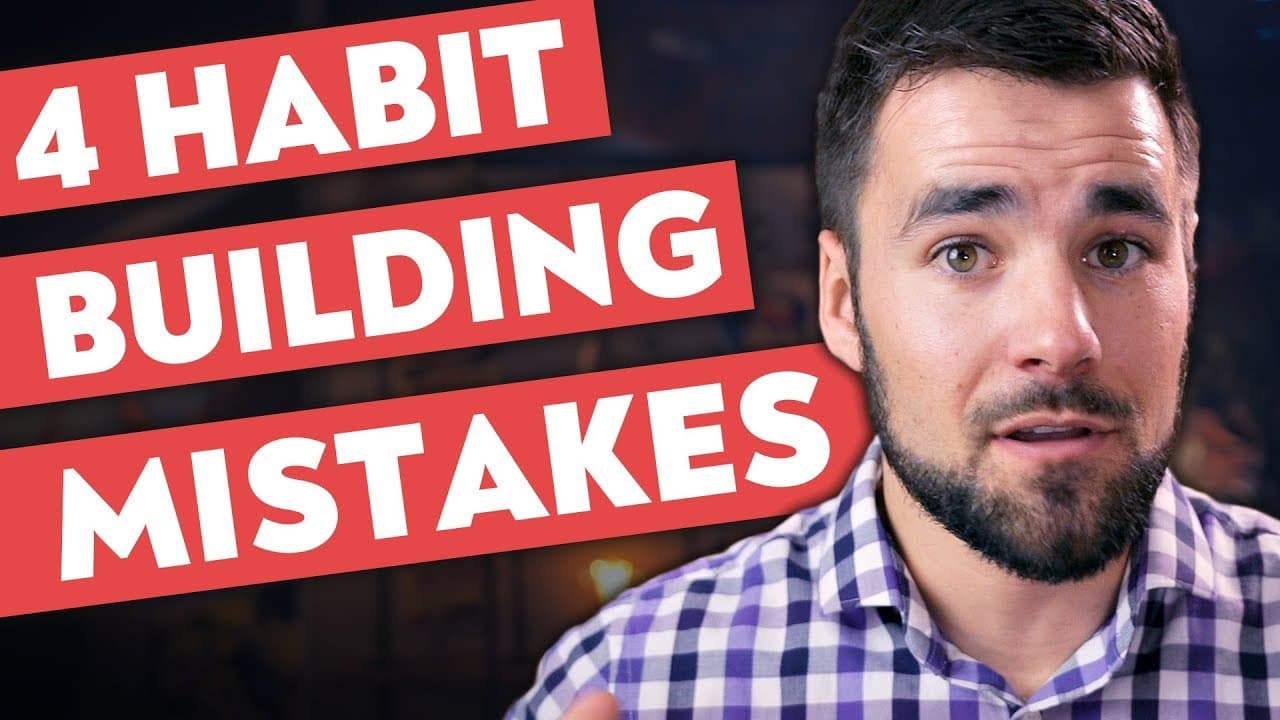
To successfully build habits, avoid common mistakes like trying to adopt too many difficult habits at once, failing to anticipate obstacles, and neglecting to establish consequences or accountability. Additionally, ensure that each habit has personal significance to maintain motivation and commitment, as a clear purpose increases your chances of long-term success.
Transcript
- Good habits are foundational to achieving your goals. However, what they aren't, is easy to build, and getting them to stick around, is even harder. Which is why so many people eagerly start trying to read more books, eat better, go to the gym, only to inevitably find themselves going back to the warm familiarity of Netflix, Cheetos and the 68 ca... Read More
Key Insights
- 😵💫 Successful habit-building involves starting small and gradually increasing the difficulty (success spirals).
- 🌱 Anticipating and planning for potential obstacles can help overcome challenges.
- 💋 Consequences and accountability measures increase the likelihood of sticking to habits.
- 🍧 Having a personally meaningful reason for building habits increases motivation and commitment.
- 🥺 Emulating others' habits without considering personal relevance can lead to failure.
- 🥅 Learning can occur through various methods, and not all goals need to involve reading books.
- 🤩 Consistency and deliberate practice are key to improving skills in playing an instrument.
Install to Summarize YouTube Videos and Get Transcripts
Explore YouTube Video Summarizer or Get YouTube Transcript Extractor
Questions & Answers
Q: Why do many people fail to build good habits?
People often make the mistake of taking on too many habits at once or choosing difficult ones, which can lead to overwhelm and failure. It is important to start small and gradually increase the difficulty.
Q: How can anticipating obstacles help in building habits?
By identifying potential challenges and planning for them in advance, individuals can mentally prepare and find solutions to overcome obstacles that may derail their habits.
Q: Why is it important to set consequences for failure when building habits?
Setting consequences holds individuals accountable and provides motivation to stick to their habits. This can be done by making a bet with a friend, using habit-tracking tools with built-in consequences, or incorporating accountability partners.
Q: Why is it crucial to have a personally meaningful reason for building habits?
When a habit aligns with an individual's values, beliefs, and goals, they are more likely to stick with it in the long term. Having a strong reason increases motivation and commitment.
Summary & Key Takeaways
-
Many people make the mistake of jumping into difficult habits right away instead of starting small and gradually building momentum.
-
It is important to anticipate obstacles and plan for them in advance to stay on track with your habits.
-
Setting consequences and accountability measures can help in maintaining discipline and sticking to your habits.
-
Having a strong, personally meaningful reason for building a habit is vital for long-term success.
Read in Other Languages (beta)
Share This Summary 📚
Summarize YouTube Videos and Get Video Transcripts with 1-Click
Try YouTube Summary with ChatGPT & Claude or YouTube Transcript Generator
Explore More Summaries from Thomas Frank 📚





Summarize YouTube Videos and Get Video Transcripts with 1-Click
Try YouTube Summary with ChatGPT & Claude or YouTube Transcript Generator