How to Start a Profitable Kids Shop Class
TL;DR
Start a kids’ shop-class business by posting a simple offer to a trusted local community, running a small free session to create social proof, and collecting payment before buying materials. Keep projects simple, separate students by age, document successful classes, and use referrals, repeat customers, camps, and community contracts to grow.
Transcript
I just signed a $30,000 contract for this fall. Spring break, we cleared $12,000 in 1 week, 9:00 to noon, so you're done in the afternoon, right? >> Okay. That's like 3 hours of work. >> Keep it simple, stupid. If you want to go all in, you can make a ton of money pretty simply. For those who wanted to make three grand a month, this is easy. So, in... Read More
Key Insights
- The business began with a plain personal Facebook post offering woodworking birthday parties, without a website, photographs, or published price. Interested parents responded with practical questions about ages, cost, timing, and location, giving Mike enough information to shape the initial offer.
- Free introductory classes are a way to create social proof when a new business has no photographs, videos, or reviews. Mike ran two small free events, and one of those early connections led to a paid father-son workshop for a much larger group.
- The homeschool community is a productive customer niche because families communicate with one another and actively seek educational activities. Mike said that once a provider enters the community, referrals spread, and about half of his students are repeat participants.
- Age segmentation is important because younger and older children have different capabilities. Mike eventually separated participants into ages 7 to 9 and ages 10 plus after finding that a 6-year-old and a 12-year-old were too far apart for the same class.
- Simple projects make the classes practical and repeatable. Students built wooden robots, small brain teasers, cornhole boards, and PVC projects rather than complex products, allowing them to practice tools and shop skills while completing something tangible.
- Advance payment can reduce the cash required to launch. The business had startup costs under $450, and the description states that collecting customer money up front meant it could effectively have been started without personal capital.
- Portable equipment allows classes to operate at customer or partner locations. Mike initially used folding tables and tools he already owned, while larger sessions used seven tables with plywood tops and additional paid helpers to supervise groups.
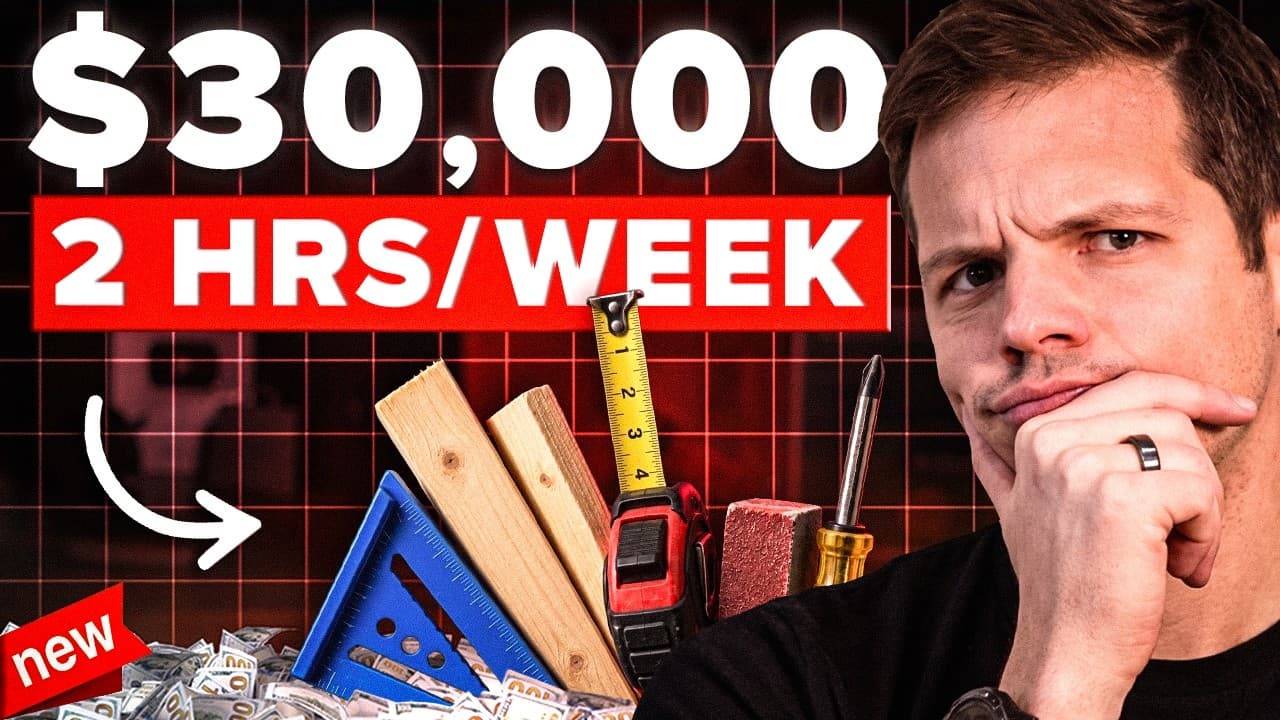
- Recurring organizational contracts can turn individual workshops into predictable revenue. Mike signed a $30,000 agreement to teach 40 homeschool students for two hours every Friday across 14 weeks, demonstrating how a local class concept can expand beyond one-time family bookings.
- More videos from this channel:
- More from this channel: Chris Koerner on The Koerner Office Podcast
Install to Summarize YouTube Videos and Get Transcripts
Explore YouTube Video Summarizer or Get YouTube Transcript Extractor
Questions & Answers
Q: How can someone start a kids’ shop-class business?
Begin by posting a clear offer to people who already know or trust you, even if you do not yet have a website, photographs, or a finalized price. Use the questions parents ask to define ages, timing, location, and pricing. Run a small introductory session, document it, collect reviews, and then offer paid classes using simple projects and portable equipment.
Q: Why should the first kids’ workshop be free?
A free introductory workshop can generate the photographs, videos, reviews, and community trust that a new operator lacks. Mike’s first two free events were small, but they proved that children would participate and parents would recommend the experience. One connection from those sessions also helped produce a paid father-son event, showing how a free trial can create commercial leads.
Q: How do you find customers for children’s woodworking classes?
Mike found his first customers through a post on his personal Facebook profile and gained traction within the homeschool community. Parents asked about eligibility, cost, timing, and location, then shared the experience with others. The business also reached families through father-son activities, foster-community programs, school-break camps, summer camps, birthday parties, and a homeschool co-op.
Q: How should children be grouped for shop classes?
Children should be divided into age ranges that reflect meaningful differences in independence and tool ability. Mike initially accepted a broad span but found that a 6-year-old and a 12-year-old were too different for one class. He later used ages 7 to 9 and ages 10 plus, making instruction easier to target and activities more appropriate.
Q: What projects work for a kids’ shop-skills class?
Projects should be simple enough to prepare, teach, and complete while still giving children genuine hands-on work. Mike used wooden robots whose bodies were prepared in advance, while children cut the feet and hands and installed the eyes. Other activities included small brain teasers, cornhole boards, and PVC builds, since the program teaches broader shop skills rather than woodworking alone.
Q: How much equipment is needed to begin teaching kids shop skills?
The initial setup can be modest because Mike began with a folding table and tools he already owned, bringing them to families’ backyards. His reported startup costs were under $450. For larger sessions, the team transported seven folding tables with plywood tops, but a beginner could validate demand through a small class before expanding the equipment inventory.
Q: How can a kids’ workshop business grow beyond individual classes?
Growth can come from repeat students, community referrals, camps, institutional relationships, and recurring programs. Mike moved from small backyard sessions into a father-son event, foster-community instruction, spring break programs, summer camps, and a homeschool co-op arrangement. The co-op contract covered 14 weeks and placed 40 students in a two-hour class every Friday.
Q: How should a kids’ shop class be priced and staffed?
Pricing should account for the class duration, number of students, supplies, preparation, and support labor. Examples in the transcript include mothers paying $75 for a child to build a wooden robot and a father-son event priced at $150 per pair for three hours. For the larger weekly program, Mike hired family members and other helpers to manage multiple tables safely.
Summary & Key Takeaways
-
Mike Herod launched a shop-class business for children after recognizing that local families had few hands-on activity options. A plain post on his personal Facebook profile generated immediate questions and bookings. He initially brought folding tables and his existing tools to backyards, showing that a dedicated facility and polished marketing were unnecessary.
-
The first free sessions created photos, videos, reviews, and word-of-mouth referrals within the homeschool community. Demand then expanded into paid classes, a father-son build, spring break programs, summer camps, and work with foster children. About half of the students became repeat customers, strengthening revenue without constant new-customer acquisition.
-
The operating model relies on simple projects, age-based groups, portable equipment, advance payment, and additional helpers for larger classes. Children practice practical shop skills by making approachable items such as wooden robots, brain teasers, cornhole boards, and PVC builds. A recurring homeschool co-op agreement ultimately created a substantial contract.
Read in Other Languages (beta)
Share This Summary 📚
Summarize YouTube Videos and Get Video Transcripts with 1-Click
Try YouTube Summary with ChatGPT & Claude or YouTube Transcript Generator
Explore More Summaries from Chris Koerner on The Koerner Office Podcast 📚






Summarize YouTube Videos and Get Video Transcripts with 1-Click
Try YouTube Summary with ChatGPT & Claude or YouTube Transcript Generator