How to Observe Better by Suspending Judgment
TL;DR
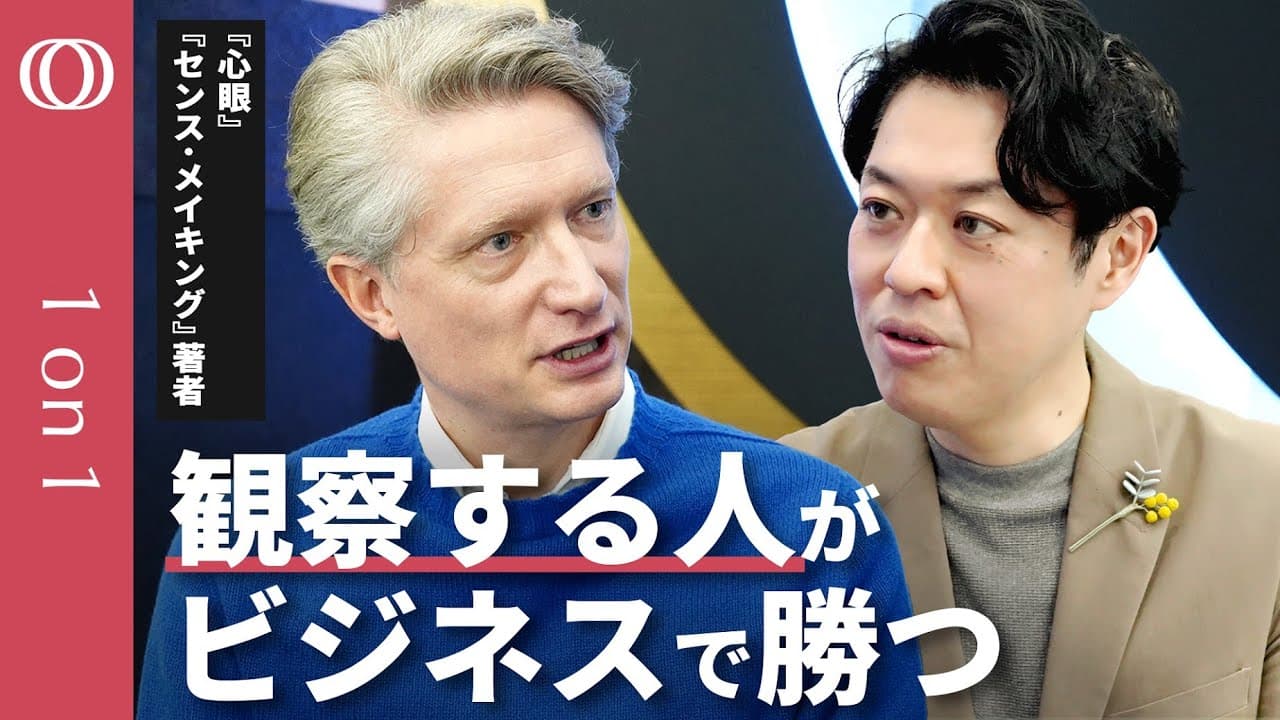
Better observation begins by identifying and challenging your own opinions, because strong assumptions narrow attention and hide important context. Combine focused, spotlight attention with broad, panoptic awareness, then describe lived experience long enough for patterns to emerge. In business, this helps people understand foreign cultures, markets, customers, and human responses to technologies such as AI.
Transcript
Some great business leaders are great observers, but the ones with the strongest opinions are often the worst at observing. Figure out what your opinions are and confront them. What's the trick here? Description of experience. Do it long enough that they can see patterns. I think it's key to business. Christian. Consulting farm. So Christian, welco... Read More
Key Insights
- Focused attention is the ability to remove distractions and concentrate on a particular task, variable, product, or market detail. It is important in science and business, but it represents only one form of attention and cannot provide complete context by itself.
- Panoptic attention is the capacity to notice everything and nothing in particular at the same time. It allows people to navigate streets, drive, and respond bodily to changing surroundings without turning every movement or environmental signal into a deliberate intellectual exercise.
- The spotlight and floodlight metaphor describes two complementary business perspectives. A spotlight examines one precise feature of a company or market, while a floodlight illuminates the larger setting that gives the detail meaning and helps an observer understand what is happening around it.
- Strong opinions are a major obstacle to attention because fixed assumptions narrow what an observer can perceive. Identifying and confronting those opinions makes it possible to notice nuance, recognize changed conditions, and revise interpretations that initially seemed certain.
- Observation is corrosive to untested opinion because sustained looking exposes details that stereotypes and assumptions exclude. Madsbjerg's students began discussions of homelessness with positions about the state or the market, even though they had not closely observed homeless people themselves.
- Description of experience is a practical method for improving observation. Recording what people experience without rushing into explanation or judgment creates material that can be examined over time, allowing patterns to appear through sustained attention rather than through predetermined categories.
- Understanding foreign markets is fundamentally connected to studying people and local culture. Any organization operating outside its familiar environment must learn how people interpret their world, experience emotions, relate to one another, and respond to products, institutions, and technologies.
- Smartphones can undermine broad attention by directing awareness toward a small screen for long periods. Madsbjerg connects this pattern with complaints from students, employees, and friends about distraction, difficulty paying attention, and sadness about being unable to disengage.
Install to Summarize YouTube Videos and Get Transcripts
Explore YouTube Video Summarizer or Get YouTube Transcript Extractor
Questions & Answers
Q: How can you improve observation by suspending judgment?
Improving observation starts with identifying the opinions and assumptions already shaping what you expect to see. Instead of treating those beliefs as conclusions, confront them with direct observation and remain open to nuance. Sustained looking may show that circumstances have changed or that your original categories were incomplete. The goal is to describe experience carefully before deciding what it means.
Q: What is panoptic attention, and how does it work?
Panoptic attention is broad awareness that attends to everything and nothing specific at the same time. It works through a bodily adjustment to the surrounding world rather than constant conscious analysis. Walking through a street, driving amid changing conditions, and seeing an entire football field are examples in which people absorb context and respond without intellectually processing every separate signal.
Q: What is the difference between spotlight and floodlight attention?
Spotlight attention concentrates narrowly on a specific detail, such as one aspect of a business, market, or scientific variable. Floodlight attention illuminates the broader environment and supplies context for that detail. Strong decision-making requires both modes because precise analysis without a wider view can isolate information from the conditions that make it meaningful.
Q: Why do strong opinions interfere with observation?
Strong opinions interfere with observation because they encourage people to interpret situations before examining them closely. Assumptions narrow attention and make confirming details easier to notice than unexpected ones. Direct observation challenges this process by revealing nuance, contradictions, and changes. As a result, continued looking can weaken certainty and require a person to revise a previously fixed perspective.
Q: How can observation help a business understand foreign markets?
Observation helps a business understand foreign markets by directing attention toward people and the local culture in which they act. Companies need to study how individuals experience the world, express emotions, relate to one another, and respond to unfamiliar products or events. This human context complements focused market analysis and prevents decisions from resting entirely on assumptions imported from another culture.
Q: Why is broad attention valuable for investors and leaders?
Broad attention gives investors and leaders a general sense of the market before they focus on a company or detail. Madsbjerg describes accomplished investors as combining a floodlight view of the whole environment with a spotlight examination of particular features. Without that background, a leader may analyze one element accurately while misunderstanding its significance within the larger situation.
Q: How do smartphones affect attention and observation?
Smartphones can weaken panoptic attention by drawing awareness away from the surrounding environment and toward a narrow screen. Madsbjerg reports that students, employees, and friends complain about distraction and difficulty paying attention. He also notes that American teenagers may spend seven or eight hours a day on their phones, contributing to sadness and difficulty disengaging from the device.
Q: How does describing experience reveal useful patterns?
Describing experience means recording what people do, perceive, and care about before imposing an explanation. When this practice continues long enough, recurring patterns become visible in the accumulated descriptions. The method supports business observation because it keeps inquiry grounded in lived experience, limits premature judgment, and provides a basis for understanding behavior within its broader human and cultural context.
Summary & Key Takeaways
-
Christian Madsbjerg distinguishes focused attention from panoptic attention. Focused attention isolates a particular task, variable, product, or market detail, while panoptic attention takes in the broader environment without selecting one object. Effective observers move between these modes, using the wider view to supply context for whatever receives concentrated analysis.
-
Strong opinions can weaken observation because assumptions determine what people notice before they examine a situation. Madsbjerg recommends identifying personal opinions, confronting them, and using direct observation to test them. Continued attention introduces nuance, reveals changing conditions, and can force an observer to adjust a previously confident interpretation of events or people.
-
The business value of observation lies in understanding people within their cultural and experiential context. Foreign markets cannot be understood through abstract data alone, and questions about AI also involve how humans relate to technology. Careful descriptions of experience, sustained over time, allow meaningful patterns to become visible without premature judgment.
Read in Other Languages (beta)
Share This Summary 📚
Summarize YouTube Videos and Get Video Transcripts with 1-Click
Try YouTube Summary with ChatGPT & Claude or YouTube Transcript Generator
Explore More Summaries from TBS CROSS DIG with Bloomberg 📚
Summarize YouTube Videos and Get Video Transcripts with 1-Click
Try YouTube Summary with ChatGPT & Claude or YouTube Transcript Generator