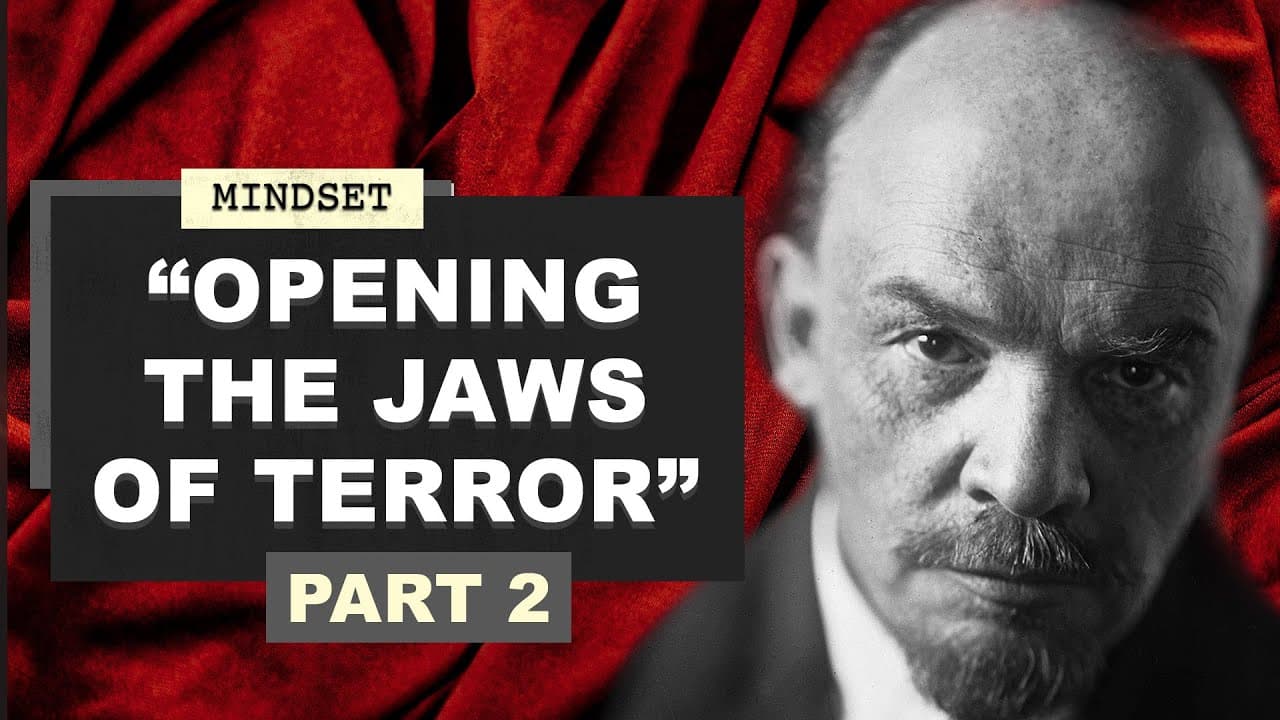
How Did Lenin Use Violence to Secure Power in Russia?
TL;DR
Lenin secured power through violent repression and manipulation of political structures, establishing control via the Bolshevik party and workers councils. His tactics, along with Trotsky's military leadership, ignited the Red Terror, targeting bourgeoisie and dissenters while fostering divisions among anti-Bolshevik forces in the civil war.
Transcript
so why wh was there violence and intimidation at this point how are they controlling these soviets they're putting their people in but is it are they first of all they sound much more disciplined than any of their opponents how they are they crack in the whip and keep making sure everyone's doing what they're told are we starting to see the develop... Read More
Key Insights
- 🥺 Lenin's despotic tendencies were fueled by his disdain for dissent, leading to violent crackdowns on perceived enemies.
- 🎖️ Trotsky's military prowess and oratory skills were crucial in supporting Lenin's political vision, though his oversight of brutal tactics contributed to the regime's oppressive nature.
- 🥳 The unchecked power wielded by the Bolshevik party centralized control and enabled the ruthless suppression of opposition.
- 🥶 The Red Terror instigated by the Cheka marked a turning point in Bolshevik brutality, giving free rein to torture and extrajudicial killings.
- 🥡 Class warfare targeted bourgeoisie, intellectuals, and political dissidents, reflecting the extreme measures taken to maintain Bolshevik dominance.
- 🖤 Disparate anti-government factions struggled to unite against the Bolsheviks, lacking a unifying leader or ideology to counter Lenin's iron grip on power.
- 🫱 The complexity of the civil war dynamics revealed the deep divisions within Russian society, pitting Bolsheviks, moderates, reactionaries, and nationalists against each other.
Install to Summarize YouTube Videos and Get Transcripts
Explore YouTube Video Summarizer or Get YouTube Transcript Extractor
Questions & Answers
Q: How did Lenin maintain control over the Soviet government through workers councils?
Lenin utilized workers councils to consolidate power, ensuring loyalty to the Bolshevik party and suppressing dissent through violence and intimidation.
Q: What role did Trotsky play in the Bolshevik leadership, and how did his tactics differ from Lenin's?
Trotsky led the military efforts, implementing forceful measures to support Lenin's political agenda, emphasizing the importance of discipline and obedience within the ranks.
Q: What were the key motivations behind the violent actions of the Bolsheviks during the civil war?
The Bolsheviks resorted to violence to crush opposition, eliminating perceived threats to their regime and instilling fear to quash any resistance to their rule.
Q: How did the concept of communism inspire loyalty and dedication among Bolshevik supporters?
The ideology of communism inspired fervent devotion among Bolshevik followers, attracting foreign volunteers who viewed the revolution as a radical experiment worth participating in, despite its reckless and risky nature.
Summary & Key Takeaways
-
Lenin's use of violence and manipulation underpins the Bolsheviks' rise to power, imposing control through workers councils and the party's dominance.
-
Trotsky's military leadership complemented Lenin's political strategy, while internal clashes and external threats shaped Soviet rule.
-
The emergence of the Red and White forces in the civil war highlighted Lenin's ruthless tactics and the ideological divides within revolutionary Russia.
Read in Other Languages (beta)
Share This Summary 📚
Summarize YouTube Videos and Get Video Transcripts with 1-Click
Try YouTube Summary with ChatGPT & Claude or YouTube Transcript Generator
Explore More Summaries from How To Academy Mindset 📚




Summarize YouTube Videos and Get Video Transcripts with 1-Click
Try YouTube Summary with ChatGPT & Claude or YouTube Transcript Generator