How Did Sonar Reveal America's Underwater City Beneath a Murky Lake?

28.9M views
•
October 11, 2025
by
Mark Rober
YouTube video player
How Did Sonar Reveal America's Underwater City Beneath a Murky Lake?

TL;DR

Sonar revealed signs of America’s underwater city by timing repeated sound echoes to map objects and terrain hidden by darkness and silt. The team calibrated its scanning torpedo on a recently sunken wakeboard boat in 63 feet of water, then detected a submerged bridge connected to an old roadway within the 30,000-acre search area. Read on to see how the technology worked and why the bridge offered a promising route toward the lost Gold Rush town.

Transcript

Somewhere underneath the 1.3 billion tons of water behind me is a 180 year old underwater city. - This city, built on the dreams of thousands of people looking to discover gold, had hotels, churches, stage coaches, and even a cemetery. But all that vanished 70 years ago when rising waters swallowed the entire valley. So today we came out here with ... Read More

Key Insights

  • The submerged town began as a Gold Rush settlement after William Sidney and two companions found a large pile of gold along the American River in March 1848. News of the discovery drew nearly 7,000 people into the valley in hopes of becoming rich.
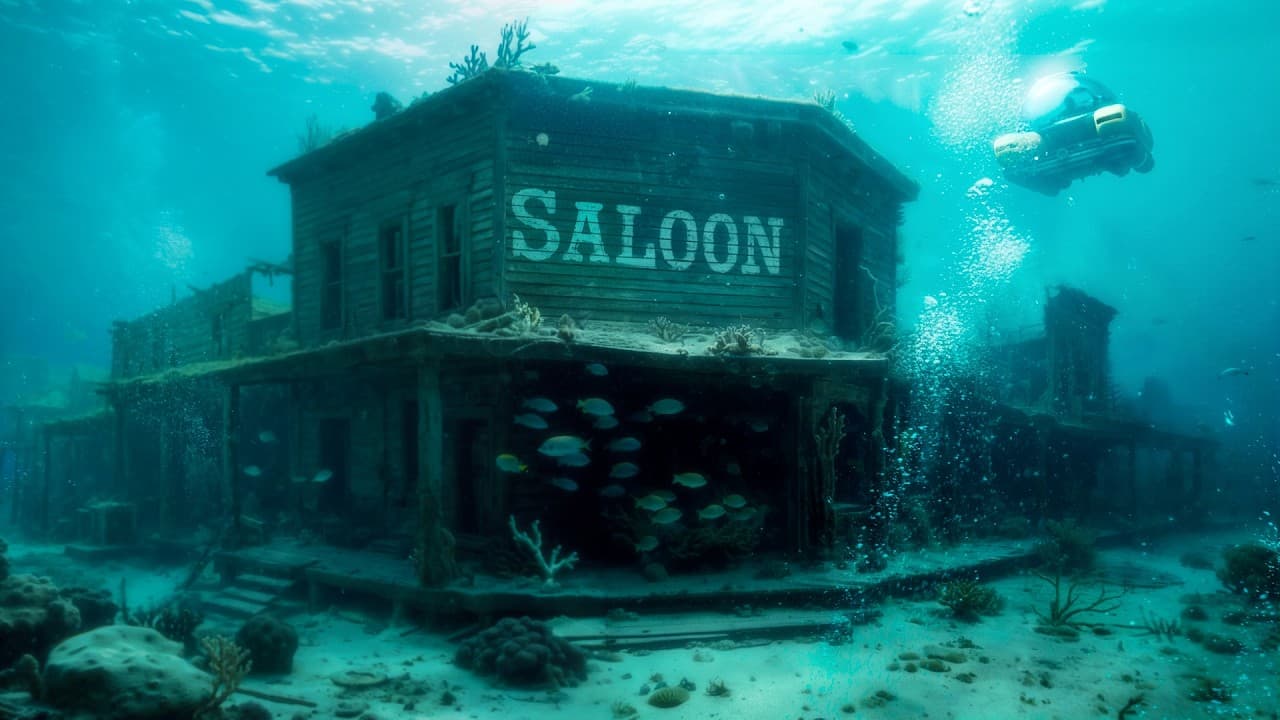
  • The settlement became a substantial community with hotels, churches, stagecoaches, a cemetery, seven saloons, a post office, and dance halls. After decades of mining depleted much of the gold, repeated floods threatened the valley and Sacramento, contributing to the decision to construct a dam.
  • The underwater city disappeared beneath a new lake when the dam was built about 70 years before the expedition. The resulting reservoir covered the former valley with 1.3 billion tons of water, leaving the settlement as a submerged time capsule somewhere within 30,000 acres of murky water.
  • The scanning torpedo works by repeatedly sending sound through the water and listening for returning echoes. Measuring how long each echo takes to return reveals the distance to surrounding surfaces, allowing the instrument to map objects and terrain even when darkness and suspended silt prevent visual observation.
  • The recently sunken wakeboard boat served as a calibration target because its approximate location was already known. After troubleshooting the scanning system and restarting it, the team detected a large object in 63 feet of water, then used a personal submarine to confirm the sonar result visually.
  • The boat’s registration number confirmed that the submarine had reached the same vessel that sank a few days earlier. Even after that short time underwater, the boat was covered in silt, demonstrating why objects in the lake are difficult to see and why sonar is essential for locating them.
  • Fresh water makes the submarine less naturally buoyant than salt water because salt water is denser. The submarine therefore needed more air to return to the surface, leaving the crew with only four ascents and descents and limiting how many dives could be attempted during the search.
  • The underwater bridge appeared warped in the sonar image because the torpedo sends echoes toward its sides and leaves a blind spot directly beneath it. Bridge supports and the remains of an old roadway indicated that the structure belonged to the submerged landscape and might provide a route toward the town.

Install to Summarize YouTube Videos and Get Transcripts

Explore YouTube Video Summarizer or Get YouTube Transcript Extractor

Questions & Answers

Q: How can sonar reveal a city beneath a murky lake?

The scanning torpedo repeatedly sends sound through the water and measures how long each echo takes to return. Those measurements indicate the distance to surrounding surfaces and create a map of objects and terrain, even in pitch-black water obscured by silt.

Q: Why is there an underwater city beneath the lake?

The city grew during the California Gold Rush after William Sidney and two companions discovered a large pile of gold along the American River in March 1848. After decades of mining and repeated floods, a dam was built, and the resulting lake swallowed the valley about 70 years before the expedition.

Q: What was in the submerged Gold Rush town?

The town included hotels, churches, stagecoaches, a cemetery, seven saloons, a post office, and dance halls. Nearly 7,000 people moved into the valley after news of the gold discovery spread.

Q: How did the team test the underwater scanning torpedo?

The team searched near the approximate location of a wakeboard boat that had sunk a few days earlier. After 30 minutes of troubleshooting, the sonar detected a large object in 63 feet of water, and a personal submarine later confirmed the vessel using its registration number.

Q: Why were submerged objects difficult to see in the lake?

The lake’s murky water, darkness, and accumulating silt made visual searches ineffective. Even the wakeboard boat that had sunk only a few days earlier was already covered in silt, showing why sonar was necessary across the 30,000-acre search area.

Q: Why could the submarine make only four ascents and descents?

Fresh water is less dense than salt water, so the submarine was less naturally buoyant and needed more air to return to the surface. Its available buoyancy air allowed only four ascents and descents, limiting the number of search dives.

Q: What evidence suggested the explorers were nearing the underwater city?

The sonar detected a submerged bridge with support structures leading toward the remains of an old roadway. Because that infrastructure belonged to the former inhabited landscape, the team believed it could provide a route toward the lost town.

Q: Why did the underwater bridge look warped in the sonar image?

The scanning torpedo directed echoes toward its sides while leaving a blind spot directly beneath it. That blind area crossed the bridge’s center during the pass, producing a distorted image even though the bridge supports and connected roadway remained visible.

Summary & Key Takeaways

  • A town grew beside the American River after William Sidney and two companions discovered a large pile of gold in March 1848. Nearly 7,000 people moved into the valley, which gained hotels, churches, saloons, dance halls, a post office, stagecoaches, and a cemetery before mining declined and floods encouraged construction of a dam.

  • The team tested an underwater scanning torpedo by searching for a wakeboard boat that had recently sunk offshore. The instrument mapped the lakebed with sound echoes, and a personal submarine then confirmed the sonar detection. The boat’s registration number established that it was the same vessel, already covered in silt after only a few days.

  • Searching 30,000 acres of murky water proved slow and included equipment trouble when the survey boat’s motor died. After switching boats, the sonar team detected a submerged bridge with support structures leading toward an old roadway. Believing the bridge could lead toward the lost town, the explorers prepared their second submarine dive despite concerns about submerged trees.


Read in Other Languages (beta)

Share This Summary 📚

Explore More Summaries from Mark Rober 📚