Which AI-Resistant Careers Need More Workers?
TL;DR
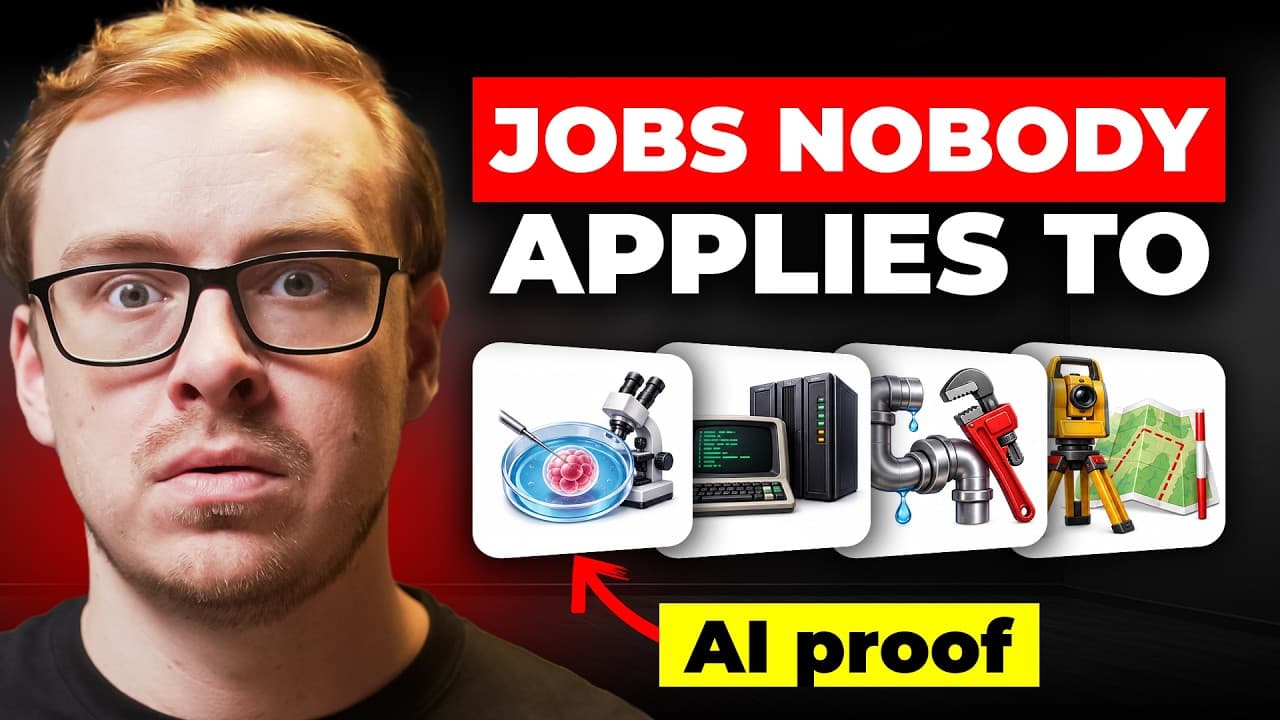
AI-resistant opportunities remain strong where technology still depends on scarce human judgment, physical skill, or accountability. Embryologists are needed to manage delicate fertility work, mainframe developers must validate automated code modernization, and data center electricians and related trades are essential for building and maintaining the physical infrastructure that powers AI.
Transcript
These are the five jobs that are begging for workers because everyone thinks that AI took them. And I promise at least one of them is going to be a good fit for you. Now, one pays up to $157,000 a year for a job that most people can't even name. Several will take you with no degree. And one of them is the career that the godfather of AI himself say... Read More
Key Insights
- Embryologists are fertility laboratory specialists who handle and care for human eggs, sperm, and embryos during treatments such as IVF. Although AI can assist with embryo ranking and laboratory procedures, the work still depends on trained humans who manage delicate biological materials and carry substantial responsibility.
- The embryologist shortage is being driven by growing fertility-treatment demand and insufficient staffing. Industry reporting cited in the transcript says the shortage is comparable to, or worse than, the shortage of fertility doctors, which is contributing to rising salaries and demand for additional laboratories.
- Mainframe developers are still needed because banks, insurers, healthcare organizations, and governments depend on decades-old systems. These systems process important transactions, while the people who understand their code and institutional business rules are becoming harder for employers to find.
- AI-assisted code modernization still requires human validation. An AWS executive cited in the transcript said AI should not replace mainframe experts because people must check translated code and explain the business logic embedded in systems that have operated for decades.
- Data center electricians are essential because AI services run on physical servers that require reliable electricity. Human workers install, maintain, and repair power systems, backup batteries, generators, control panels, and electrical connections that cannot be managed solely through software.
- The data center boom also creates demand for plumbers, pipe fitters, HVAC technicians, welders, fiber technicians, and generator technicians. Their work supports cooling, connectivity, structural construction, and backup power, making skilled trades a direct beneficiary of expanding AI infrastructure.
- Technological change often shifts work instead of eliminating all employment. The transcript describes earlier transitions in agriculture, factories, telecommunications, computers, banking, and the internet, where some roles declined while new occupations, services, and industries developed around the new technology.
- Career expertise can create a second income opportunity through educational content. Workers can document their jobs, explain required skills and certifications, or teach others how to enter an occupation, especially when public curiosity is high and few practitioners are producing accessible material.
- More videos from this channel:
- More from this channel: Shane Hummus
Install to Summarize YouTube Videos and Get Transcripts
Explore YouTube Video Summarizer or Get YouTube Transcript Extractor
Questions & Answers
Q: What careers remain in demand despite AI automation?
The transcript identifies strong demand in embryology, mainframe development, and data center electrical work. These careers persist because AI still needs human judgment, validation, accountability, or physical execution. Related data center trades, including plumbing, HVAC, welding, fiber installation, and generator maintenance, also benefit because AI systems depend on buildings, cooling, power, and connectivity.
Q: Why are embryologists still needed when AI can rank embryos?
AI can assist with embryo ranking and parts of robotic fertility procedures, but embryologists still handle and care for eggs, sperm, and embryos in specialized laboratories. Their work involves delicate biological materials and direct responsibility for fertility-treatment processes. The transcript also describes growing demand for fertility services and a serious shortage of trained human embryologists.
Q: What does an embryologist do in an IVF laboratory?
An embryologist is a scientist or laboratory expert who supports fertility treatments such as IVF. The role includes handling and caring for human eggs, sperm, and embryos under specialized laboratory conditions. Although automated tools may support selection or particular procedures, the embryologist remains responsible for essential hands-on work involving material that may become a future child.
Q: Why are mainframe developers still valuable?
Mainframe developers maintain old but essential software used by banks, insurance companies, healthcare organizations, and governments. These systems continue to process important financial and administrative transactions. Employers need specialists who can understand the code, preserve system reliability, and explain business rules that may not be documented clearly outside the long-running software itself.
Q: Can AI replace mainframe developers during code modernization?
The transcript says AI can help translate and modernize old code, but it cannot remove the need for experienced mainframe specialists. Humans must validate the generated code and explain the business logic embedded in legacy systems. AI modernization projects can therefore increase the value of experts who understand both the technical systems and the institutional processes behind them.
Q: Why does AI growth increase demand for electricians?
AI operates through physical servers housed in large data centers, and those facilities require extensive electrical infrastructure. Electricians install and maintain power systems, backup batteries, generators, control panels, and many electrical connections. Every AI response ultimately depends on functioning hardware and reliable power, so expanding computing capacity creates additional physical work that software cannot perform alone.
Q: Which skilled trades benefit from new AI data centers?
The transcript names electricians, plumbers, pipe fitters, HVAC technicians, welders, fiber technicians, and generator technicians. These workers provide electricity, cooling water, temperature control, structural construction, network connectivity, and backup power. Their roles are essential because a data center must be physically built, connected, cooled, maintained, and protected against interruptions before its AI systems can operate reliably.
Q: How can workers earn additional income from career expertise?
The suggested approach is to perform the job and also create educational content about it. A worker can show appropriate parts of the work, explain how to enter the field, discuss necessary skills or certifications, and teach the relevant technology. Less visible occupations may attract an audience because many people are curious while few practitioners explain them clearly.
Summary & Key Takeaways
-
Embryology remains a human-centered career despite growing use of AI and robotics in fertility treatment. Automated systems can help rank embryos and perform parts of laboratory procedures, but trained specialists still handle eggs, sperm, and embryos. Rising fertility demand and a shortage of qualified embryologists are supporting strong compensation and employer demand.
-
Mainframe development remains valuable because critical institutions still rely on old software that processes essential transactions. AI tools can translate or modernize legacy code, but experienced developers must validate the output and explain the underlying business logic. Declining expertise therefore creates opportunities for people willing to learn and maintain these systems.
-
AI growth is increasing demand for electricians and other skilled trades because data centers require extensive physical infrastructure. Human workers install and maintain power systems, cooling equipment, generators, fiber connections, pipes, and structural components. Many of these careers do not require a degree and can provide strong earnings as construction demand expands.
Read in Other Languages (beta)
Share This Summary 📚
Summarize YouTube Videos and Get Video Transcripts with 1-Click
Try YouTube Summary with ChatGPT & Claude or YouTube Transcript Generator
Explore More Summaries from Shane Hummus 📚





Summarize YouTube Videos and Get Video Transcripts with 1-Click
Try YouTube Summary with ChatGPT & Claude or YouTube Transcript Generator