How to Create YouTube Videos That Get Views
TL;DR
Start with a video idea that has strong audience demand and limited existing supply, because a compelling idea can succeed despite mediocre production. Find proven outlier topics, improve their execution without copying their wording, validate keywords with multiple tools, and combine an early search term with an emotional title angle.
Transcript
Most YouTube advice is completely backwards. And I know this because I've tested everything while growing my channel to over a million subscribers and building two sevenfigure businesses from my content. And today, I'm revealing my entire video creation process, the exact system that I've developed over the last 5 years, perfecting my YouTube chann... Read More
Key Insights
- The video idea is presented as the most important part of production because strong audience interest can compensate for mediocre execution, while polished work cannot guarantee demand for a subject people do not currently want.
- A promising topic has high demand and low supply, which the creator compares to selling simple food to a hungry crowd rather than offering gourmet food to people who have already eaten.
- The Icahn Method is a process for finding outlier videos that earned unusually high view counts despite small channel audiences, weak thumbnails, poor recording quality, bad audio, minimal editing, or unimpressive presentation.
- Ethical topic adaptation means borrowing only the underlying idea, then changing the wording and producing a substantially better title, thumbnail, and video instead of copying another creator's complete execution.
- VidIQ is used to estimate keyword volume and reveal semantically related searches, including other subjects or people that viewers interested in the original term are also likely to care about.
- Keywords Everywhere is used as a second source for estimated search volume and advertiser bidding information, allowing creators to compare similar phrases and identify terminology associated with greater commercial interest.
- Oneof10.com is described as a shortcut for locating outlier content by filtering for conditions such as channels below 20,000 subscribers, videos above 100,000 views, and a selected subject area.
- An effective title is described as half analytical and half emotional, with the main keyword placed near the beginning for search relevance and an emotionally compelling phrase added to strengthen audience interest.
Install to Summarize YouTube Videos and Get Transcripts
Explore YouTube Video Summarizer or Get YouTube Transcript Extractor
Questions & Answers
Q: How do you find YouTube video ideas with viral potential?
Look for topics with substantial audience demand and relatively little existing supply. The transcript recommends finding outlier videos that attracted many views even though their channels were small or their production was weak. Such performance suggests that viewers strongly wanted the subject itself. Borrow only that underlying idea, then create a better version with distinct wording, a stronger thumbnail, and improved execution.
Q: What is the Icahn Method for YouTube research?
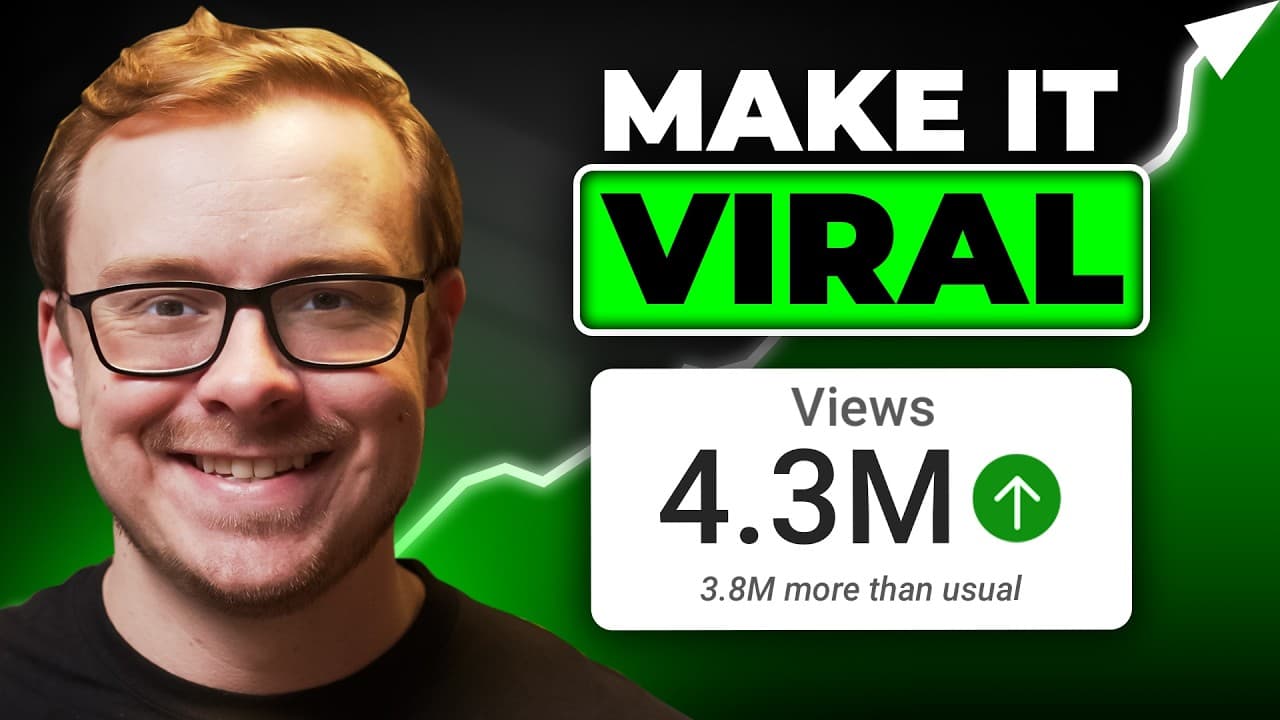
The Icahn Method is the creator's process for identifying a proven topic from an outlier video and adapting only its core idea. The example involved a poorly produced video about worthless college majors that reached about 760,000 views on a channel with about 10,000 subscribers. The creator reframed the topic as useless degrees, improved the presentation, and received more than four million views.
Q: Why is the video idea more important than production quality?
A strong idea reflects an audience need that already exists, so viewers may watch even when the thumbnail, camera quality, audio, editing, or delivery is mediocre. The transcript supports this with an outlier whose technical execution was described as poor but whose topic drew about 760,000 views. Production improvements matter, but they cannot replace genuine interest in the subject.
Q: How should creators adapt ideas from successful YouTube videos?
Creators should take only the underlying subject, not the original video's title, keywords, thumbnail, script, or overall execution. The transcript demonstrates this by changing a topic about worthless college majors into a video about useless degrees. The revised version used different wording, a substantially better thumbnail, and stronger production, turning validated audience demand into an original and more useful presentation.
Q: How can VidIQ help with YouTube keyword research?
VidIQ estimates keyword search volume and displays semantically related terms. Those related terms indicate subjects that are likely to interest people who care about the original query. The transcript notes that searches for the creator's name were associated with remote jobs and work-from-home jobs. Creators can also enter a topic to discover related people, phrases, and potential angles for future videos.
Q: Why compare VidIQ with Keywords Everywhere?
Both tools estimate how often people search for particular terms, and neither can provide Google's exact internal data. When both tools indicate high volume, the agreement gives the creator more confidence that meaningful demand exists. Keywords Everywhere also displays information about advertiser bidding, which the transcript uses to compare commercially different phrases that may otherwise describe nearly the same subject.
Q: How can creators find outlier videos from small channels?
Creators can search YouTube manually or use Oneof10.com to narrow the results. The transcript says the tool can filter for conditions such as a channel having fewer than 20,000 subscribers while a video has more than 100,000 views, along with a chosen topic. Results matching that pattern can reveal subjects whose demand appears unusually strong relative to the creator's established audience.
Q: How should a YouTube title combine SEO and emotion?
The recommended framework makes the title 50 percent analytical and 50 percent emotional. The analytical portion contains the primary keyword and places it as close to the beginning as practical, helping establish the subject clearly. The emotional portion adds a compelling angle near the end, illustrated by the phrase "MUST AVOID" in capital letters after the main keyword "YouTube monetization."
Summary & Key Takeaways
-
Successful YouTube creation begins with topic selection rather than expensive equipment or polished production. The recommended approach is to find subjects with substantial audience demand but limited content supply. A strong idea can overcome weaknesses in the thumbnail, recording quality, audio, editing, presentation, and the creator's existing subscriber base.
-
The Icahn Method identifies outlier videos that receive many views despite coming from smaller channels or having weak execution. Creators can adopt only the underlying idea, then produce a stronger version with different wording, a better thumbnail, and improved production. One adapted topic described in the transcript exceeded four million views.
-
Keyword research helps creators choose among different phrases describing the same subject. VidIQ estimates search volume and suggests semantically related terms, while Keywords Everywhere estimates volume and displays advertiser activity. Existing channels can also export analytics data to a spreadsheet and ask ChatGPT Pro to recommend topics based on their performance history.
Read in Other Languages (beta)
Share This Summary 📚
Summarize YouTube Videos and Get Video Transcripts with 1-Click
Try YouTube Summary with ChatGPT & Claude or YouTube Transcript Generator
Explore More Summaries from Shane Hummus 📚




Summarize YouTube Videos and Get Video Transcripts with 1-Click
Try YouTube Summary with ChatGPT & Claude or YouTube Transcript Generator