How to Implement a Marketing Playground Strategy
TL;DR
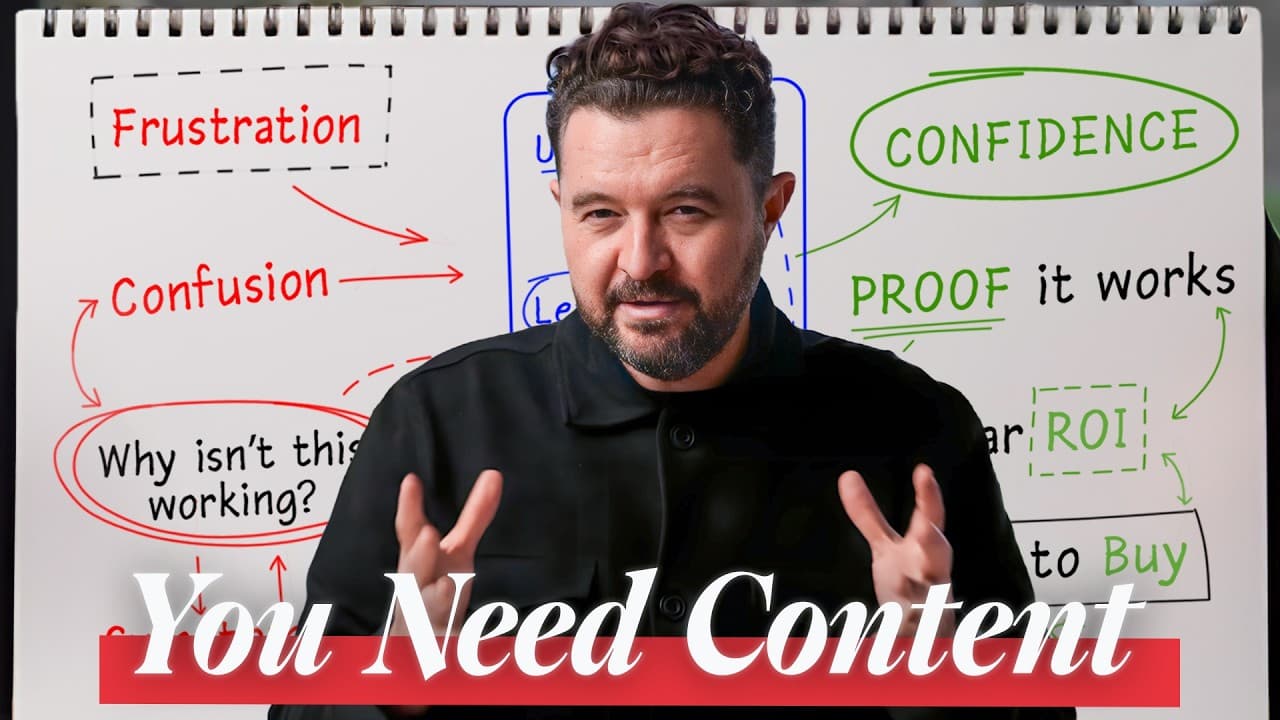
Traditional marketing funnels are outdated as consumers now require 8-12 touchpoints before making a purchase. The solution is a 'marketing playground,' where businesses create positive experiences to guide potential customers through a three-phase journey: understanding the problem, discovering the process, and realizing the prize. This approach fosters empathy and engagement, ultimately leading to higher conversion rates.
Transcript
You have probably heard of something called a marketing funnel. And it's where you apply pressure for people to move from awareness into consideration into decision. And you want that to happen as fast as possible. But here's the problem. No one likes to be funneled. No one wants to be pushed and cajolled and squeezed. And you would hate that to ha... Read More
Key Insights
- Traditional marketing funnels are no longer effective as consumers require more touchpoints before making decisions.
- A marketing playground focuses on creating positive experiences rather than pressuring customers through a funnel.
- The buying journey consists of three phases: understanding the problem, discovering the process, and realizing the prize.
- Empathy is crucial in marketing; businesses must understand and connect with customers' problems.
- Problem-aware content should focus on symptoms, causes, treatments, and prognosis to provide value.
- Customers want to learn about processes through books, podcasts, workshops, and case studies.
- Experiences such as free trials and assessment tools help customers evaluate the potential benefits of a product.
- Successful marketing strategies involve multiple touchpoints that naturally guide customers to a purchase decision.
Install to Summarize YouTube Videos and Get Transcripts
Explore YouTube Video Summarizer or Get YouTube Transcript Extractor
Questions & Answers
Q: How do traditional marketing funnels compare to marketing playgrounds?
Traditional marketing funnels are less effective in today's market because they rely on pressuring customers through a linear path. In contrast, marketing playgrounds focus on creating positive, engaging experiences that naturally guide potential customers through their buying journey. This approach acknowledges that consumers now require 8-12 touchpoints before making a purchase decision, emphasizing empathy and understanding over pressure.
Q: What are the three phases of the buyer's journey in a marketing playground?
The three phases of the buyer's journey in a marketing playground are: understanding the problem, discovering the process, and realizing the prize. Initially, customers become aware of their problems and seek solutions. They then learn about the processes available to solve their issues, and finally, they evaluate the benefits and outcomes of purchasing a product or service, leading to a decision.
Q: Why is empathy important in a marketing strategy?
Empathy is crucial in a marketing strategy because it allows businesses to genuinely connect with their customers' needs and concerns. By understanding and addressing the problems customers face, companies can create content and experiences that resonate with their audience, fostering trust and engagement. This empathetic approach leads to more meaningful interactions and increases the likelihood of conversion.
Q: How can businesses create problem-aware content?
Businesses can create problem-aware content by using the clinical method framework, which focuses on discussing symptoms, causes, treatments, and prognosis. This approach provides valuable information to potential customers who are aware of their problems but unsure of the solutions. By addressing these aspects, businesses can demonstrate understanding and offer helpful guidance, making their content more engaging and effective in converting leads.
Q: What role do experiences play in the marketing playground strategy?
Experiences are central to the marketing playground strategy as they provide customers with engaging, informative interactions that guide them through their buying journey. These experiences can include mini-courses, quizzes, discussion groups, free trials, and assessments. By offering diverse touchpoints, businesses can help customers understand their problems, explore solutions, and evaluate the benefits of a purchase, ultimately leading to higher conversion rates.
Q: How can businesses use the clinical method framework in marketing?
Businesses can use the clinical method framework in marketing by structuring content around four key elements: symptoms, causes, treatments, and prognosis. This method helps in crafting problem-aware content that resonates with customers by addressing their concerns and providing actionable insights. By clearly explaining these aspects, businesses can build trust and guide potential customers through their decision-making process, enhancing engagement and conversion.
Q: What are some examples of marketing playground experiences?
Examples of marketing playground experiences include mini-courses that educate customers about specific problems, quizzes that diagnose issues, discussion groups that foster community and support, free trials that allow users to test products, and assessments that provide personalized insights. These experiences create multiple touchpoints, helping customers understand their problems, explore solutions, and make informed purchasing decisions.
Q: How did ScoreApp successfully implement a marketing playground strategy?
ScoreApp successfully implemented a marketing playground strategy by offering a variety of engaging experiences, such as mini-courses on lead generation, blueprints explaining their methodology, and free trials of their software. These touchpoints helped potential customers understand their problems, explore solutions, and experience the benefits of ScoreApp's offerings, resulting in rapid growth to over 10,000 customers.
Summary & Key Takeaways
-
Consumers today need 8-12 touchpoints before purchasing, making traditional funnels ineffective. A marketing playground offers positive experiences that guide customers through understanding their problem, learning the process, and realizing the prize. This empathetic approach enhances engagement and conversion rates.
-
A marketing playground strategy replaces the outdated funnel by focusing on empathy and customer experiences. It involves three phases: problem awareness, process discovery, and prize realization, using tools like mini-courses, quizzes, and discussion groups to engage and convert leads.
-
Creating problem-aware content using the clinical method framework—symptoms, causes, treatments, and prognosis—helps businesses connect with customers. This strategy, exemplified by ScoreApp's success, transforms marketing from a frustrating task to an engaging and effective process.
Read in Other Languages (beta)
Share This Summary 📚
Summarize YouTube Videos and Get Video Transcripts with 1-Click
Try YouTube Summary with ChatGPT & Claude or YouTube Transcript Generator
Explore More Summaries from Daniel Priestley 📚





Summarize YouTube Videos and Get Video Transcripts with 1-Click
Try YouTube Summary with ChatGPT & Claude or YouTube Transcript Generator