How to Make Viral Facebook Ads With High ROAS
TL;DR
Winning ads are built before you touch the ads manager: 80% of ad performance comes from creative, and that starts with deep research into your prospect's real pain points. Copy customers' exact words from Reddit, Facebook groups, and forums, wrap the whole ad around one core problem, and hijack attention with wild visual and audio pattern interrupts.
Transcript
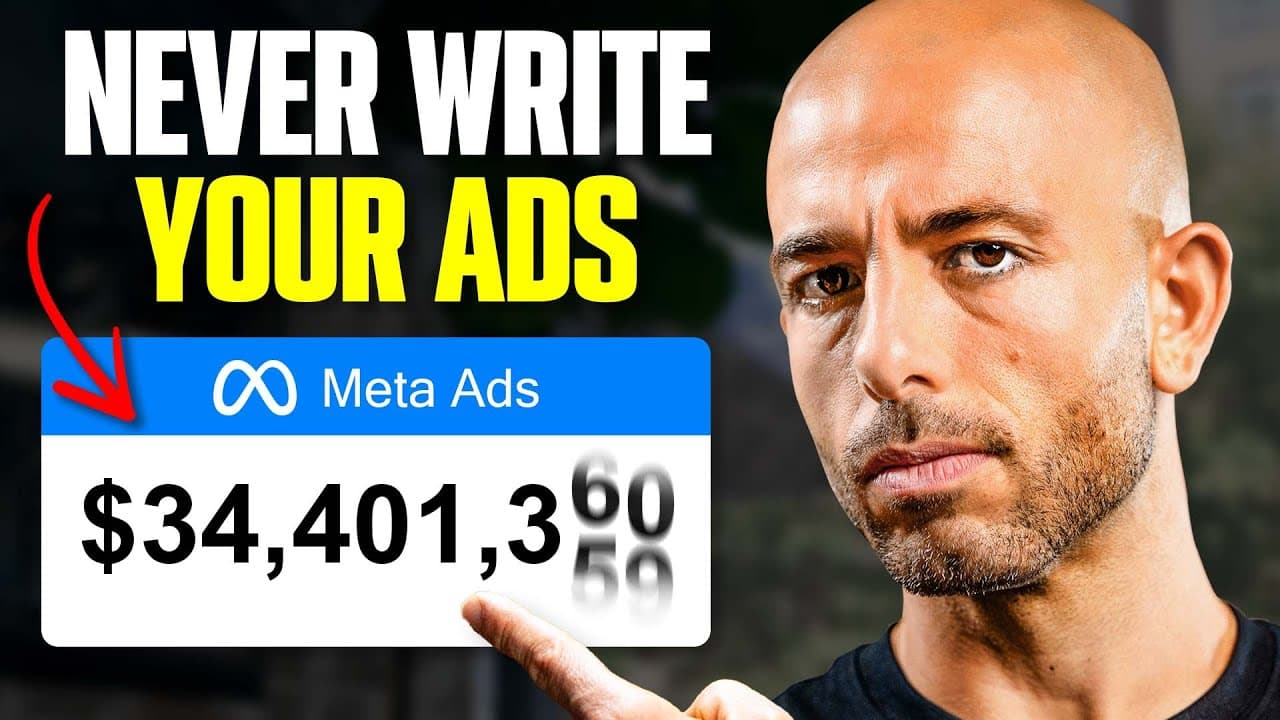
This viral ad generated me over $34 million in sales and took the internet by storm. Look at this graph. It shows the cost to advertise on Facebook. Each year, it continues to go up and up and up, and things are only going to get worse unless something changes. And I probably shouldn't be sharing this with you, but today I'm going to let you steal ... Read More
Key Insights
- 80% of ad performance comes from the creative, not the ads manager. The work of understanding your prospect and doing research determines results far more than tweaking buttons and campaign settings inside Facebook.
- Great ads start with research and copy, not templates. Amateurs use templates, hyperbole, and buzzwords, while pros dive inside the brain of the dream prospect and speak directly to their specific pain points.
- Speaking directly to a market's pain points drove one ad to $34 million in sales. People were tired of agencies promising the world and not delivering, so that frustration was addressed repeatedly throughout the ad copy.
- Research language should be copied verbatim from real customers. Pull long, emotionally charged comments from Reddit, Facebook groups (80,000 to millions of members), and forums, then paste the exact words into a research document without altering them.
- The 'bullseye' is the one core problem all symptoms point to. Rather than addressing every pain, boil research down to the single underlying problem and wrap the entire ad around that one thing to make it pull hard.
- Ads must hijack attention with pattern interrupts. Because the news feed is chaotic, a normal setting is not enough, so combining wild visual interrupts (a man carrying a chicken) with auditory interrupts stops the scroll.
- Pattern matching uses familiar visual cues to signal relevance. Showing something a prospect sees daily, like a Shopify dashboard or the Facebook ads manager, signals the ad is of interest and triggers the right identity.
- Shooting 10 to 12 hooks per ad gives campaigns longevity. Launch with one or two hooks, then roll out fresh hooks as earlier ones fatigue, letting a single week of production run one ad for a year or two.
Install to Summarize YouTube Videos and Get Transcripts
Explore YouTube Video Summarizer or Get YouTube Transcript Extractor
Questions & Answers
Q: Where does most of an ad's performance actually come from?
80% of ad performance comes from the creative, not from pressing buttons inside the ads manager. It all starts with understanding your prospect and doing your research. Marketers who spend all their time in the ads manager thinking that is where high ROAS hides are missing the point, because the real leverage is in the words, the research, and how directly you speak to your prospect's pain points.
Q: How do you research your prospect's pain points for an ad?
Dive inside the brain of your dream prospect to find their real pains. Look at long, emotionally charged comments on Reddit, monitor Facebook groups with 80,000 to millions of members, and use the Discussions Chrome extension to surface only forums on Google. Copy the exact language verbatim into a research document without altering it, and use multiple sources rather than just one place.
Q: Why did the first viral ad make $34 million in sales?
The ad made over $34 million because it spoke directly to the market's pain points. People had grown tired of marketing agencies promising the world and not delivering results, so that specific frustration was addressed multiple times throughout the ad copy. The core approach is figuring out the exact pain points your market has and then solving them in a way that is unique, which requires intimately understanding all the alternatives and claims competitors make.
Q: What is the 'bullseye' in ad creation?
The bullseye is the one core problem that all of a market's symptoms point back to. Instead of trying to talk to every pain a prospect has, you boil it down to the single underlying thing they are trying to solve. It exists in every marketplace, and when you hit it and wrap your whole ad around it, it is what causes an ad to pull incredibly hard.
Q: How do you hijack attention in a crowded news feed?
You interrupt the scroll with something wild, because a normal setting is not enough to compete with the chaotic blizzard of the news feed. Combine a visual pattern interrupt with an auditory one, such as a man walking through an office carrying a chicken, which makes people stop, turn on the sound, and click to see what it is about. People pay attention to things that are different, so do the opposite of everyone else.
Q: What is the difference between a pattern match and a pattern interrupt?
A pattern match uses familiar visual cues your prospect sees every day, like a Shopify dashboard for an e-commerce business or the Facebook ads manager for a media buyer, to signal that the ad is of interest and trigger their identity. A pattern interrupt does the absolute opposite of what everyone else in the marketplace is doing, breaking the expected pattern of what an ad looks like so it stands out as different.
Q: How can ChatGPT help with ad research?
If you already have customers, export all of your customer service emails and put them into ChatGPT, then ask it to tell you the top five common pains and benefits people get from your products. This turns existing customer communication into a structured source of real language and insight, which complements research pulled from Reddit, Facebook groups, and forums for building your swipe file and research document.
Q: Why should you shoot multiple hooks for a single ad?
Shooting 10 to 12 hooks for one ad gives longevity to the campaign so everything does not rest on a single hook. You launch with one or two hooks, and when they fatigue and people think they have already seen the ad because they only watch the first 15 seconds, you roll out the next hook, and then the next. One week of production can let a single ad run for a year or even two years.
Summary & Key Takeaways
-
Facebook advertising costs keep rising every year, so standing out requires an eight-step process for creating ads that bully the algorithm and generate high ROAS. Every good ad, written or video, begins with research into the words and pain points of the dream prospect, which is what separates professionals from amateurs.
-
Research means copying customers' exact language from Reddit, Facebook groups, forums (via the Discussions Chrome extension), and exported customer service emails analyzed with ChatGPT. All of this goes unaltered into a research document. The goal is to find the 'bullseye,' the single underlying problem that all symptoms point to, and build the whole ad around it.
-
Attention is hijacked through outrageous visual and auditory pattern interrupts plus two frameworks: pattern matching, which uses familiar visual cues to signal relevance, and pattern interrupts, which do the opposite of competitors. To sustain campaigns, 10 to 12 hooks are shot per ad and rolled out as each fatigues, letting one production run for a year or more.
Read in Other Languages (beta)
Share This Summary 📚
Summarize YouTube Videos and Get Video Transcripts with 1-Click
Try YouTube Summary with ChatGPT & Claude or YouTube Transcript Generator
Explore More Summaries from Sabri Suby 📚
Summarize YouTube Videos and Get Video Transcripts with 1-Click
Try YouTube Summary with ChatGPT & Claude or YouTube Transcript Generator