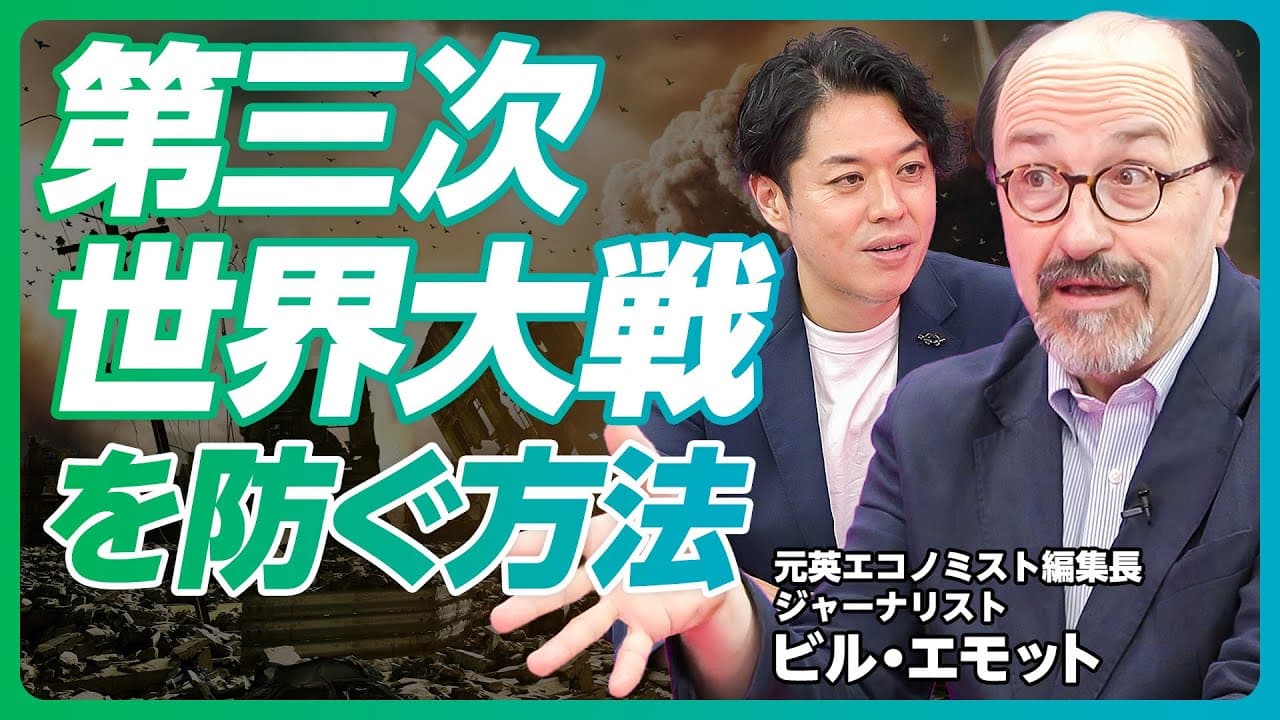
【第三次世界大戦は現実的な危機だ】元エコノミスト編集長 ビル・エモット/日本はどう防ぎ、備えるべきか/米大統領選が及ぼす台湾有事への影響/日米同盟と中国の緊張関係/【PIVOT GLOBAL】
TL;DR
World War III can be prevented by making a Chinese invasion of Taiwan appear too costly through credible commitments from the United States, Japan, and their allies. Bill Emmott argues that nearby military capabilities, Japan’s defense buildup toward Okinawa and Yonaguni, consistent support for Taiwan, and sustained diplomacy must reinforce one another. Read on to understand how deterrence, the U.S. presidential election, and Japan’s constitutional constraints shape the risk of conflict.
Transcript
do we need to prepare for World War I or how close are we to the third world war this might sound like a theoretical problem but actually it's a very real danger what would be the most important factor to prevent World War I I think the key factor is The credibility of particularly the United States and Japan but also other allies in convincing Chi... Read More
Key Insights
- The credibility of the United States, Japan, and other allies is crucial in preventing World War III by convincing China of the high costs of invading Taiwan.
- Building up military capabilities and demonstrating political commitment are necessary strategies to deter potential Chinese aggression towards Taiwan.
- The U.S. presidential elections could significantly influence Taiwan's crisis and international relations, with different approaches expected from candidates like Kamala Harris and Donald Trump.
- The U.S.-China relationship is often compared to a new Cold War, but the deep economic and human connections between the two countries differentiate it from the past Cold War with the Soviet Union.
- A lack of dialogue and understanding between the U.S. and China increases the risk of conflict, highlighting the need for frameworks to discuss nuclear weapons and arms control.
- Taiwan's geopolitical significance lies in its control over crucial shipping lanes, which could enable regional dominance by any controlling power.
- Japan plays a vital role in preventing World War III through defense buildup and maintaining strong alliances, particularly with the United States.
- Improving U.S.-China relations requires better mutual understanding of each other's motivations, ambitions, and responses, with dialogue being a critical component.
Install to Summarize YouTube Videos and Get Transcripts
Explore YouTube Video Summarizer or Get YouTube Transcript Extractor
Questions & Answers
Q: How close are we to World War III, and how can it be prevented?
Bill Emmott describes World War III as a real danger arising from tensions between the United States and China, particularly over Taiwan, but says it can be prevented. Prevention requires credible political commitments, nearby military capabilities, and diplomacy that convince China an invasion would be too costly.
Q: What is the most important factor in preventing a war over Taiwan?
The key factor is the credibility of the United States, Japan, and other allies. China must believe that an attempt to invade Taiwan and change the status quo would meet a real military response.
Q: How should Japan prepare for a possible Taiwan conflict?
Japan should build up its defense capabilities and clearly indicate that they could be used if China attempted to invade Taiwan. Its plan to expand Japanese forces and position them closer to Taiwan, from Okinawa toward Yonaguni, helps make that commitment credible and rapid.
Q: Why are military capabilities essential to deterrence?
Political promises are more persuasive when forces are available nearby to carry them out. Emmott argues that visible capabilities and demonstrations help convince China that the costs of invading Taiwan would be so high that an attack is not worth attempting.
Q: Why does consistency in U.S. policy toward Taiwan matter?
President Biden said four times during 2021 and 2022 that the United States would defend Taiwan if China invaded. Emmott says successors such as Kamala Harris or Donald Trump, and later presidents, would need to maintain that commitment for deterrence to remain credible.
Q: How could the U.S. presidential election affect the Taiwan crisis?
The election matters because a new president’s intentions toward Taiwan may influence whether China takes U.S. deterrence seriously. Emmott emphasizes that either a Harris or Trump presidency would need to repeat the commitment to respond to an invasion.
Q: How do Japan’s constitutional constraints affect deterrence?
Japan’s constitutional constraints can create doubt about whether it could follow through on its deterrence strategy during a crisis. Emmott suggests constitutional revision may need broader support in Japanese society to strengthen the psychological impact of Japan’s commitment on China.
Q: What is Bill Emmott’s strategy for avoiding conflict between the United States and China?
His strategy combines deterrence with diplomacy, as reflected in the English title of his book, “Deterrence, Diplomacy and the Risk of Conflict over Taiwan.” Military readiness and political commitment are intended to prevent aggression, while diplomacy addresses the broader U.S.-China tension before it becomes a regional military conflict.
Summary & Key Takeaways
-
The discussion highlights the real danger of World War III and the importance of deterrence and diplomacy, particularly in the context of U.S.-China tensions over Taiwan. Building military capabilities and demonstrating political commitment are emphasized as preventive measures.
-
The U.S. presidential election could impact international relations and Taiwan's crisis, with different approaches expected from candidates like Kamala Harris and Donald Trump. Consistency in U.S. policy towards Taiwan is crucial for maintaining deterrence.
-
The U.S.-China relationship is often likened to a new Cold War, but the deep economic and human connections between the two countries differentiate it from the past Cold War with the Soviet Union. Dialogue and understanding are essential to prevent conflict.
Read in Other Languages (beta)
Share This Summary 📚
Summarize YouTube Videos and Get Video Transcripts with 1-Click
Try YouTube Summary with ChatGPT & Claude or YouTube Transcript Generator
Explore More Summaries from PIVOT 公式チャンネル 📚
Summarize YouTube Videos and Get Video Transcripts with 1-Click
Try YouTube Summary with ChatGPT & Claude or YouTube Transcript Generator