How to Turn a Business Idea Into a Working Model
TL;DR
Start by identifying a real problem your business will solve, then connect that problem to a purpose strong enough to sustain your effort. You can begin from any available location, but moving closer to customers, investors, manufacturers, and supportive communities can improve your chances, while the right legal and operational structure may involve several markets.
Transcript
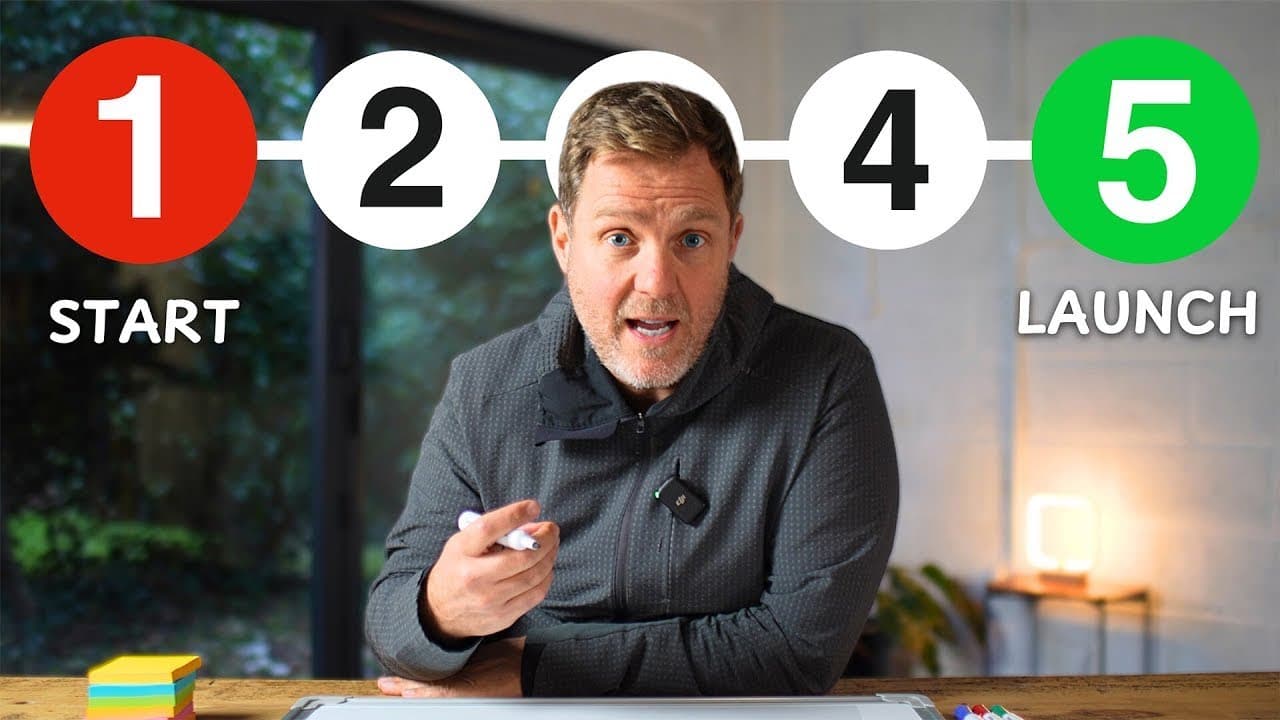
I was 15 years old when I first started a business I had no choice but to start a company is the best thing I ever did in 35 years I've gathered so much knowledge and how to build a business just recently a year ago I launched a business called Help bank and today based on last money in it's already worth 30 million and I'm going to give you all th... Read More
Key Insights
- Starting is more important than securing ideal conditions. A founder can begin in a spare room or another imperfect setting, because the immediate objective is to take action and develop something rather than wait until the location, concept, and resources appear perfect.
- Business location can influence whether a company succeeds. The right environment may place founders near investors, paying customers, capable collaborators, manufacturers, and communities that encourage innovation, while an unsuitable environment can limit access to the resources the business needs.
- San Francisco is presented as a fundraising location because venture capital is concentrated there. The transcript uses Facebook's move to the city as an example and argues that businesses seeking investment should consider establishing a presence where potential funders are located.
- Hong Kong is described as useful for accessing Asian markets and creating a company structure. The speaker says profits there face a flat 15% company tax without additional tax when that money is later paid to the company director.
- Shenzhen is presented as a manufacturing center with a large concentration of patents. The transcript also says some accelerators may pay for founders to travel, stay, and build there, challenging the belief that relocation always requires substantial personal funds.
- A distributed business can use different locations for different functions. The suggested arrangement combines manufacturing in Shenzhen, legal structure in Hong Kong, fundraising in San Francisco, and a lifestyle location suited to the founder, with online tools supporting operations across markets.
- A useful business idea solves a clearly defined problem. The speaker reframes the common question about what someone wants to do when grown up into a more productive question about which problem that person wants to solve.
- Purpose is what helps a founder persist beyond an apparent market gap. A gap may represent an opportunity, but the speaker argues that responsibility and accountability provide the stronger motivation needed to keep working when doing nothing appears to have no immediate consequence.
- More videos from this channel:
- More from this channel: Simon Squibb
Install to Summarize YouTube Videos and Get Transcripts
Explore YouTube Video Summarizer or Get YouTube Transcript Extractor
Questions & Answers
Q: Where should you start a business with no money?
Start wherever you currently have access, even if that means a spare room, a friend's couch, or another imperfect location. The central advice is to begin rather than wait for ideal circumstances. Once the business is moving, consider whether relocating or operating in another market would provide better access to customers, investors, manufacturers, collaborators, or an environment that supports innovation.
Q: How does location affect a new business?
Location affects the people, capital, customers, suppliers, and attitudes surrounding a founder. The transcript argues that expensive cities can still be valuable because people with money to invest or spend often live there. It also suggests that founders reflect both the people around them and the place where they live, making a supportive environment an important business resource.
Q: Which locations are suggested for different business functions?
The proposed arrangement uses Shenzhen for manufacturing, Hong Kong for legal structure, and San Francisco for fundraising. Los Angeles is discussed in connection with creating a television show, while Dubai is associated with tax and Web3, Bali with lifestyle businesses, and Thailand with manufacturing. These are presented as possibilities whose relevance depends on the company and the founder's intended lifestyle.
Q: Why is San Francisco recommended for raising business funding?
San Francisco is recommended because the transcript identifies it as a center of venture capital. The speaker argues that a founder seeking investment should go where investors are located and uses Mark Zuckerberg's move there while building Facebook as an example. The broader principle is to place each business function near the people and resources most likely to support it.
Q: Why are Hong Kong and Shenzhen discussed together?
Hong Kong is presented as a potential legal and commercial base for reaching Asian markets, while Shenzhen is presented as a manufacturing center. The speaker says Hong Kong applies a flat 15% tax to company profit without additional tax when that money is paid to the director. Shenzhen is described as a place where products are made and accelerators may support visiting founders.
Q: How do you turn an idea into a viable business model?
Begin by stating the problem the idea solves. The transcript argues that problem solving creates the basis for earning money, while purpose gives the founder a reason to continue doing the work. A perceived market gap can be useful, but it is treated as an additional benefit rather than the main foundation. The founder's responsibility to solve the problem should guide execution.
Q: How can you tell whether a business idea is worth pursuing?
Ask what specific problem the proposed business solves and why solving it matters to you. An idea based only on filling a market gap or becoming rich may not provide enough motivation to survive difficult periods. According to the transcript, a stronger idea combines a practical problem with a purpose that creates responsibility, accountability, and a reason to work consistently.
Q: Why does purpose matter when starting a company?
Purpose matters because founders need a reason to act when there is no immediate penalty for doing nothing. The transcript uses nurses and shop operators to illustrate how responsibility encourages people to show up: patients need care, and a shop must be opened. A business connected to a meaningful problem can create similar accountability and help the founder persist rather than give up.
Summary & Key Takeaways
-
Starting matters more than waiting for perfect conditions. A business can begin in a spare room or another modest location, but founders should later consider whether their environment provides access to customers, investors, talent, manufacturing, and encouragement. The place where a company develops can materially affect its opportunities and direction.
-
A viable business idea begins with a problem worth solving. Instead of asking only what job you want or which market gap exists, ask what problem the company addresses. Solving problems can generate revenue, while a meaningful purpose gives founders a reason to remain responsible and continue working when motivation declines.
-
A company can distribute its activities across markets according to their strengths. The transcript proposes Shenzhen for manufacturing, Hong Kong for legal structure, San Francisco for fundraising, and lifestyle-oriented locations for suitable ventures. Online work makes this approach more practical, but founders must still evaluate affordability, taxation, industry fit, and personal priorities.
Read in Other Languages (beta)
Share This Summary 📚
Summarize YouTube Videos and Get Video Transcripts with 1-Click
Try YouTube Summary with ChatGPT & Claude or YouTube Transcript Generator
Explore More Summaries from Simon Squibb 📚

Summarize YouTube Videos and Get Video Transcripts with 1-Click
Try YouTube Summary with ChatGPT & Claude or YouTube Transcript Generator