How to Ask Better Questions to Close More Deals
TL;DR
Saying what you think clears stress and reveals budget and scope details. Ask better, open questions to understand clients, then listen actively to uncover real needs. Shift from solving problems to identifying core problems and asking questions that move conversations forward.
Transcript
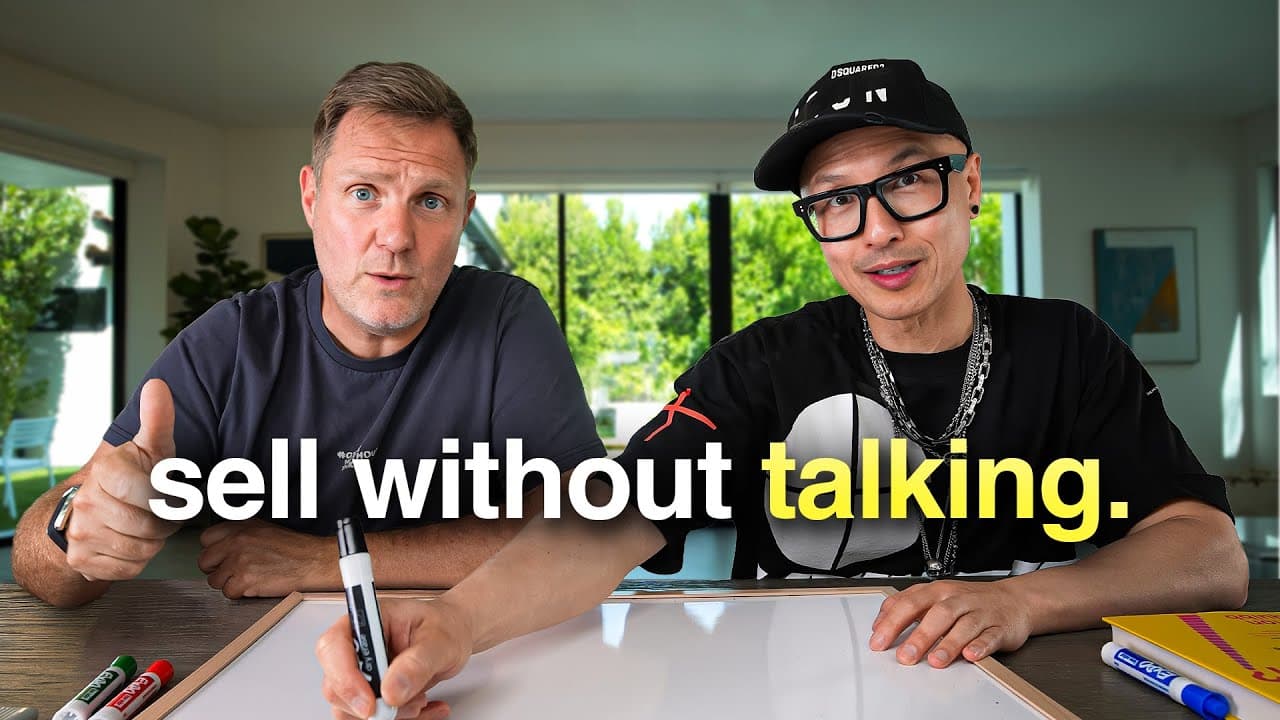
Chris Do just sat down with me to share his brutally honest advice to become a sales machine. Chris and I have a combined 50 years of business experience and we've sold to some of the biggest companies in the world. There isn't a thing we don't know about sales. Here are the eight brutally honest steps that will get you more sales than you can ever... Read More
Key Insights
- Saying what you think reduces stress and surfaces critical information such as budget and project scope, enabling clearer, faster progress in client conversations.
- Questions are more powerful than answers because they open dialogue, help you understand the client’s current state and desired future state, and prevent premature jumping to solutions.
- Listening deeply is the essential skill that turns questions into meaningful understanding, requiring attention to subtext, tone, and implied needs beyond literal words.
- Ask open-ended questions that avoid binary or agenda-driven prompts to build rapport and discover genuine client motivations.
- Great sales progress comes from treating conversations as collaborative problem solving rather than solitary pitching, focusing on what the client truly needs.
- Avoid justifying or defending proposals; instead, learn to understand objections and restructure the dialogue to address underlying concerns.
- Branding and serving others should be leveraged as strategic advantages, showcasing how your work solves real problems and enhances the client’s business, not just presenting features.
- Being a natural born seller means consistently practicing these behaviors, staying curious, and prioritizing the client’s success over short-term gains.
- More videos from this channel:
- More from this channel: Simon Squibb
Install to Summarize YouTube Videos and Get Transcripts
Explore YouTube Video Summarizer or Get YouTube Transcript Extractor
Questions & Answers
Q: What is the core mindset shift recommended for sales conversations?
The core mindset shift is to say what you think and not be afraid to ask direct questions about budget, scope, and competition. This openness reduces stress, clarifies expectations, and accelerates decision making. By asking blunt questions with clarity, you demonstrate a focus on real needs and set the stage for honest dialogue that moves projects forward.
Q: Why are questions considered more powerful than answers in sales?
Questions open conversations and invite clients to reveal their current state and desired future state. Answers can close dialogue by providing a fixed solution, whereas questions keep the discussion evolving and reveal nuances you wouldn’t uncover otherwise. This approach helps you understand the problem more completely before proposing a solution.
Q: How should listening be used as a sales skill?
Listening should be treated as a active, intentional practice. After asking a question, you must listen to the response, process its meaning, and read subtext. This enables you to pull on threads in the conversation, ask follow-up questions, and show the client you are truly understanding their situation.
Q: What is the recommended approach to handling objections?
Handle objections by focusing on understanding the root concern rather than defending the proposal. Ask clarifying questions to uncover the real issue, then tailor your follow-up questions and statements to address that concern. This shifts the dynamic from confrontation to collaborative problem solving.
Q: How can a brand act as a power-up in sales conversations?
Branding acts as a power-up by signaling credibility, consistency, and value in the client’s perspective. When you articulate how your work consistently solves problems and improves outcomes, you reinforce trust and make it easier for the client to envision a successful partnership.
Q: What role does serving others play in increasing sales effectiveness?
Serving others shifts the seller’s focus from selling to helping. By prioritizing the client’s needs and outcomes, you build rapport, demonstrate genuine care, and create a collaborative environment where the client feels seen and supported, which increases the likelihood of deal closure.
Q: How can you become a natural born seller according to the video?
Becoming a natural born seller involves practicing the eight steps consistently: say what you think, ask better questions, listen deeply, avoid unnecessary justification, handle objections thoughtfully, leverage branding, focus on serving others, and integrate these behaviors into everyday interactions. Over time, these habits become intuitive and lead to more successful outcomes.
Q: What practical habit helps reduce sales anxiety during client discussions?
A practical habit is to ask clear, direct questions about budget and competition, then listen carefully to the answers without rushing to finalize a pitch. This approach reduces anxiety by creating a structured, transparent dialogue and ensures both parties stay aligned on goals and constraints.
Summary & Key Takeaways
-
The video distills eight practical steps for selling more effectively, starting with saying what you think and ending with becoming a natural born seller. It emphasizes direct communication, asking about budgets and competition, and using questions to build rapport. The host argues that questions drive conversations and help reveal true client needs.
-
Listening is presented as a skill equal to asking good questions, requiring focus to understand both stated and unstated meanings. The conversation should evolve by following up on answers and uncovering deeper motivations. The approach is designed to reduce anxiety and create a collaborative problem-solving dynamic.
-
Brand and serving others are framed as power-ups in sales, encouraging designers and business people to articulate value and focus on helping clients achieve better outcomes. The eight steps provide a cohesive path from inquiry to action, with practical examples and dialogue guidance.
Read in Other Languages (beta)
Share This Summary 📚
Summarize YouTube Videos and Get Video Transcripts with 1-Click
Try YouTube Summary with ChatGPT & Claude or YouTube Transcript Generator
Explore More Summaries from Simon Squibb 📚



Summarize YouTube Videos and Get Video Transcripts with 1-Click
Try YouTube Summary with ChatGPT & Claude or YouTube Transcript Generator