How to Sell Creative Services Without Being Pushy
TL;DR
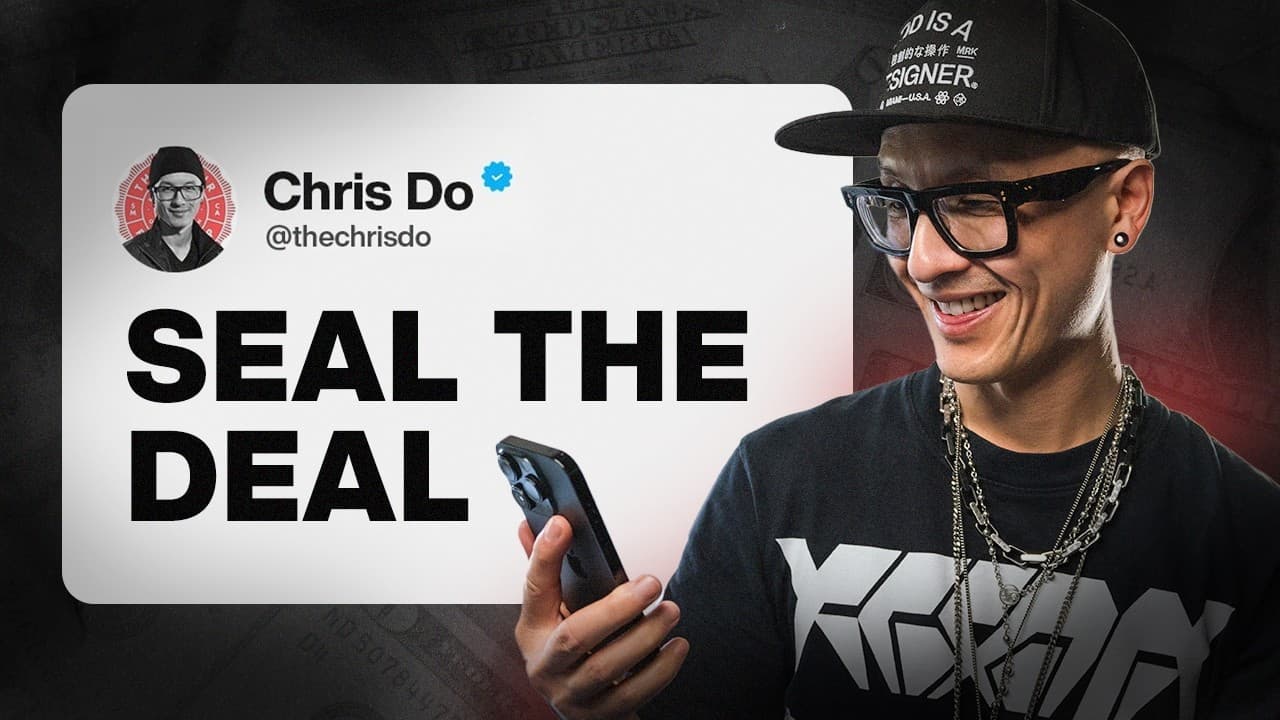
Stop trying to close clients and start diagnosing whether they have a problem you can solve. Ask questions, connect the price to the client's desired outcome and cost of inaction, and charge for value rather than hours worked. Efficient delivery should command more value when it saves the client time, not reduce your compensation.
Transcript
I find that people who try to sell who try to close who they're not really trying to help me it pushes me away it makes me to lose trust and if that's what's happens what what you'll find out is the harder you try to sell the fewer clients you get if we walk around we have this impression that to sell is to be like a snake then we're not going to w... Read More
Key Insights
- Sales is a process of diagnosing before prescribing. Asking questions reveals whether a real problem exists, eliminates incorrect assumptions, and helps determine whether the creative's services are suitable before any solution, partnership, or price is proposed.
- Pushy closing behavior is harmful because clients can sense a seller's agenda. When people feel that someone is trying to close them instead of helping them, fear rises, trust falls, and stronger selling pressure can produce fewer clients.
- Service is the alternative to aggressive selling. A creative can replace the goal of closing a job with the goal of understanding the client and being useful, which changes the conversation from a rehearsed pitch into a collaborative assessment.
- Hourly pricing punishes speed and expertise. If excellent work takes five minutes instead of several months, the client receives the benefit sooner and can go to market sooner, yet time-based billing would compensate the efficient expert less.
- Client time is the relevant measure of value. The important question is not merely how long the creative works, but how much delay, stress, or lost opportunity the client avoids when the problem is solved quickly.
- The cost of inaction provides context for an investment. When poor sales or failure to reach the right audience could cost a company millions in lost opportunity, a proposed £2,000 solution may be disproportionate to the problem.
- Stating the price first can anchor the conversation around the provider's actual business model. The example establishes that branding work typically begins between £20,000 and £50,000, rather than trying to squeeze the same service into a £2,000 budget.
- Unselling demonstrates confidence and protects fit. Telling a prospect that another provider may complete the requested work for less reduces pressure, preserves the stated price, and leaves the prospect free to return after considering other options.
Install to Summarize YouTube Videos and Get Transcripts
Explore YouTube Video Summarizer or Get YouTube Transcript Extractor
Questions & Answers
Q: How do you sell creative services without being pushy?
Sell creative services by replacing the goal of closing with the goal of serving. Begin with questions about what the client wants to accomplish, what is currently failing, and whether a problem actually exists. Do not lead with credentials, capabilities, or a partnership pitch. Once the situation is understood, explain only the solution that fits, or acknowledge that another provider may be more appropriate.
Q: Why should a salesperson ask questions before pitching?
Questions allow a salesperson to diagnose the client's condition before recommending a solution. The transcript compares this process to a doctor eliminating possibilities through questioning. Without that discovery, a creative cannot know whether a problem exists, what causes it, or whether the proposed service is relevant. Pitching first makes the interaction feel agenda-driven and can cause the prospective client to lose trust.
Q: Why does hourly pricing punish efficient creative work?
Hourly pricing ties compensation to how long the provider works, so a skilled creative who reaches the right answer quickly may earn less than someone who takes longer. That logic conflicts with the client's interest in receiving excellent work sooner. If a logo is loved after five minutes, the speed can make it more valuable because the client saves time and can go to market immediately.
Q: How should creatives measure the value of their work?
Creatives should consider the client's time rather than measuring only their own production hours. The relevant factors include how urgently the client needs the result, how much time the solution saves, and what the unresolved problem is costing in stress or lost opportunity. A fast, effective result can carry greater value because it lets the client return attention to running the business.
Q: How can the cost of inaction support value-based pricing?
Ask what will happen if the client does not solve the problem and what opportunities may be lost. In the example, inadequate sales and failure to reach the right audience could cost millions, making a £2,000 budget appear disproportionate. The price should not equal the entire loss, since that would only produce a break-even result, but a reasonable percentage can frame an appropriate investment.
Q: Should a creative state the price before the client does?
The sales lesson presented argues that the person who states the price first wins, contrary to the common habit of waiting so the other party cannot be underbid. A creative can state a normal starting range clearly, as in the £20,000 to £50,000 branding example. This establishes realistic expectations and exposes a budget mismatch before unnecessary negotiation or project planning.
Q: What should you do when a client's budget is too low?
Explain calmly that you cannot reconcile the requested work with the available budget, then clarify the range at which your services normally begin. You can suggest that another provider may deliver what the client wants for less and invite the client to return after exploring alternatives. This approach avoids discounting, preserves goodwill, and keeps the original price available if the prospect comes back.
Q: Why can trying harder to close result in fewer clients?
Trying harder to close can reveal a clear seller-centered agenda rather than a genuine effort to help. The transcript says this pressure pushes people away, creates fear, and causes them to lose trust. A service-centered conversation has the opposite focus: determine whether a problem exists, understand its importance, and assess whether the offered solution is suitable before asking for a commitment.
Summary & Key Takeaways
-
Effective sales begins with service rather than persuasion. A creative should ask diagnostic questions, listen carefully, and determine whether the client has a meaningful problem that can be solved. Pitching credentials before understanding the situation makes clients feel sold to, weakens trust, and prevents an accurate recommendation.
-
Hourly pricing creates a conflict between efficiency and compensation. If a creative produces an excellent result quickly, billing by time makes that expertise appear less valuable. A stronger approach considers the client's saved time, urgency, desired outcome, business opportunity, and potential cost of leaving the underlying problem unresolved.
-
Confident pricing requires stating an appropriate range, resisting mismatched budgets, and remaining willing to refer the client elsewhere. A small proposed budget may be disproportionate when the unresolved problem threatens major sales or opportunities. Discussing consequences helps both parties evaluate whether the investment reasonably matches the importance of the goal.
Read in Other Languages (beta)
Share This Summary 📚
Summarize YouTube Videos and Get Video Transcripts with 1-Click
Try YouTube Summary with ChatGPT & Claude or YouTube Transcript Generator
Explore More Summaries from The Futur 📚




Summarize YouTube Videos and Get Video Transcripts with 1-Click
Try YouTube Summary with ChatGPT & Claude or YouTube Transcript Generator