How to trap 100 players in Hoplite UHC battles
TL;DR
The video demonstrates using a sequence of concealed traps to control a crowd in a Hoplite UHC battle. It shows distracting opponents, luring them into pits and knockback sections, and finally eliminating the remaining players with a combination of strategic play and crowd manipulation. The method relies on planning, timing, and exploiting hidden elements in the arena.
Transcript
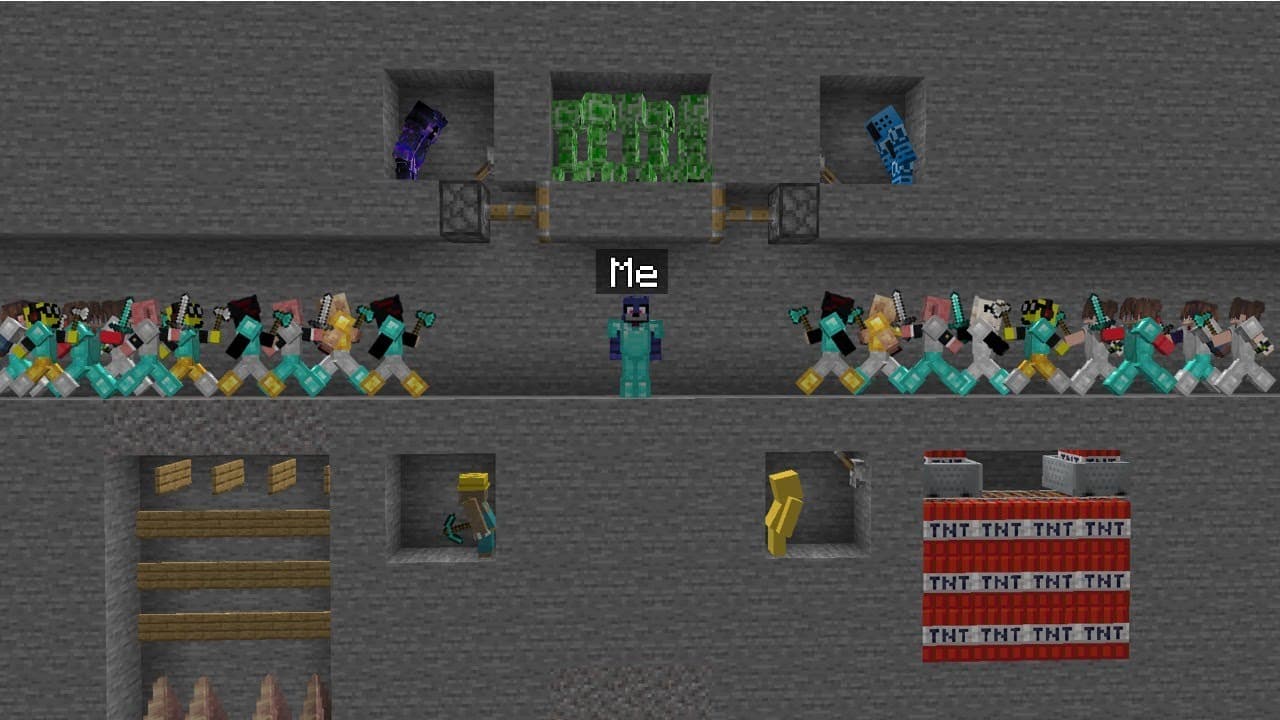
this is me and I'm currently running from 100 players who want to kill me well actually only 90 of them want to kill me because 10 of these players are secret moles that I hired to build traps for me this video is full of insane traps but will it be enough for me to win the 1 V1 100 watch till the end to find out I decided to teleport into a crowd ... Read More
Key Insights
- The host hides a trap behind a gray glass pane to create an unseen pit that catches unsuspecting players.
- The traps are designed to be triggered by crowd movement, forcing players into chokepoints or dangerous areas.
- The second trap involves a large pit created by collaborating moles to maximize area denial and damage.
- A knockback stick is used to push multiple players into hazards, increasing kill potential.
- There is a planned retreat between traps to allow new crowds to form and avoid immediate counteraction.
- The third trap section includes a hidden nuke like device intended to disrupt the crowd without needing to manually kill all players.
- The video shows rapid crowd management, directing players toward the next trap rather than pursuing them individually.
- The finale relies on a deception tactic where the host pretends a helmet or boots have broken to provoke a chase and separate the crowd.
- More videos from this channel:
- More from this channel: JudeLow
Install to Summarize YouTube Videos and Get Transcripts
Explore YouTube Video Summarizer or Get YouTube Transcript Extractor
Questions & Answers
Q: How to set up hidden traps in Hoplite UHC battles
Hidden traps in Hoplite UHC battles require careful placement and a plan for concealment. The strategy uses features like transparent panes to obscure danger, tactical chokepoints to limit movement, and timing to lure players into hazards. Building a sequence of traps allows for crowd control and staged eliminations rather than direct confrontation.
Q: What is the role of crowd control in this Trap heavy playthrough
Crowd control is central to the approach. By drawing players into planned trap zones, the player minimizes direct confrontations and maximizes trap effectiveness. Coordinated movement, bait, and decoy actions help sustain pressure on the crowd while preserving the user’s safety and strategic advantage.
Q: How does the video describe trap sequencing in order
Trap sequencing is described as a step by step progression that begins with a simple hidden trap and escalates to larger crowd affecting mechanisms. Each trap serves as a setup for the next, creating a chain reaction that concentrates players into the most dangerous areas and ensures efficient eliminations.
Q: What is the purpose of using a knockback tool in traps
The knockback tool is used to scatter or reposition multiple players at once, increasing the likelihood that they fall into subsequent hazards. It also helps maintain space around the trap user, reducing the chance that the player will be overwhelmed by the crowd while setting up the next mechanism.
Q: How does deception play a part in the strategy
Deception is used to manipulate player behavior by simulating vulnerability, such as pretending equipment has broken, which tempts others to chase. This buys time to execute further traps or reposition for better outcomes, and it keeps the crowd engaged with the trapper rather than focusing on direct combat.
Q: What happens when traps fail to eliminate players quickly
When traps fail to kill quickly, the plan shifts to secondary mechanisms and crowd reformation. The player relies on remaining traps, reengaging the crowd at another location, or withdrawing briefly to reset the pace, maintaining pressure without letting the crowd overwhelm the trapper.
Q: How important is ally coordination in this video
Allied coordination is crucial for trapping success. Allies can help build traps, lure players toward hazard zones, and provide support during the execution phase. Effective communication increases overall trap efficacy and reduces the risk to the trapper while maintaining momentum.
Q: What is the overall takeaway of the traps approach
The overall takeaway is that crowd oriented trap design can outperform direct confrontation in a large, chaotic match. By controlling the arena, sequencing hazards, and using deception, a single player can achieve significant eliminations, extend survivability, and create a dramatic, strategic victory through planned containment.
Summary & Key Takeaways
-
The video outlines a multi trap strategy where the creator stages the environment with hidden hazards to trap a large group, using disguises and misdirection to maximize casualties.
-
The content emphasizes coordination with in game allies and a strong awareness of crowd behavior to prevent being overwhelmed while executing traps.
-
The climactic sequence relies on reusing older traps and fake vulnerabilities to draw players into final decisive moments.
Read in Other Languages (beta)
Share This Summary 📚
Summarize YouTube Videos and Get Video Transcripts with 1-Click
Try YouTube Summary with ChatGPT & Claude or YouTube Transcript Generator
Explore More Summaries from JudeLow 📚


Summarize YouTube Videos and Get Video Transcripts with 1-Click
Try YouTube Summary with ChatGPT & Claude or YouTube Transcript Generator