How Does the Parker Solar Probe Survive the Sun?
TL;DR
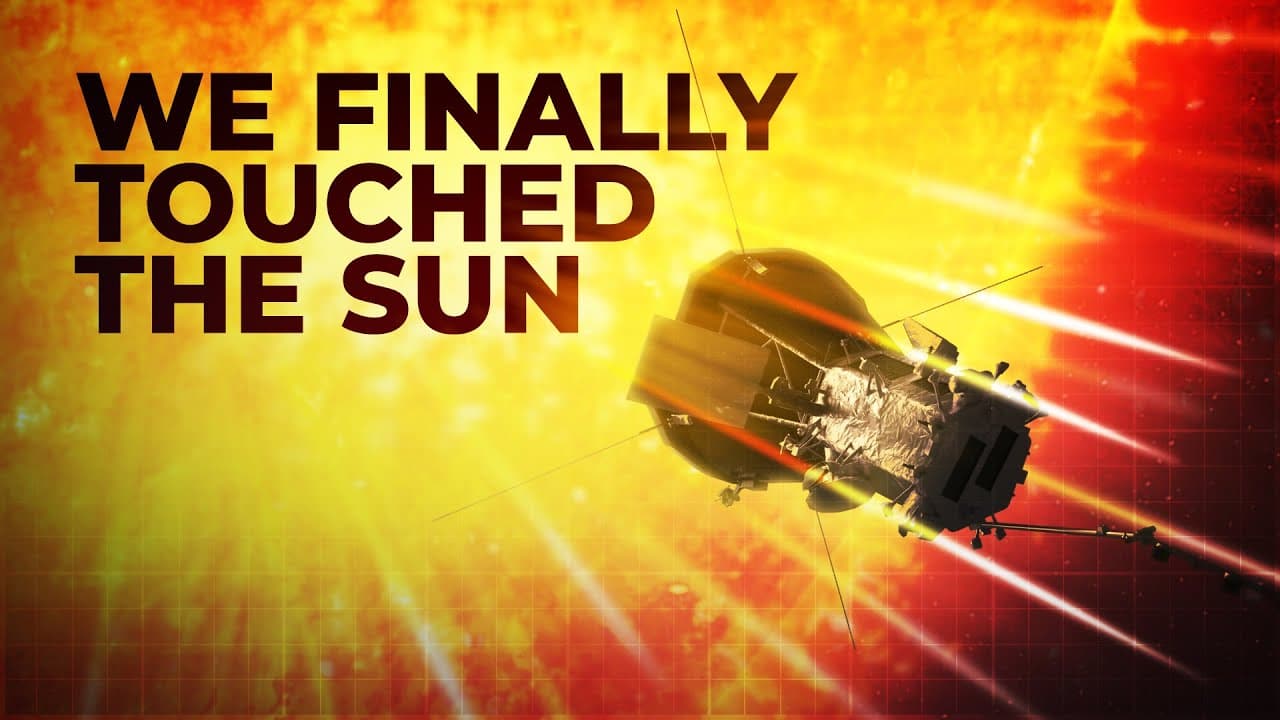
The Parker Solar Probe is the first spacecraft to fly through the sun's atmosphere, providing vital data on the sun's corona. Despite the sun's gravity, reaching it requires significant energy to reduce orbital velocity. The probe uses multiple Venus flybys for gravity assists and features advanced materials like carbon foam and tungsten to withstand extreme temperatures.
Transcript
This episode of Real Engineering is brought to you by the CuriosityStream & Nebula bundle deal. Watch until the end of the video to see a trailer for our upcoming Nebula Original series, The Battle of Britain. For the first time in human history, a spacecraft has flown through the atmosphere of the Sun. Sweeping through the super heated particles ... Read More
Key Insights
- The Parker Solar Probe is the first to fly through the sun's atmosphere, specifically the corona.
- The corona is significantly hotter than the sun's surface, reaching half a million degrees Celsius.
- Reaching the sun requires reducing the spacecraft's orbital velocity, a highly energy-intensive task.
- The probe uses multiple gravity assists from Venus to approach the sun.
- The heat shield is made from carbon foam, providing excellent insulation and thermal stability.
- The solar probe cup measures solar winds and mass ejections, using tungsten for its high-temperature resistance.
- The spacecraft's solar panels are cooled with water to maintain operation during close sun passes.
- Testing of components was done using facilities like the Odeillo Solar Furnace to simulate extreme conditions.
Install to Summarize YouTube Videos and Get Transcripts
Explore YouTube Video Summarizer or Get YouTube Transcript Extractor
Questions & Answers
Q: How does the Parker Solar Probe survive the sun's heat?
The Parker Solar Probe survives the sun’s heat using a carbon foam heat shield that provides excellent insulation and thermal stability. The shield reflects and absorbs the intense heat, allowing the spacecraft to operate in the sun’s corona. Additionally, advanced materials like tungsten are used in exposed instruments to withstand extreme temperatures.
Q: Why is the sun's corona hotter than its surface?
The sun’s corona is hotter than its surface due to a phenomenon not yet fully understood. The corona, located above the sun’s surface, can reach temperatures of half a million degrees Celsius. Scientists believe magnetic fields and charged particles play a role in this heating, a mystery the Parker Solar Probe aims to help solve.
Q: What is the role of Venus flybys in the Parker Solar Probe mission?
Venus flybys are crucial for the Parker Solar Probe mission as they provide gravity assists that help reduce the spacecraft’s orbital velocity around the sun. This maneuver allows the probe to get closer to the sun by using Venus’s gravity to adjust its trajectory and speed, compensating for the high energy required to approach the sun.
Q: What materials are used in the Parker Solar Probe's construction?
The Parker Solar Probe is constructed using advanced materials designed to withstand extreme conditions. The heat shield is made from carbon foam, known for its insulation properties. Tungsten is used in the solar probe cup due to its high-temperature resistance. Niobium C-103 alloy is used for electrical components exposed to the sun’s heat.
Q: How are the Parker Solar Probe's solar panels protected from heat?
The Parker Solar Probe’s solar panels are designed to retract partially and are cooled with water to prevent overheating. During close approaches to the sun, only smaller secondary panels remain exposed, and water is pumped through these panels to radiators, dissipating heat and ensuring the spacecraft continues to receive power.
Q: What testing methods were used for the Parker Solar Probe?
Testing for the Parker Solar Probe involved simulating extreme solar conditions using facilities like the Odeillo Solar Furnace, which can reach temperatures over 3500 degrees Celsius. Components such as the heat shield and faraday cup were exposed to these conditions to ensure they could withstand the sun’s heat. Particle accelerators were used to simulate solar wind conditions.
Q: What scientific instruments are onboard the Parker Solar Probe?
The Parker Solar Probe is equipped with several scientific instruments to study the sun. Key among them is the solar probe cup, a faraday cup that measures solar winds and particle ejections. Magnetic field measuring instruments with antennas extend beyond the heat shield, and a wideview imager captures visual data of the sun’s corona.
Q: What is the significance of the Parker Solar Probe's mission?
The Parker Solar Probe’s mission is significant because it provides unprecedented data on the sun’s corona, helping scientists understand why it is hotter than the surface. The probe’s close proximity to the sun allows for detailed study of solar winds and magnetic fields, contributing to our knowledge of solar physics and potentially improving space weather predictions.
Summary & Key Takeaways
-
The Parker Solar Probe's mission is to gather data on the sun's corona, which is hotter than its surface. Achieving this requires reducing the probe's orbital velocity, a task made possible through multiple Venus flybys. The probe's design incorporates advanced materials like carbon foam and tungsten to withstand extreme temperatures.
-
The spacecraft uses a carbon foam heat shield to protect itself from the sun's intense heat. The solar probe cup, a key instrument, measures solar winds and mass ejections. It is made from tungsten, chosen for its ability to withstand high temperatures without melting.
-
To maintain power near the sun, the probe's solar panels are partially retracted and cooled with water. Testing of these components was conducted using solar furnaces and particle accelerators to simulate the harsh conditions they will face in the sun's atmosphere.
Read in Other Languages (beta)
Share This Summary 📚
Summarize YouTube Videos and Get Video Transcripts with 1-Click
Try YouTube Summary with ChatGPT & Claude or YouTube Transcript Generator
Explore More Summaries from Real Engineering 📚




Summarize YouTube Videos and Get Video Transcripts with 1-Click
Try YouTube Summary with ChatGPT & Claude or YouTube Transcript Generator