Is This the Last Big Wealth Opportunity for the Next 10 Years or Much Longer?
TL;DR
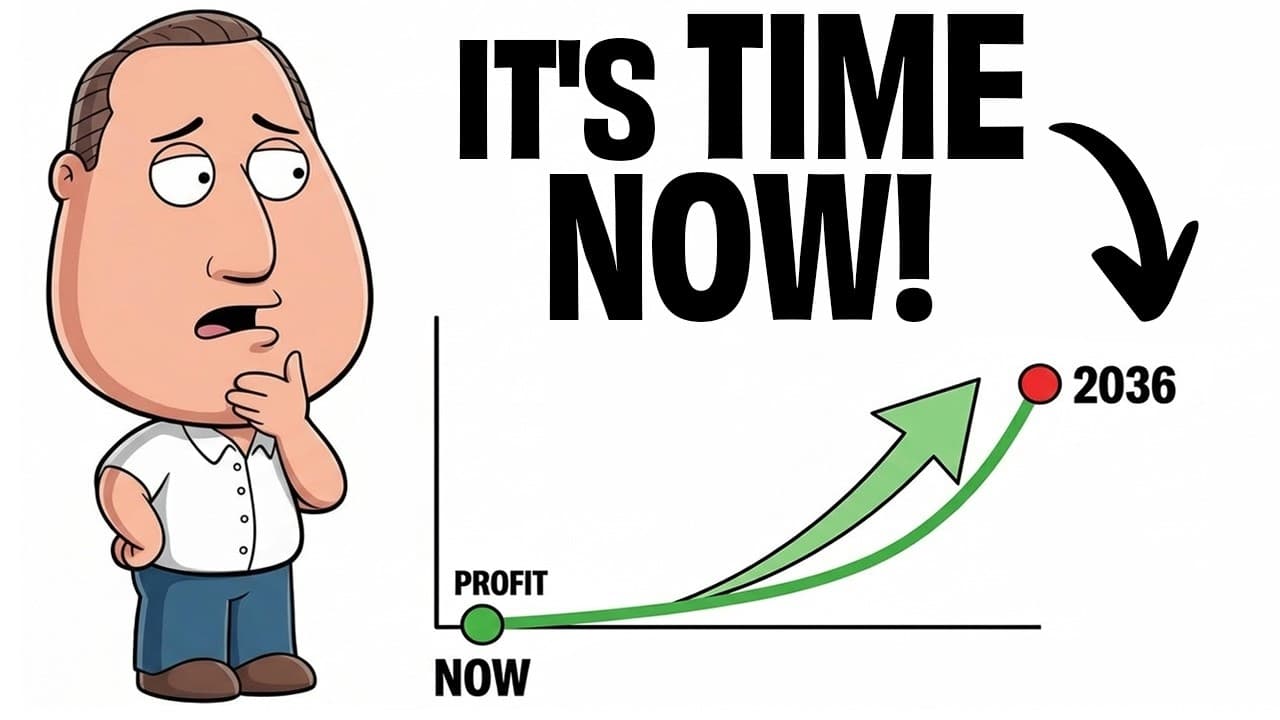
Market crashes can create major long-term wealth opportunities for investors who keep buying instead of moving to cash. Starting with $5,000 in March 2009, one investor who contributed $500 monthly had over $210,000 by 2020, while the investor who moved to cash had roughly $18,000. Read on for the historical conflict data, market indicators and risks behind this argument.
Transcript
Two guys, same age, 27, same city, same income, both pulling around $58,000 a year, both opened a brokerage account for the first time in the same week, March of 2009, each with $5,000 they'd scraped together. Both had read the same personal finance article about investing in your 20s. Both were terrified. The market had just collapsed 57%. The new... Read More
Key Insights
- Market downturns historically precede significant recoveries, offering buying opportunities.
- Staying invested during financial crises often results in capturing market recovery gains.
- Fear-based investment decisions can lead to missing out on market rebounds and growth.
- Investing consistently, even during market lows, maximizes long-term returns.
- Historical data shows that the market recovers from military conflicts quickly.
- The S&P 500 has shown positive returns in 94.1% of rolling 10-year periods.
- Investors who sell during downturns often underperform the market significantly.
- Investing in broad market ETFs and quality companies during downturns is recommended.
- "By 2020, guy number one had roughly $18,000." (0:49)
- "The market bottomed in an average of 13 trading days and fully recovered in an average of 28 trading days." (6:22)
- "The people who moved to cash captured none of it." (6:43)
Install to Summarize YouTube Videos and Get Transcripts
Explore YouTube Video Summarizer or Get YouTube Transcript Extractor
Questions & Answers
Q: How can investors leverage a market crash to build wealth?
The transcript argues that investors should remain invested and continue making regular purchases when markets fall. Its example compares two people who each started with $5,000 in March 2009, but the one who kept investing $500 monthly had over $210,000 by 2020, while the one who moved to cash had roughly $18,000.
Q: What happened to the two investors who started investing in March 2009?
Both investors were 27, earned around $58,000 a year and opened brokerage accounts with $5,000. By 2020, the investor who moved to cash had roughly $18,000, while the investor who continued contributing $500 monthly had over $210,000.
Q: How have military conflicts historically affected the S&P 500?
RBC Wealth Management analyzed 20 major military conflicts since 1950. Across those conflicts, the S&P 500 declined by an average of 6%, bottomed after an average of 13 trading days and fully recovered after an average of 28 trading days.
Q: Why does moving to cash during a market crash create a risk?
Moving to cash can cause an investor to miss a recovery that begins before uncertainty disappears. The transcript says investors who stayed invested during past conflict-driven declines captured the recovery, while those who moved to cash did not.
Q: What market conditions does the transcript describe?
The S&P 500 was down 4.6% in its worst quarter since 2022, while the Nasdaq had fallen more than 10% from its highs. Microsoft was down more than 20% year to date, Tesla more than 21%, and the VIX had risen from the mid-teens to over 35.
Q: How did the conflict affect oil prices?
Oil was at $72 per barrel before the war, and Brent crude reached $118 by the end of March. The transcript describes that as a 63% increase in one month and the biggest monthly move since 1988.
Q: How likely does the transcript say stagflation is?
The transcript says economists who modeled the situation estimated a stagflation probability of 20% to 40%. It describes that risk as elevated but not the base case.
Q: Why does the transcript argue that current conditions differ from the 1970s?
It contrasts 1974 inflation of 10.1%, unemployment of 9% and contracting GDP with current figures of 2.7% inflation, 4.2% unemployment and positive GDP. It also says the US is now one of the world's largest oil producers and that productivity is growing at more than 4% annually.
Summary & Key Takeaways
-
Investing during market downturns can lead to significant wealth accumulation. Historical data shows that staying invested and continuing to buy during market lows often results in substantial returns. Fear-driven decisions to move to cash can result in missing out on recovery gains. The current market conditions present a rare opportunity for long-term investment growth.
-
Historical patterns indicate that the market typically recovers quickly from downturns caused by military conflicts. The S&P 500 has shown positive returns in 94.1% of rolling 10-year periods. Investors who maintain their investments during these times often capture the recovery gains, while those who sell tend to underperform.
-
Investors are advised to stay invested and continue buying during market lows to maximize long-term returns. Investing in broad market ETFs and quality companies can provide substantial growth opportunities. Fear-driven decisions to sell during downturns often lead to missing out on market rebounds and potential wealth growth.
Read in Other Languages (beta)
Share This Summary 📚
Summarize YouTube Videos and Get Video Transcripts with 1-Click
Try YouTube Summary with ChatGPT & Claude or YouTube Transcript Generator
Explore More Summaries from Nick Invests 📚





Summarize YouTube Videos and Get Video Transcripts with 1-Click
Try YouTube Summary with ChatGPT & Claude or YouTube Transcript Generator