Asianometry and Dylan Patel: How Does the Semiconductor Industry Actually Work?
TL;DR
The semiconductor industry runs on stacked layers of specialists, so no single stolen blueprint lets a newcomer catch up: Dylan Patel argues China has had ASML's files for over five years and still finds the machines very difficult to build. Asianometry's Jon Y traces China's real gains to Taiwanese talent instead, from Richard Chang's move to Shanghai to Liang Mong Song's exits. Read on for what that implies for export controls, Huawei, and Taiwan risk.
Transcript
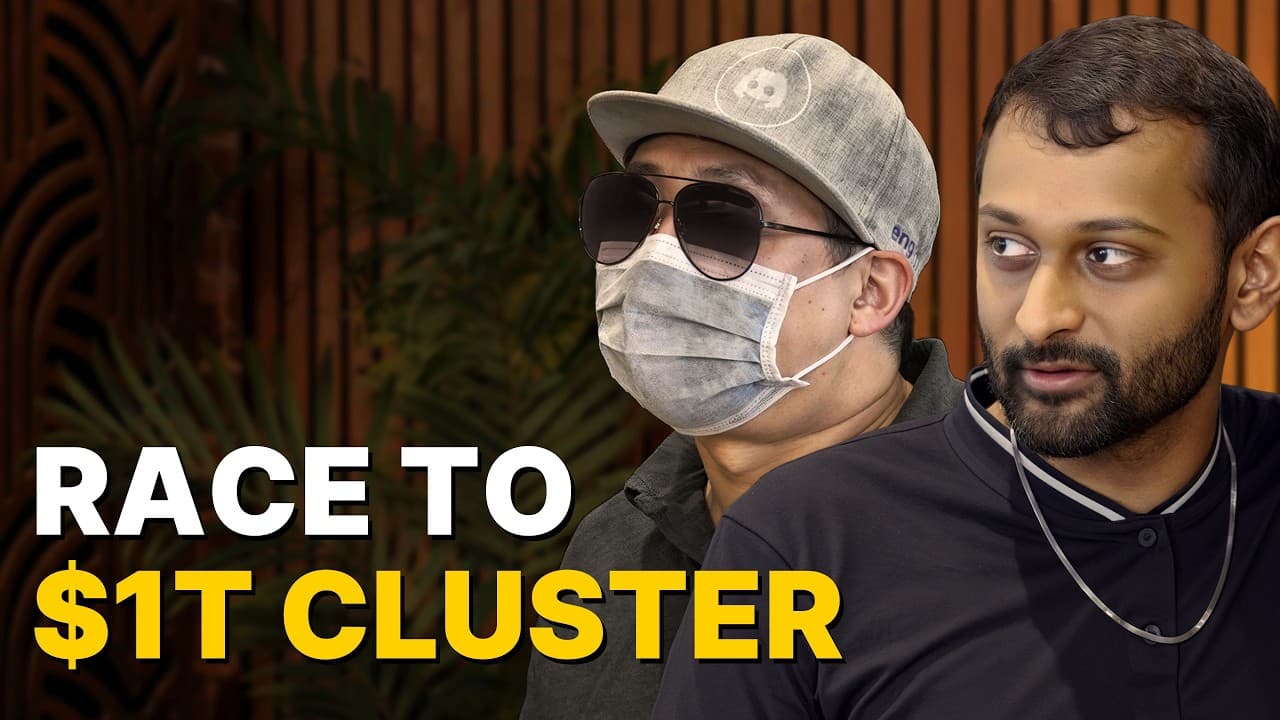
Today, I'm chatting with Dylan Patel, who runs SemiAnalysis, and Jon, who runs the Asianometry YouTube channel. Does he have a last name? No, I do not. No, just kidding. Jon Y. Why is it only one letter? Because Y is the best letter. Why is your face covered? Why not? No, seriously why is it covered? Because I'm afraid of looking at myself gett... Read More
Key Insights
- The semiconductor industry is highly specialized, with each layer requiring deep expertise.
- China's centralization of compute resources could significantly impact global semiconductor dynamics.
- Export controls and sanctions play a crucial role in limiting China's semiconductor capabilities.
- Huawei's intense company culture is seen as a competitive advantage in engineering and innovation.
- Vertical integration in the semiconductor industry is limited due to historical specialization.
- The economic viability of advancing process nodes like 2nm is increasingly challenged.
- A hypothetical Taiwan invasion would severely disrupt global semiconductor supply chains.
- AI advancements are driving demand for new process nodes and architectural innovations.
- More videos with Dylan Patel:
Install to Summarize YouTube Videos and Get Transcripts
Explore YouTube Video Summarizer or Get YouTube Transcript Extractor
Questions & Answers
Q: How has China actually acquired advanced semiconductor know-how from Taiwan?
Dylan Patel says the main channel is people, not files. TSMC employees do not make absurd amounts of money, so they can be poached with the offer of a much better life, and a lot of SMIC's staff are Taiwanese nationals, including many of the really good ones high up. Jon Y adds that Richard Chang, after selling Worldwide Semiconductor to TSMC and working there eight or nine months, went to Shanghai and recruited a whole conga line of Taiwanese engineers. Generally, the acceleration points in China's semiconductor industry come from talent flowing out of Taiwan.
Q: Who is Liang Mong Song and why does he matter to SMIC and Samsung?
Liang Mong Song was one of TSMC's top R&D people, second or third in line, with roughly 285 patents. Jon Y describes him as a genius who does not care about people or business and only wants to take the technology to its limit. After losing an internal power game for the head of R&D position and being demoted, he left for Samsung and took TSMC talent with him, and later moved on to SMIC.
Q: If you could steal one megabyte of information, should it come from TSMC, NVIDIA, or OpenAI?
Dylan Patel's answer is that no single document is enough because you have to stack every layer, and AI growth is stressing all of them at once. He notes China has been hacking ASML for over five years and in his view already has those files, yet the equipment is still a very difficult thing to build. The same holds for fab recipes and model secrets: the question is how many secrets a rival already has but has not deployed, implemented, or organized.
Q: Why don't top fab engineers command much higher wages if their knowledge is so valuable?
Because the work is very compartmentalized, so no individual holds the whole recipe and the market does not price them as irreplaceable. Jon Y notes that back in the 2000s, before SMIC got big, the industry was much more open and flat. That changed after Liang Mong Song's moves, the Samsung issues, and SMIC's rise.
Q: Why is Huawei considered so competitive despite sanctions?
Huawei's intense company culture, often described as struggle, is treated as a competitive advantage. It pushes engineering excellence and continuous improvement, which lets Huawei outcompete Western firms even under heavy geopolitical constraints. A key part of its edge is innovating on less advanced process nodes rather than waiting for leading-edge access.
Q: Do export controls actually work against China's chip industry?
Export controls restrict access to advanced equipment and technologies, which directly limits production capability, and they remain a major lever in the geopolitical contest. Their effectiveness is debated, because pressure can also push the targeted country to build its own domestic industry. The conversation also notes that controls do not stop knowledge moving through people and hacking, as with the long-running intrusions into ASML.
Q: Is advancing to nodes like 2nm still economically worth it?
The economics are increasingly hard to justify because development and production costs keep climbing while traditional scaling delivers diminishing returns. Companies now have to defend the return on investment for each new node rather than assuming it. Demand from AI is what keeps the case alive, since it shifts where the value of extra compute and efficiency shows up.
Q: What would a Taiwan invasion do to the global semiconductor supply chain?
It would severely disrupt supply, because Taiwan is the critical hub of advanced manufacturing. The immediate effect would be a major market crash followed by shortages of components across industries such as automotive and consumer electronics. How bad the long run gets depends on how quickly the rest of the industry can reconfigure supply chains elsewhere.
Summary & Key Takeaways
-
The semiconductor industry is characterized by a high degree of specialization and stratification, with each layer of production requiring distinct expertise. This complexity makes coordination and innovation within the industry challenging yet essential for progress.
-
China's efforts to centralize compute resources and the impact of export controls are significant factors shaping the global semiconductor landscape. These factors influence not only production capabilities but also geopolitical dynamics.
-
The industry's future is closely tied to AI advancements, which drive demand for new process nodes and architectural innovations. Companies must navigate economic challenges and geopolitical tensions to continue scaling and innovating.
Read in Other Languages (beta)
Share This Summary 📚
Summarize YouTube Videos and Get Video Transcripts with 1-Click
Try YouTube Summary with ChatGPT & Claude or YouTube Transcript Generator
Explore More Summaries from Dwarkesh Patel 📚





Summarize YouTube Videos and Get Video Transcripts with 1-Click
Try YouTube Summary with ChatGPT & Claude or YouTube Transcript Generator