Why AI Power Demand Is Not an Infrastructure Bubble
TL;DR
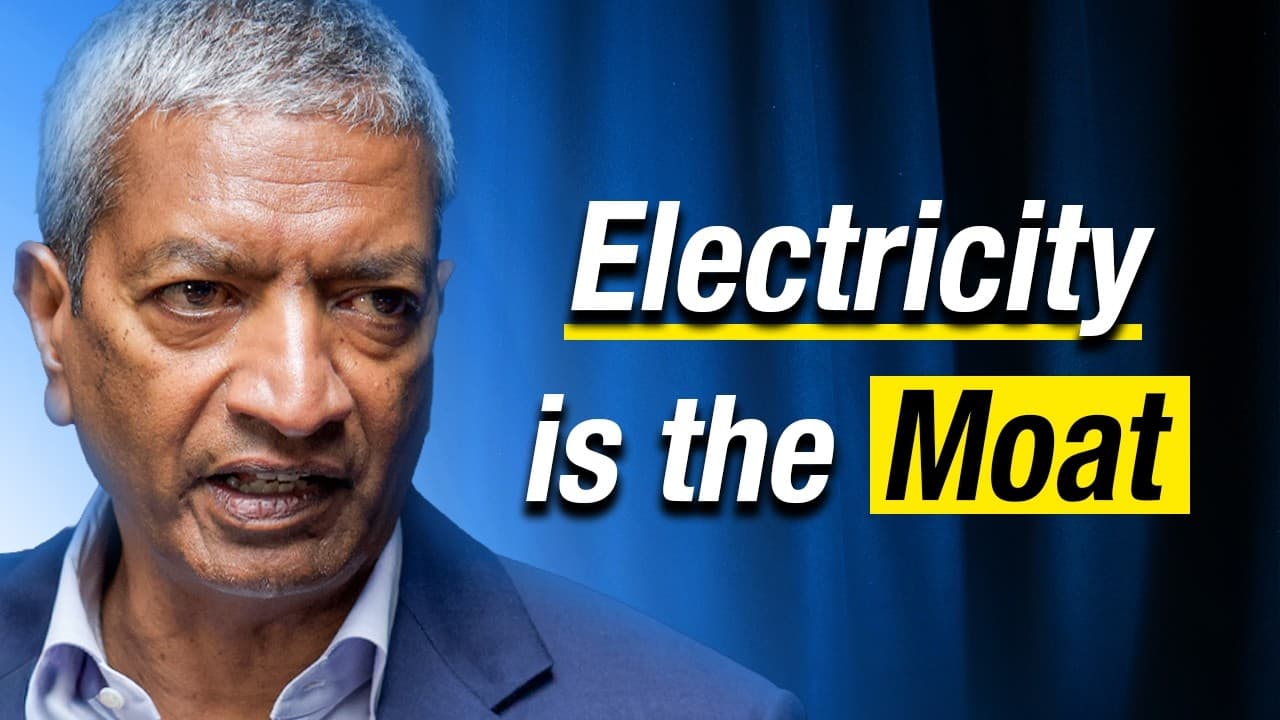
AI-driven electricity demand reflects a lasting technological shift, not merely movements in stock prices or infrastructure spending. Bloom Energy’s experience suggests that distributed power, regulatory reform, energy sovereignty, and close attention to customers and frontline workers will be critical as data centers expand and electricity becomes a central constraint on AI growth.
Transcript
To lose is something I simply cannot contemplate. There's nothing that I do where I put effort, I put time, and I think of failure as an option. Today, KR Shridha, founder and CEO of Bloom Energy, joins us in the studio. Now, KR's journey is wild. Former NASA rocket scientist who worked on Mars missions before founding the energy company that is Bl... Read More
Key Insights
- AI is described as a revolution whose accelerating growth makes electricity a key limiting factor. Sridhar separates enduring technological and infrastructure change from fluctuations in markets and stock prices, arguing that these categories should not be treated as evidence of the same kind of bubble.
- Bloom Energy’s data-center strategy dates back to 2001, when Sridhar’s investor presentation depicted a Bloom box powering a disconnected data center and using waste heat for cooling. The present surge in interest therefore matches the company’s original long-term vision rather than representing a recent strategic invention.
- Risk mitigation is Sridhar’s primary response to the possibility of failure. His experience with Mars missions taught him to identify the largest threats in advance, develop multiple workarounds, and accept that setbacks can occur while focusing on the ability to recover.
- Resilience is strengthened by learning from difficult experiences without repeatedly reliving them. Sridhar advises looking forward, using the past only to extract lessons, and maintaining the belief that tomorrow can be better than today because that attitude makes hardship easier to manage.
- Manufacturing success requires translating engineering intent into instructions that technicians can execute reliably. Bloom’s early one-off units worked, but later units failed after production expanded because the knowledge held by engineers had not been communicated adequately to the people assembling the systems.
- Empathetic leadership is built through direct contact with every part of a business. Andy Grove urged Sridhar to walk the factory floor, speak with technicians, and discover what they did not understand, showing that operational problems can reflect leadership’s distance from frontline work.
- Customer empathy begins with identifying pain rather than promoting product features. Sridhar argues that companies should ask customers which problems need solving and then design products around those needs, applying the same listening discipline used with frontline employees.
- Energy sovereignty is presented as a democratic principle because distributed power can reduce dependence on institutions that control access. The discussion connects this vision with hydrogen, data-center demand, hyperscalers’ energy roles, energy poverty, and the long-term pursuit of genuine energy independence.
Install to Summarize YouTube Videos and Get Transcripts
Explore YouTube Video Summarizer or Get YouTube Transcript Extractor
Questions & Answers
Q: Why is AI-driven power demand not simply an infrastructure bubble?
AI-driven power demand is presented as part of a secular and enduring technological revolution rather than as a conclusion drawn from stock prices. Sridhar argues that people often confuse markets, company valuations, infrastructure investment, and lasting technological change. Markets can fluctuate, but rapidly expanding AI systems still require electricity, making access to power a fundamental constraint independent of short-term financial movements.
Q: How did Bloom Energy anticipate the power needs of data centers?
Bloom Energy’s data-center concept appeared in Sridhar’s 2001 presentation to Kleiner Perkins and John Doerr. Its summary depicted a Bloom box powering a data center without connection to anything else, while waste heat provided cooling. Sridhar says current data-center customers are finally recognizing that arrangement as the right solution, turning a 25-year expectation into a present commercial opportunity.
Q: How does KR Sridhar manage the risk of failure?
Sridhar manages failure by identifying major threats before they occur and preparing workarounds for each one. He connects this discipline to Mars missions, where outside repair help would not be available after deployment. He accepts that bad events and falls can happen, but concentrates on mitigation, recovery, and getting back up rather than treating a setback as the final outcome.
Q: What advice does KR Sridhar give for recovering from setbacks?
Sridhar advises people to learn from difficult experiences and then direct their attention forward. He compares repeatedly replaying a painful experience to watching the same bad movie again and again. The past should function like a rearview mirror, useful for avoiding repeated mistakes, while the main focus remains on the road ahead and the possibility that tomorrow will improve.
Q: What manufacturing lesson did Andy Grove teach KR Sridhar?
Andy Grove taught Sridhar that the manufacturing problem required direct engagement with the people building the product. Rather than spending the night reviewing binders with advisers, Sridhar needed to walk the floor and ask technicians what they did not understand. Because he knew the technology deeply, Grove believed he could diagnose the failures by combining technical knowledge with frontline observation and listening.
Q: Why did Bloom Energy’s early production units fail?
Bloom’s first one-off units worked well, including systems installed at Google and other locations. Problems emerged when engineers handed the design to manufacturing and assumed it could be reproduced easily. The engineering and design intent had not been translated into sufficiently detailed instructions for technicians who lacked the engineers’ background, so subsequent groups of units failed after reaching the field.
Q: How does empathy improve company leadership and product design?
Empathy improves leadership by helping executives understand the experiences of factory workers, customers, and other participants in the business. Sridhar says frontline employees can reveal information that separates a good company from a great one. With customers, empathy means asking about pain and desired solutions instead of simply describing why a product is impressive, then designing around the answers received.
Q: Why does distributed power matter for energy sovereignty?
Distributed power matters because it can broaden access to electricity and reduce reliance on centralized gatekeepers. Sridhar connects democratized power with genuine democracy, arguing that access should not be restricted by people who hold institutional power. The discussion places this principle within a longer-term vision involving data centers, hydrogen, energy independence, and the claim that energy sovereignty is especially important.
Summary & Key Takeaways
-
KR Sridhar describes building Bloom Energy over 25 years with an unwavering belief that distributed power would eventually become essential to data centers. A 2001 investor presentation already envisioned a Bloom box powering an isolated data center while its waste heat supplied cooling, making the company’s current opportunity a long-anticipated development rather than a sudden pivot.
-
Sridhar’s leadership philosophy combines resilience, risk mitigation, and empathy. His NASA experience taught him to anticipate major failure modes and prepare workarounds. Andy Grove later taught him to investigate manufacturing failures by walking the floor, listening to technicians, and understanding what they lacked instead of relying primarily on binders, executives, or outside experts.
-
The broader discussion frames electricity as a key constraint in the AI revolution and connects distributed generation with energy independence and democratic access to power. It also raises questions about regulation, energy poverty, wealth concentration, government investment, hyperscalers becoming energy companies, hydrogen, and the importance of energy sovereignty relative to model sovereignty.
Read in Other Languages (beta)
Share This Summary 📚
Summarize YouTube Videos and Get Video Transcripts with 1-Click
Try YouTube Summary with ChatGPT & Claude or YouTube Transcript Generator
Explore More Summaries from 20VC with Harry Stebbings 📚




Summarize YouTube Videos and Get Video Transcripts with 1-Click
Try YouTube Summary with ChatGPT & Claude or YouTube Transcript Generator