How to Build a Virtual Assistant with Python and Speech Recognition
TL;DR
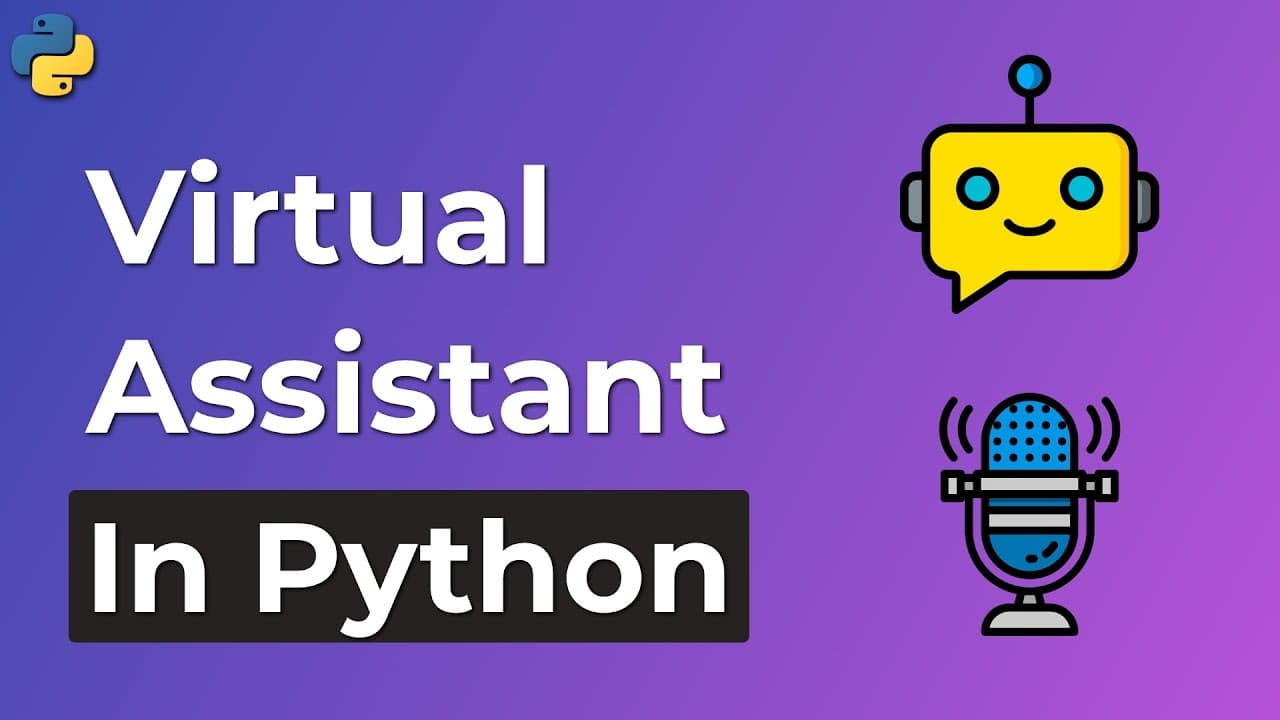
To build a virtual assistant in Python, utilize real-time speech recognition with Pi Audio and websockets, and integrate the OpenAI API for advanced natural language processing. This project guides you through setting up these technologies to create an interactive chatbot capable of understanding and responding to voice commands.
Transcript
welcome to the final project in this one you will learn a bunch of new exciting technologies first of all you will learn how to do real-time speech recognition in python then you will learn how to use the open ai api and build a virtual assistant or chat chatbot and finally you will learn a little bit about websockets and how to use async io in pyt... Read More
Key Insights
- 😯 Real-time speech recognition involves utilizing libraries like Pi Audio and websockets for communication.
- 😯 Assembly AI's real-time speech recognition feature enhances the transcription process over websockets.
- ❓ Integrating the OpenAI API with GPT-3 enriches the virtual assistant's capabilities for natural language processing tasks.
Install to Summarize YouTube Videos and Get Transcripts
Explore YouTube Video Summarizer or Get YouTube Transcript Extractor
Questions & Answers
Q: What technologies are used in the final project?
The final project incorporates real-time speech recognition in Python, the OpenAI API, and websockets with async IO for building a virtual assistant or chatbot.
Q: How is real-time speech recognition implemented in Python?
Real-time speech recognition is achieved by using Pi Audio for microphone recording, websockets for communication, and Assembly AI's feature over websockets for transcription.
Q: What steps are involved in setting up real-time speech recognition?
Setting up real-time speech recognition involves importing necessary libraries, defining the URL for websockets connection, creating functions to send and receive data, and utilizing Assembly AI for transcription.
Q: How can the OpenAI API be used to enhance the virtual assistant?
The OpenAI API is integrated to leverage GPT-3 for natural language processing tasks, allowing the virtual assistant to provide intelligent responses based on user prompts.
Summary & Key Takeaways
-
Learn real-time speech recognition using Python with Pi Audio and websockets.
-
Utilize the Assembly AI real-time speech recognition feature over websockets.
-
Integrate OpenAI API to build a virtual assistant/chatbot with real-time speech recognition.
Read in Other Languages (beta)
Share This Summary 📚
Summarize YouTube Videos and Get Video Transcripts with 1-Click
Try YouTube Summary with ChatGPT & Claude or YouTube Transcript Generator
Explore More Summaries from AssemblyAI 📚

Summarize YouTube Videos and Get Video Transcripts with 1-Click
Try YouTube Summary with ChatGPT & Claude or YouTube Transcript Generator