How to Scale a Business Before Optimizing It

TL;DR
Prioritize building a product customers love and achieving meaningful scale before spending excessive attention on margins, suppliers, taxes, or exit planning. Modern founders can outsource manufacturing, logistics, talent, and software infrastructure, allowing them to focus on the product, brand, marketing, culture, and customer experience that create demand and earn consumer mind share.
Transcript
It's easy to settle for a good life because a good life is comfortable. It's a good life. It doesn't suck. But no one really talks about what it takes to build a great life. And that is what I think I am dedicating my life to at this point. It's like, what does it really take to build a great life? And I don't think I'm there yet. But I know that B... Read More
Key Insights
- Scale is more important than early financial optimization because a high profit percentage produces limited value when sales remain small. Founders should first prove that customers want the product while confirming that a realistic path to better economics exists once the business becomes larger.
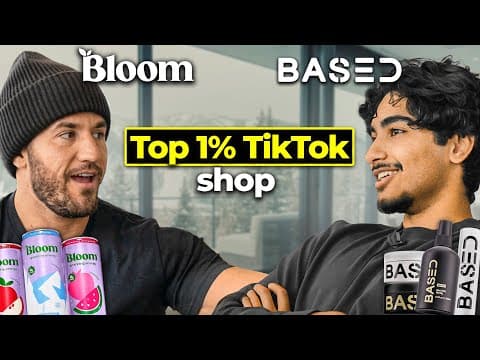
- A strong customer experience is the central early priority. Bloom initially emphasized timely delivery, attractive packaging, product effectiveness, and good taste, while postponing supplier, manufacturer, and shipping renegotiations for roughly the first three years.
- Financial expertise does not have to reside entirely within the founder. A founder with a basic understanding can surround themselves with one or more financially literate people who manage details that fall outside the founder's strongest capabilities.
- Modern infrastructure is increasingly outsourced through third-party manufacturers, global talent, consultants, content creators, logistics partners, and software. This allows entrepreneurs to start and scale companies without owning the warehouses, trucks, factories, office space, and large internal teams once considered necessary.
- Lower barriers to entry have raised the standard required to win. Since tools and outsourced services make launching easier, competitive advantage increasingly comes from understanding consumer behavior, building demand, creating a strong brand, and delivering a compelling product experience.
- Owning infrastructure can make a business more complex and harder to scale. Bloom uses multiple independently owned manufacturers, including more than ten producing its energy drinks, so the company can expand capacity without owning production facilities itself.
- Consumer mind share has become more valuable than factory ownership. Brands can delegate manufacturing and distribution while focusing on why people buy, what they aspire to become, why they share products, and how cultural momentum forms around an offering.
- Business formulas cannot be copied with predictable results because every company's outcome reflects unique timing, culture, founder personality, taste, obsession, and risk tolerance. Principles may transfer, but another founder's exact playbook resembles previously winning lottery numbers rather than a guaranteed method.
- More videos from this channel:
- More from this channel: Greg Lav
Install to Summarize YouTube Videos and Get Transcripts
Explore YouTube Video Summarizer or Get YouTube Transcript Extractor
Questions & Answers
Q: How should a founder prioritize scale and profitability?
A founder should first create something useful, launch it, improve it, and establish that customers genuinely want it. Early cost optimization should not consume the attention needed for product quality and growth. Profitability still matters, so the business needs a plausible path toward better economics, but detailed optimization becomes more consequential after sales have reached meaningful scale.
Q: What should an early-stage product company focus on first?
An early-stage product company should focus on whether customers love the product and receive a strong overall experience. The priorities described include on-time delivery, attractive packaging, product effectiveness, and good taste. These factors help establish demand and trust. Negotiating every supplier, manufacturing, and shipping cost can wait until the company has created meaningful customer interest and sales volume.
Q: Does a founder need advanced financial expertise?
A founder does not necessarily need advanced financial expertise, but they should have a basic understanding of business finances and recognize their limitations. The recommended approach is to surround the founder with one or more financially literate people. Those specialists can support sound decision-making while the founder concentrates on building the product, team, brand, and customer experience.
Q: How can entrepreneurs start businesses without owning infrastructure?
Entrepreneurs can rent or outsource much of the infrastructure that earlier companies had to own. Third-party manufacturers can make products, logistics providers can move them, global talent and consultants can supply expertise, content creators can support marketing, and software can power online sales. The founder's role becomes coordinating these resources while developing demand, differentiation, and customer loyalty.
Q: Why can owning factories and trucks hinder business growth?
Owning factories, trucks, and related infrastructure can add complexity and make expansion harder. A company that works with independent manufacturers can add production partners as demand grows instead of building every facility itself. Bloom follows this approach with multiple third-party manufacturers, including more than ten for energy drinks, allowing attention to remain on consumers, products, marketing, culture, and brand development.
Q: What creates competitive advantage when infrastructure is outsourced?
Competitive advantage comes from understanding how and why people buy, why they share products, what they aspire to become, and how momentum develops around a brand. When competitors can access similar manufacturers, logistics services, talent, and software, owning physical infrastructure becomes less distinctive. Product quality, customer experience, marketing, culture, and consumer mind share become the more important sources of value.
Q: Why is copying a successful business formula unreliable?
Copying a successful company's visible tactics is unreliable because observers cannot reproduce all the conditions behind its outcome. Timing, cultural circumstances, founder personality, taste, obsession, and risk tolerance can materially shape results. Another founder's playbook may provide useful principles, but repeating the same actions does not guarantee the same outcome because the underlying context has changed.
Q: When should a startup optimize suppliers and operating costs?
A startup should pursue detailed supplier and operating-cost optimization after it has evidence of demand and enough scale for those improvements to matter, provided it already understands that a path to profitability exists. Bloom did not renegotiate suppliers, manufacturers, or shipping companies for roughly its first three years because customer satisfaction, delivery, packaging, effectiveness, taste, and growth received greater priority.
Summary & Key Takeaways
-
Early-stage founders should concentrate on creating something useful, launching it, improving it, and delivering an excellent customer experience. Financial optimization matters later, but negotiating every cost before proving demand can consume attention that would be better spent making the product effective, appealing, reliable, and capable of reaching meaningful scale.
-
Modern business infrastructure can largely be rented or outsourced through third-party manufacturers, global talent, consultants, content creators, logistics providers, and software. This reduces the need for heavy startup capital and vertical integration. The founder can instead coordinate specialized partners while concentrating internal attention on areas that directly shape customer demand and loyalty.
-
Copying another company's apparent formula is unreliable because its results depended on variables that cannot be reproduced exactly. Timing, cultural conditions, founder personality, taste, obsession, and risk tolerance all affect outcomes. Entrepreneurs should study principles without assuming that another founder's precise tactics constitute a repeatable playbook for success.
Read in Other Languages (beta)
Share This Summary 📚
Summarize YouTube Videos and Get Video Transcripts with 1-Click
Try YouTube Summary with ChatGPT & Claude or YouTube Transcript Generator
Explore More Summaries from Greg Lav 📚





Summarize YouTube Videos and Get Video Transcripts with 1-Click
Try YouTube Summary with ChatGPT & Claude or YouTube Transcript Generator