How to Build a Brand Without Being First

TL;DR
Build a lasting brand by growing a specific community, measuring marketing through immediate search, traffic, and sales changes, and entering proven markets only when the business is prepared. Starting with a narrow audience and expanding into distribution channels competitors ignore can create an early advantage without requiring the company to invent a category or join every platform first.
Transcript
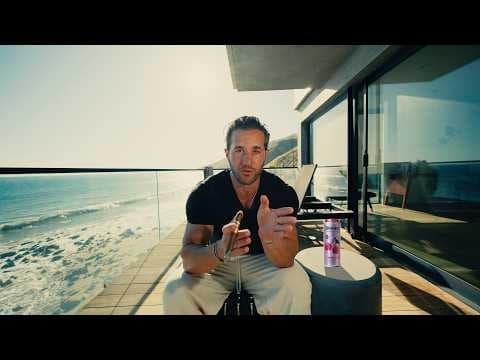
If you are trying to build a brand and you are not just trying to sell a product, you need to make a fundamental change about the marketing that you are deploying. My name is Greg Levia. I'm the co-founder and CEO of Bloom. We are in a floating vessel aka a yacht. >> You can convert someone with an ad. You've converted them on a product. You haven'... Read More
Key Insights
- Community building is the foundation of Bloom's early marketing strategy. The company used paid meme-page posts to attract followers to founder Mari Llewellyn, expecting that people who joined her community would later become interested in products closely associated with her lifestyle.
- A product conversion is not necessarily a lifestyle conversion. Advertising can persuade someone to make one purchase, but building a brand requires a broader relationship in which customers identify with the community, values, and lifestyle surrounding the company's products.
- Sales response is a practical measure of marketing quality for smaller online businesses. Bloom expects effective influencer, affiliate, or advertising activity to produce timely increases in search volume, website traffic, normal conversion activity, and ultimately revenue rather than views alone.
- Hour-by-hour sales data is more informative than daily totals when diagnosing growth. Granular monitoring helps leaders connect spikes with specific posts, advertisements, or outside events and distinguish the effects of their own marketing from demand generated by competitors.
- Competitor advertising can increase sales across an entire category. Bloom observed its soda sales rise when Poppy advertised during the Super Bowl, while campaigns by Athletic Greens were associated with increased Bloom sales on Amazon and at Target.
- Being late is not inherently a disadvantage when a market or platform already has a proven foundation. Bloom entered products, retailers, and platforms after others, prioritizing operational preparation and proper execution over rushing into opportunities before the company was ready.
- Entering too early can force a bootstrapped company to finance consumer education. Bloom prefers familiar categories such as energy drinks, where customers already understand the product and marketing can focus on why its offering deserves trial or switching.
- Narrow positioning can provide an effective starting advantage. Bloom's initial pre-workout targeted women seeking body-fat loss through weightlifting while managing anxiety concerns, serving a specific audience that large corporations were unlikely to address with equal attention.
- More videos from this channel:
- More from this channel: Greg Lav
Install to Summarize YouTube Videos and Get Transcripts
Explore YouTube Video Summarizer or Get YouTube Transcript Extractor
Questions & Answers
Q: How can a company build a brand instead of only selling products?
A company can build a brand by investing in a community connected to a recognizable lifestyle rather than directing every marketing message toward an immediate purchase. Bloom's early campaigns invited people to follow founder Mari Llewellyn through paid meme-page posts. Because the products were closely associated with her community, those followers became a foundation of people who could later choose to buy Bloom products.
Q: How should a brand measure whether its content is working?
A brand should compare content activity with immediate commercial signals, including search volume, website traffic, conversion activity, and sales. Bloom saw Amazon searches and Shopify visits increase within one minute when effective influencers posted. If affiliate posts, influencer content, or advertisements generate attention without corresponding traffic or revenue movement, the marketing may require a fundamental change rather than more views.
Q: Why should businesses monitor sales hour by hour?
Hour-by-hour sales monitoring helps a business connect sudden changes with specific marketing events more accurately than daily totals can. Leaders can compare sales spikes with influencer posts, advertisements, platform activity, or competitor campaigns. Bloom used this level of detail to determine whether growth came from its own work or from outside activity that increased demand across the broader product category.
Q: Can a competitor's advertising increase another brand's sales?
A competitor's advertising can increase awareness and demand for an entire category, benefiting other brands that are available where customers shop. Bloom reported that Poppy's Super Bowl advertising lifted sales of Bloom Pop. It also observed higher Amazon and Target sales when Athletic Greens ran advertising with Joe Rogan or bought the front page of The Wall Street Journal.
Q: Is it too late to enter an established market or platform?
Entering later can still work when the market has a proven foundation and the company arrives with the preparation needed to execute properly. Bloom was not first in greens powder, energy drinks, soda, TikTok Shop, Instagram, Amazon, Shopify, or Target. Its leaders argue that a careful later entry can be stronger than an early launch that is operationally sloppy or poorly matched to consumer readiness.
Q: Why can entering a market too early be expensive?
Entering too early can require a company to spend money teaching consumers why an unfamiliar category belongs in their lives. Bloom's leaders consider that especially risky for a bootstrapped business with no outside investors because every dollar must produce value. They prefer established categories such as energy drinks, where marketing can concentrate on differentiation, trial, and switching instead of basic category education.
Q: How does narrow positioning help a new consumer brand?
Narrow positioning gives a new brand a clearly defined customer whose needs can shape the product and message from the first day. Bloom initially positioned its pre-workout for women who wanted to lose body fat through weightlifting while keeping anxiety concerns under control. The audience was deliberately specific, creating a segment that large corporations were unlikely to serve with comparable focus.
Q: How can distribution create competitive white space?
Distribution creates white space when a brand becomes available through purchasing channels that major competitors have not entered. Bloom's largest greens-powder competitor was initially limited to its own direct-to-consumer website, while Bloom expanded through Amazon, Target, and Walmart. That availability gave Bloom a competitive advantage for years by meeting shoppers in channels where the competing product could not be purchased.
Summary & Key Takeaways
-
Bloom initially built its audience by paying popular meme pages to promote founder Mari Llewellyn and invite people into her community. The campaign promoted a person and lifestyle rather than a product, creating a foundation of potential customers who already associated Bloom products with a community they had chosen to follow.
-
The company evaluates content through commercial signals beyond views, including hour-by-hour sales, Amazon search volume, and Shopify traffic. Influencer posts once produced visible increases within one minute. Leaders also investigate unexplained sales spikes because competitors' advertising can expand category demand and indirectly lift sales for other well-distributed brands.
-
Bloom favors prepared entry over being first. It begins with narrowly defined consumers, avoids paying to educate markets about unfamiliar categories, and seeks white space in distribution. Its greens powder gained an advantage by entering Amazon, Target, and Walmart while its largest competitor remained available only through its direct-to-consumer website.
Read in Other Languages (beta)
Share This Summary 📚
Summarize YouTube Videos and Get Video Transcripts with 1-Click
Try YouTube Summary with ChatGPT & Claude or YouTube Transcript Generator
Explore More Summaries from Greg Lav 📚



Summarize YouTube Videos and Get Video Transcripts with 1-Click
Try YouTube Summary with ChatGPT & Claude or YouTube Transcript Generator