How to Keep Resolutions With Stoic Habits
TL;DR
Keep one simple, realistic resolution and turn it into a routine through small, consistent actions. Replace harmful habits with healthier responses that meet the same underlying need, limit public announcements, reject excuses, and rely on personal commitment rather than validation. Reviewing progress, rewarding effort, persisting after difficulty, and continuing to evolve can help sustain change.
Transcript
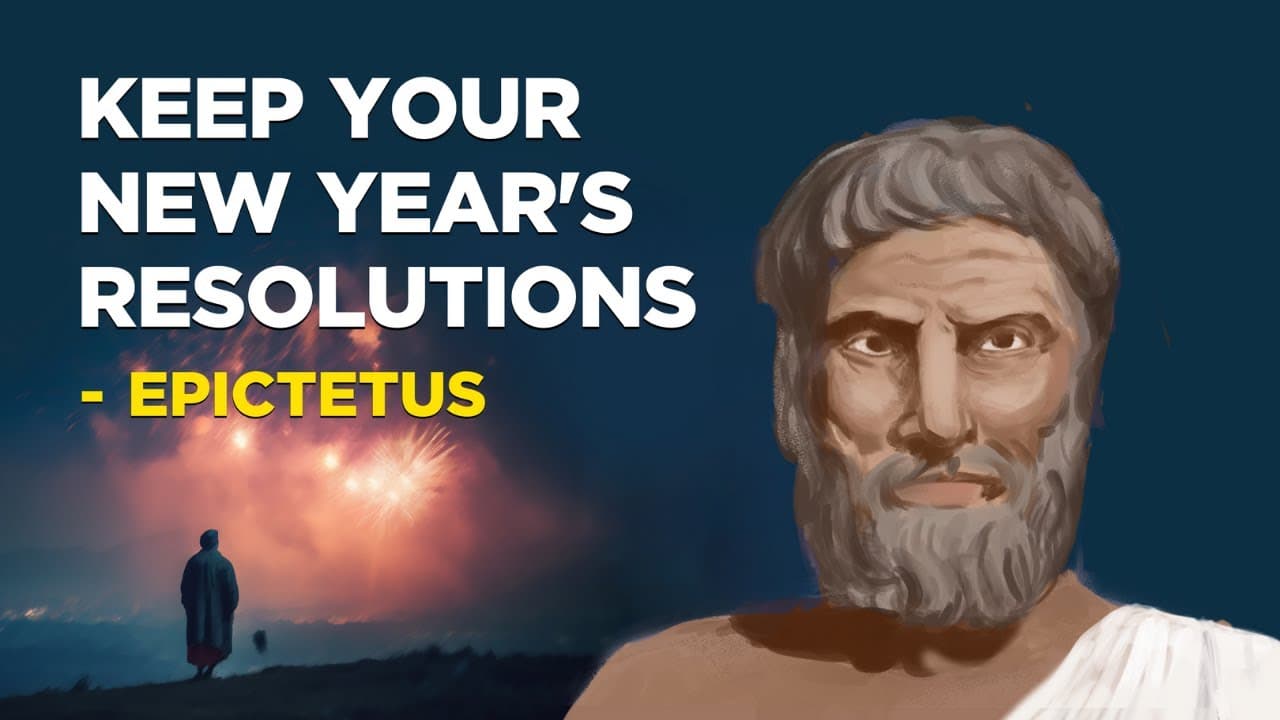
Epictetus was a Greek/Roman philosopher of the Hellenistic period. He managed to overcome huge obstacles in developing from a crippled Roman slave to become one of the most popular and sought after philosophers of his time. He was one of the most influential teachers of the later years of the school of Stoicism, and considered by some to be the gre... Read More
Key Insights
- A simple resolution is more realistic than a complete lifestyle overhaul. Epictetus advises practicing with little things before proceeding to greater ones, so the recommended starting point is one important goal chosen for its likely effect on happiness, health, and fulfilment.
- A practical plan is built from specific actions, a deadline, and mini-milestones. Breaking a large outcome into manageable pieces and time blocks makes the resolution something a person can repeatedly act upon instead of leaving it as a broad commitment.
- Consistency is the foundation of a new routine. The transcript presents the first 30 days as three ten-day phases, moving from strong resistance, through greater familiarity, toward enjoyment and a sense that the repeated behavior has become normal.
- A missed action can become a repeated justification for further avoidance. The marathon example shows how taking an unnecessary day off may make another exception feel easier, allowing laziness to grow until the person abandons the resolution.
- Bad habits often serve as responses to stress or boredom. Smoking, overspending, drinking, and wasting time online may provide an immediate benefit, so removing the behavior without addressing the underlying need can make lasting change difficult.
- Habit replacement works by choosing a healthier response that provides a similar benefit. The suggested approach is to plan before temptation appears, such as using breathing exercises when the urge to smoke arises or writing one work sentence when social media invites procrastination.
- Publicly announcing a goal can create premature satisfaction. The transcript calls this social reality, where acknowledgment makes the goal feel like part of one's identity before the work is completed, potentially reducing motivation and exposing the person to unhelpful judgment or pressure.
- Personal responsibility is necessary for meaningful progress. Excuses such as lacking time, not knowing where to begin, facing expense, or postponing action surrender control, while persistence, self-control, reflection, rewards, continued effort, and personal evolution reinforce commitment.
Install to Summarize YouTube Videos and Get Transcripts
Explore YouTube Video Summarizer or Get YouTube Transcript Extractor
Questions & Answers
Q: How can I make a New Year's resolution easier to keep?
Choose one simple and realistic resolution instead of trying to overhaul your entire lifestyle. Select the goal that could have the greatest effect on your happiness, health, and fulfilment. Create a deadline and identify the small actions required along the way. Divide the outcome into mini-milestones so you can work toward it through manageable pieces and time blocks.
Q: Why should I focus on only one new habit at first?
Focusing on one habit keeps your effort clear and manageable. The transcript cites a study claiming that establishing one habit for 30 days gives an 80% likelihood of continuing it one year later, while adding a second habit lowers the stated one-year success rate to 35%. Its practical conclusion is to prioritize one important goal before beginning another phase.
Q: How does the 30-day routine cycle work?
The cycle divides the first 30 days into three ten-day phases. Days 1–10 are described as physically painful and mentally challenging, with frequent urges to quit. Days 11–20 remain uncomfortable but become less frightening and more normal. During days 21–30, enjoyment can begin, negative thoughts may weaken, and the repeated behavior starts to feel established.
Q: How should I replace a bad habit instead of simply stopping it?
Identify the stress, boredom, or unmet need that prompts the behavior, then prepare a healthier response that offers a similar benefit. The transcript suggests breathing exercises when an urge to smoke appears and writing one work sentence when social media tempts you to procrastinate. Planning the replacement beforehand makes it available when the familiar trigger occurs.
Q: Why can sharing a resolution reduce motivation?
Public acknowledgment may create an immediate feeling of satisfaction before the work has been completed. The transcript describes this as social reality: other people begin associating you with the intended identity, and your mind may respond as if the achievement has already happened. Public sharing can also invite judgment and pressure, which may weaken determination rather than strengthen it.
Q: Who should I tell about an important personal goal?
Share the resolution selectively with an accountability partner, mentor, or another person who is prepared to help you pursue it. The advice is not to announce the goal to everyone. Selective sharing can provide useful support while reducing premature satisfaction, unnecessary judgment, repeated scrutiny, and the feeling that other people are trying to control your behavior.
Q: How do excuses interfere with keeping resolutions?
Excuses defend current behavior, postpone action, and allow a person to neglect responsibility. Common examples in the transcript include lacking time, not knowing where to start, believing the goal is too expensive, or promising to act later. When people treat themselves as victims of circumstances, they surrender ownership, and meaningful progress becomes difficult to sustain.
Q: What Stoic practices support long-term progress on goals?
The described practices are keeping resolutions simple, building routines, replacing bad habits, limiting public announcements, refusing excuses, and avoiding dependence on other people's validation. The description also adds rewarding yourself, reviewing your day, never giving up, and always evolving. Together, these practices emphasize repeated action, personal responsibility, reflection, persistence, self-control, and continued adjustment.
Summary & Key Takeaways
-
Epictetus advises beginning with one simple, realistic resolution rather than attempting a complete lifestyle overhaul. Choose the goal likely to have the greatest effect on happiness, health, and fulfilment. Then create a practical plan with a deadline, specific actions, and mini-milestones that divide the desired outcome into manageable pieces and time blocks.
-
Consistency turns a resolution into a routine. The first 30 days can be divided into three ten-day phases: strong physical and mental resistance, growing familiarity, and eventual enjoyment. The lesson is to continue doing what is right when quitting feels easier, because repeated action gradually makes the new behavior feel normal.
-
Bad habits often respond to stress or boredom and provide some perceived benefit, so merely removing them can leave needs unmet. Prepare a substitute that offers a similar benefit, such as breathing exercises instead of smoking. Protect motivation by limiting announcements, refusing excuses, seeking useful accountability, reviewing each day, rewarding progress, and persisting.
-
The remaining practices reinforce long-term self-direction: do not depend on other people's validation, reward yourself, review your day, never give up, and keep evolving. Together, these ideas frame resolutions as continuing commitments supported by reflection, persistence, self-control, and adjustment rather than as temporary declarations made at the beginning of a year.
Read in Other Languages (beta)
Share This Summary 📚
Summarize YouTube Videos and Get Video Transcripts with 1-Click
Try YouTube Summary with ChatGPT & Claude or YouTube Transcript Generator
Explore More Summaries from Philosophies for Life 📚




Summarize YouTube Videos and Get Video Transcripts with 1-Click
Try YouTube Summary with ChatGPT & Claude or YouTube Transcript Generator