How to Build Kubernetes Operators with Go
TL;DR
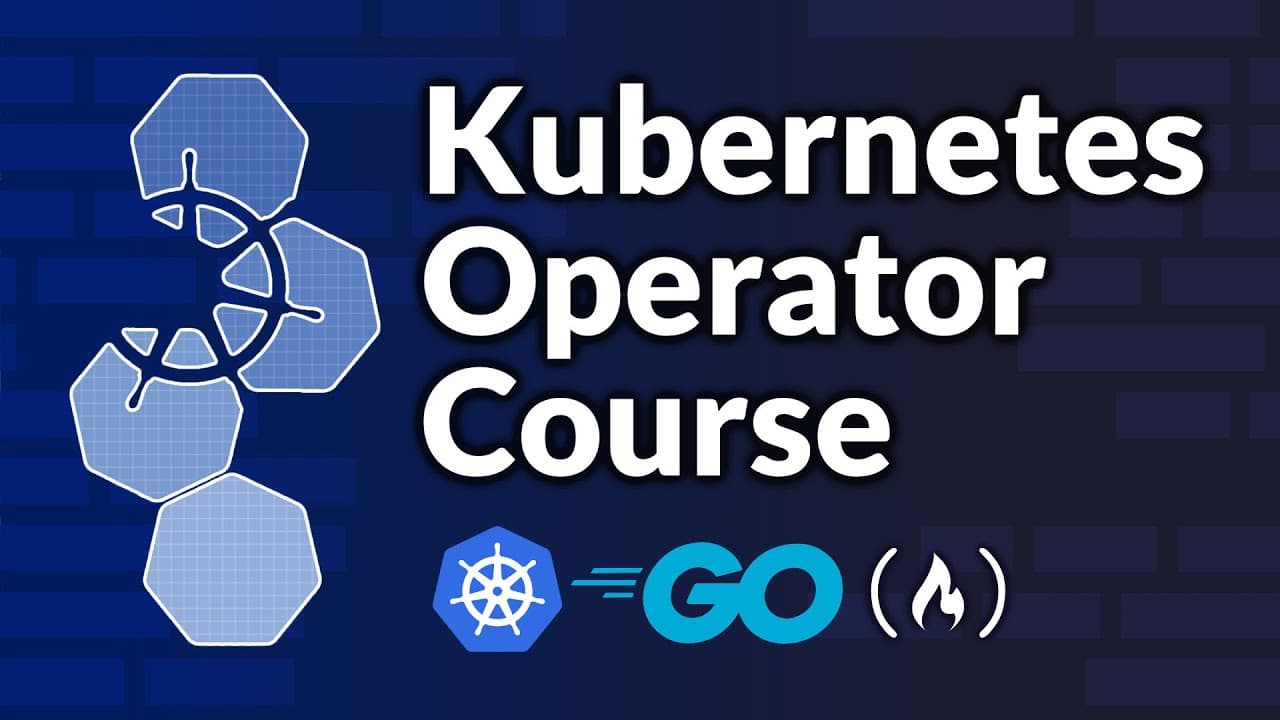
Learn how to extend Kubernetes by building custom operators and controllers using Go and Kubebuilder. This course guides you through creating a real-world operator to manage AWS EC2 instances directly from Kubernetes. Key topics include the internal architecture of informers, caches, advanced concepts like finalizers, and idempotency, providing a comprehensive understanding of Kubernetes as a software development kit.
Transcript
In this hands-on Kubernetes operator course, you'll learn how to extend Kubernetes by building your own custom operators and controllers from scratch. You'll go beyond simply using Kubernetes and start treating it as a software development kit. You'll learn how to build a realworld operator that manages AWS EC2 instances directly from Kubernetes co... Read More
Key Insights
- Kubernetes can be extended by building custom operators and controllers, transforming it into a software development kit.
- Operators manage external resources like AWS EC2 instances directly from Kubernetes, providing seamless infrastructure management.
- The reconcile loop is crucial in operators, ensuring the cluster state matches the desired state through observe-compare-act logic.
- Idempotency is vital for operators, allowing them to run multiple times without causing unintended changes if the desired state is already achieved.
- Custom Resource Definitions (CRDs) and Custom Resources (CRs) expand Kubernetes' vocabulary, enabling the creation of new resource types.
- Kubebuilder simplifies the process of building Kubernetes operators by providing scaffolding, boilerplate code, and project structure.
- Operators can expose metrics via Prometheus, offering insights into their performance and success rates.
- Leader election is important for high availability, ensuring only one instance of an operator acts on changes at any given time.
Install to Summarize YouTube Videos and Get Transcripts
Explore YouTube Video Summarizer or Get YouTube Transcript Extractor
Questions & Answers
Q: How to build a Kubernetes operator using Go?
To build a Kubernetes operator using Go, you can use Kubebuilder, which provides a framework with scaffolding and boilerplate code. Start by initializing a project and creating APIs for your custom resources. Define the resource specifications and status in Go, then implement the reconcile loop logic to manage the desired state of your resources. Finally, deploy the operator to a Kubernetes cluster.
Q: What is the reconcile loop in Kubernetes operators?
The reconcile loop in Kubernetes operators is a core component that ensures the cluster's state matches the desired state defined in the custom resource. It operates on an observe-compare-act cycle, continuously monitoring resource changes and applying necessary updates. Idempotency is crucial, allowing the loop to run multiple times without causing unintended changes if the desired state is already achieved.
Q: Why is idempotency important in Kubernetes operators?
Idempotency is important in Kubernetes operators because it ensures that the reconcile loop can run multiple times without causing unintended changes or side effects if the desired state is already achieved. This characteristic allows operators to be robust and reliable, handling repeated execution gracefully, which is essential for maintaining the cluster's stability and consistency.
Q: What are Custom Resource Definitions (CRDs) in Kubernetes?
Custom Resource Definitions (CRDs) in Kubernetes are extensions that allow users to define new resource types within the Kubernetes API. They expand Kubernetes' vocabulary, enabling the creation of custom resources with specific specifications and statuses. CRDs are used to manage external resources, like AWS EC2 instances, by defining their desired state and allowing operators to act on them.
Q: How does Kubebuilder help in building Kubernetes operators?
Kubebuilder helps in building Kubernetes operators by providing a framework with scaffolding and boilerplate code, simplifying the development process. It offers a structured project setup, generates necessary files like Dockerfiles and Makefiles, and includes tools for defining APIs and reconcile logic. Kubebuilder also supports role-based access control and deployment configurations, streamlining operator creation and management.
Q: What is the role of the manager in a Kubernetes operator?
The manager in a Kubernetes operator is responsible for managing the lifecycle of controllers and their interactions with the Kubernetes API server. It handles client communication, caching, and leader election to ensure high availability. The manager also coordinates the execution of reconcile loops and can host webhooks for validation and mutation, making it a central component in operator architecture.
Q: How can operators expose metrics for monitoring?
Operators can expose metrics for monitoring by implementing Prometheus-compatible endpoints. Kubebuilder facilitates this by providing default metrics endpoints that track operator performance, such as reconcile loop success rates and execution counts. Developers can further instrument their code to expose custom metrics, offering insights into resource management tasks and enabling comprehensive monitoring through Prometheus and Grafana.
Q: What are the benefits of using Kubernetes as a software development kit (SDK)?
Using Kubernetes as a software development kit (SDK) offers several benefits, including the ability to extend its functionality through custom operators and controllers. This approach allows developers to automate infrastructure tasks, manage external resources, and create new resource types. Kubernetes' extensibility, API-first approach, and support for custom resources make it a powerful platform for building scalable and robust cloud-native applications.
Summary & Key Takeaways
-
Kubernetes operators extend the platform by allowing the creation of custom controllers that manage external resources like AWS EC2 instances. By using Kubebuilder, developers can treat Kubernetes as a software development kit, leveraging its extensibility to automate infrastructure tasks. This course covers key concepts such as the reconcile loop, idempotency, and CRDs, providing a comprehensive guide to building operators.
-
The course delves into the architecture of Kubernetes operators, highlighting the importance of the reconcile loop, which ensures the cluster's state aligns with the desired state. It also emphasizes idempotency, which allows operators to run repeatedly without causing unintended changes. By using Kubebuilder, developers can efficiently create operators with the necessary scaffolding and boilerplate code.
-
Advanced topics in the course include the use of finalizers for cleanup logic, handling object deletion, and using Prometheus metrics to monitor operator performance. The course also covers deploying operators to Kubernetes, including RBAC and service accounts, ensuring secure and efficient operation management. The comprehensive curriculum provides a deep understanding of Kubernetes as an SDK.
Read in Other Languages (beta)
Share This Summary 📚
Summarize YouTube Videos and Get Video Transcripts with 1-Click
Try YouTube Summary with ChatGPT & Claude or YouTube Transcript Generator
Explore More Summaries from freeCodeCamp.org 📚


![The Most Important Skills Going Forward with CTO + Homebrew Maintainer Mike McQuaid [Podcast #204] thumbnail](/_next/image?url=https%3A%2F%2Fi.ytimg.com%2Fvi%2F58Tn2xB8kIE%2Fhqdefault.jpg&w=750&q=75)
Summarize YouTube Videos and Get Video Transcripts with 1-Click
Try YouTube Summary with ChatGPT & Claude or YouTube Transcript Generator