How would a $5,000 payout affect Americans?
TL;DR
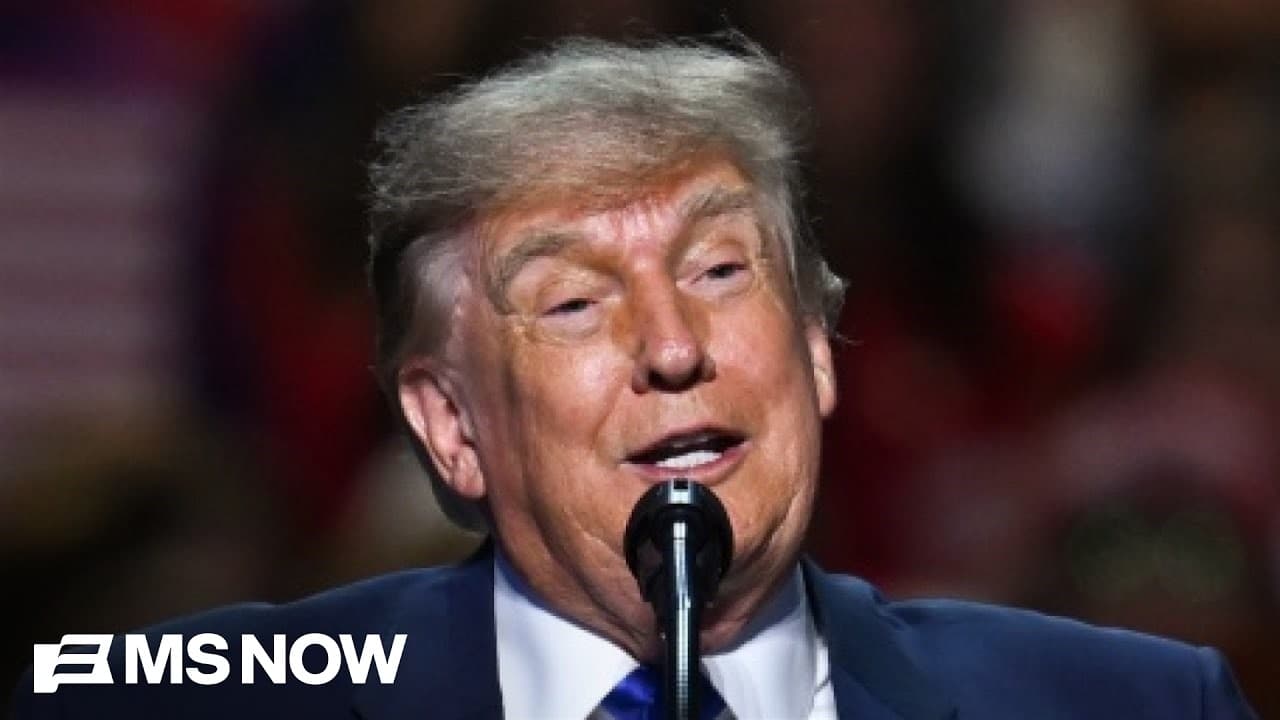
A $5,000 payout proposal is criticized as unrealistic and fiscally risky, with critics arguing it would worsen deficits and inflation. The discussion weighs bond yields, debt, and political strategy, suggesting such promises may be hard to deliver and could provoke market reactions and political backlash.
Transcript
WELCOME, WELCOME, WELCOM OKAY, MOLLY, YOUR FIRST REACTION TOTO THE FIRST NIGHT OF TRUMP'S MIDTERM CONVENTIONS? YOU KNOW, HE HAS NOT HE'S NOT GOTTEN, YOU KNOW, IN 2016 WHEN HE WOULD SPEAK, YOU WOULD SEE A LOT OF CHARISMA AND A LOT OF POLITICAL DEALING AND I THINK SOME OF THE STUFF HE SAID LAST NIGHT, IF YOU JUST TAKE IT APART SEEMED VERY DESPE... Read More
Key Insights
- The $5,000 payout is framed as a political promise tied to a GOP victory.
- The panel argues the plan would require Congressional approval and could be hard to finance.
- Debt levels are emphasized, including a $40 trillion backdrop and 6 percent deficits.
- Bond yields and inflation are discussed as constraints on funding large payouts.
- The idea is described as politically desperate or even gaslighting by opponents.
- Critics point out inflation and energy prices could react to added spending.
- Some guests suggest real negotiations and targeted policy changes are needed rather than broad payouts.
- There is skepticism about the ability to implement such a proposal given the current economic climate.
- More videos from this channel:
- More from this channel: MS NOW
Install to Summarize YouTube Videos and Get Transcripts
Explore YouTube Video Summarizer or Get YouTube Transcript Extractor
Questions & Answers
Q: What is the proposed payout and who would receive it?
The proposal discussed is a $5,000 payout to every American if Republicans win the midterms. The format suggests a universal grant funded through government spending, and commentators question the legality and feasibility of such a universal transfer, noting that congressional approval would be required and that financing this would raise significant fiscal and political hurdles.
Q: Why do the critics say the promise is impractical?
Critics emphasize the $40 trillion debt backdrop and 6 percent annual deficits, arguing that adding a $5,000 payout would worsen deficits and trigger inflationary pressures. They also highlight the need for Congressional authorization and potential misalignment with existing fiscal policies, making the promise appear impractical and unlikely to be fulfilled.
Q: How do bond yields factor into the discussion?
Bond yields are cited as a barometer of funding feasibility. Higher yields make new debt more expensive, increasing the cost of financing a universal payout. The panel explains that sustained high yields would complicate debt service and could be seen as a signal of fiscal instability, constraining policy options.
Q: What is said about inflation and oil prices in relation to the plan?
The discussion notes that inflation and energy prices influence the feasibility of large stimulus. If new spending drives prices higher, it could erode purchasing power and complicate monetary policy. The guests remark that oil prices are already a consideration, with broader implications for consumer costs and economic stability.
Q: What alternatives are suggested instead of a universal payout?
The speakers propose more targeted approaches or negotiated policies, such as reforming spending, improving efficiency, or focusing aid where it is most needed. They emphasize the importance of real negotiations and experienced negotiators rather than broad promises, suggesting more practical steps could achieve policy goals without ballooning deficits.
Q: How does the panel compare this to past promises?
Panelists compare the payout idea to other bold campaign promises, noting a pattern of ambitious fiscal pledges that confront political and economic constraints. They contend that past promises were not fulfilled easily and that similar challenges would likely arise again, given the debt burden and market dynamics.
Q: What role does the economy play in evaluating the plan?
Economy-wide factors like debt levels, deficits, and inflation shape whether such a payout could be sustained. The discussion highlights that extreme spending could destabilize markets or trigger higher borrowing costs, complicating macroeconomic management and policy credibility during a period of inflation and global financial pressures.
Q: Is there any consensus about the political ramifications of the proposal?
There is no clear consensus; some see it as a bold political signal to voters, while others view it as reckless rhetoric that could undermine credibility. The conversation suggests that how the plan is perceived by markets and the public would significantly influence its political viability and impact on future policy debates.
Summary & Key Takeaways
-
The discussion centers on a proposed $5,000 payout to every American if Republicans win, framed as a fiscally unrealistic and potentially legally dubious promise. Critics highlight the prevailing debt and annual deficits, arguing that financing such payments amid high yields and inflation would be problematic.
-
The panel compares this idea to past fiscal promises, noting concerns about feasibility and impact on financial markets, while considering how the proposal could influence voter behavior and policy debates.
-
Overall, the segment frames the payout within a broader critique of fiscal responsibility, debt levels, and the practicalities of implementing large-scale stimulus funded by government spending.
Read in Other Languages (beta)
Share This Summary 📚
Summarize YouTube Videos and Get Video Transcripts with 1-Click
Try YouTube Summary with ChatGPT & Claude or YouTube Transcript Generator
Explore More Summaries from MS NOW 📚


Summarize YouTube Videos and Get Video Transcripts with 1-Click
Try YouTube Summary with ChatGPT & Claude or YouTube Transcript Generator