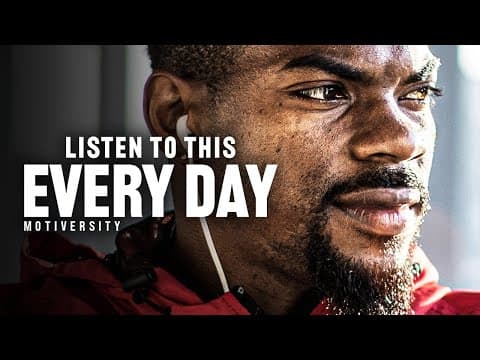
How to push through adversity like Eric Thomas?

TL;DR
Execution beats excuses. The talk urges you to turn pain into progress, stop blaming circumstances, and treat every setback as a setup for a comeback. It emphasizes focus, responsibility, and making the most of opportunity, regardless of how hard things get.
Transcript
execute execute on the things that you said you were going to execute on kobe said why would i pass the ball to you when you haven't even trained properly i just always was like why is my man hogging the ball he's like yo why would i have confidence in somebody who's getting to the gym late who's leaving early we losing doesn't seem to care that we... Read More
Key Insights
- Execution over excuses, as feelings do not determine results.
- Setbacks are reframed as setups for a comeback, not reasons to quit.
- There is opportunity in every situation, especially when you choose to act.
- Self accountability is crucial; demand more from yourself than others.
- Emergent greatness comes from consistent, hard work over time.
- Limitations exist only if you accept them; you can redefine your path.
- Impact comes from serving a larger purpose beyond self.
- The real enemy is the procrastination and fear you tell yourself to justify inaction.
- More videos from this channel:
- More from this channel: Motiversity
Install to Summarize YouTube Videos and Get Transcripts
Explore YouTube Video Summarizer or Get YouTube Transcript Extractor
Questions & Answers
Q: A real search query question about the video (e.g. 'How to...', 'What is...', 'Why does...', 'When should...'). Question 1
What does Eric Thomas mean by turning pain into progress and how can a person apply this mindset in daily life? He explains that pain and difficulties are natural and unstoppable, but the choice to respond with decisive action is what separates achievers from average. By focusing on execution over emotions, you convert setbacks into fuel for growth, using discipline to maintain momentum even when motivation wanes.
Q: Question 2
How does the speaker describe the role of opportunity and personal responsibility in achieving success? He emphasizes that opportunities exist globally and that much is given requires much is required. Individuals must acknowledge the edge they have and leverage it through persistent work, rather than waiting for perfect conditions, to turn potential into tangible results.
Q: Question 3
What is the recommended mindset for handling difficult times and staying committed to goals? The guidance is to get out of feelings, treat execution as a fact, and not let temporary pain derail long term aims. The speaker counsels pushing through adversity by aligning actions with goals and refusing to use circumstances as an excuse for mediocrity.
Q: Question 4
Why does the talk say you should hold yourself as accountable as you hold others? The idea is that external accountability only goes so far; true progress requires internal standards that punish yourself for underperforming. By applying the same scrutiny to yourself as you do to others, you accelerate growth and maintain consistency.
Q: Question 5
What is the message about took risks and not letting fear stop progress? The message is that fear and risk are integral to growth; you should not wait for perfection or ideal conditions. Instead, you must act despite fear, because the cost of not trying can be higher than the risk of trying and failing.
Q: Question 6
How does the speaker frame the concept of life as a competition or game seven moment? He portrays major challenges as opportunities to elevate performance, where the best players rise under pressure. This framing encourages embracing hard times as the catalyst for peak effort and ultimate success, similar to a decisive playoff moment.
Q: Question 7
What does the speaker say about the importance of purpose beyond personal gain? He compares personal achievement to wider impact, suggesting that greatness is proven when it helps others move from one life position to another. The nobler aim is to affect millions, not just garner accolades.
Q: Question 8
How should someone approach goal setting and self-discovery according to the talk? The guidance is to explore what you truly want without others’ expectations, then align actions to reach that vision. If you can articulate your desired outcomes, the speaker believes you can restructure your current reality to reach them.
Summary & Key Takeaways
-
Eric Thomas argues that adversity is a catalyst for growth and that sustained effort turns setbacks into comebacks. He stresses the importance of executing despite emotions and external conditions, treating pain as fuel for progress. The message centers on ownership, discipline, and maximum effort to honor opportunity.
-
The speech contrasts external excuses with internal choice, urging listeners to rely on deliberate action rather than inertia. It highlights how high performers convert pressure into performance, and how a deliberate mindset can reshape outcome regardless of starting point.
-
The core call to action is to get out of negative feelings, lock in on goals, and relentlessly pursue personal excellence. By reframing challenges as opportunities and stepping up when others quit, one can achieve significant personal and professional breakthroughs.
Read in Other Languages (beta)
Share This Summary 📚
Summarize YouTube Videos and Get Video Transcripts with 1-Click
Try YouTube Summary with ChatGPT & Claude or YouTube Transcript Generator
Explore More Summaries from Motiversity 📚





Summarize YouTube Videos and Get Video Transcripts with 1-Click
Try YouTube Summary with ChatGPT & Claude or YouTube Transcript Generator