How Can pH Indicators Be Used in Soap Bubbles?
TL;DR
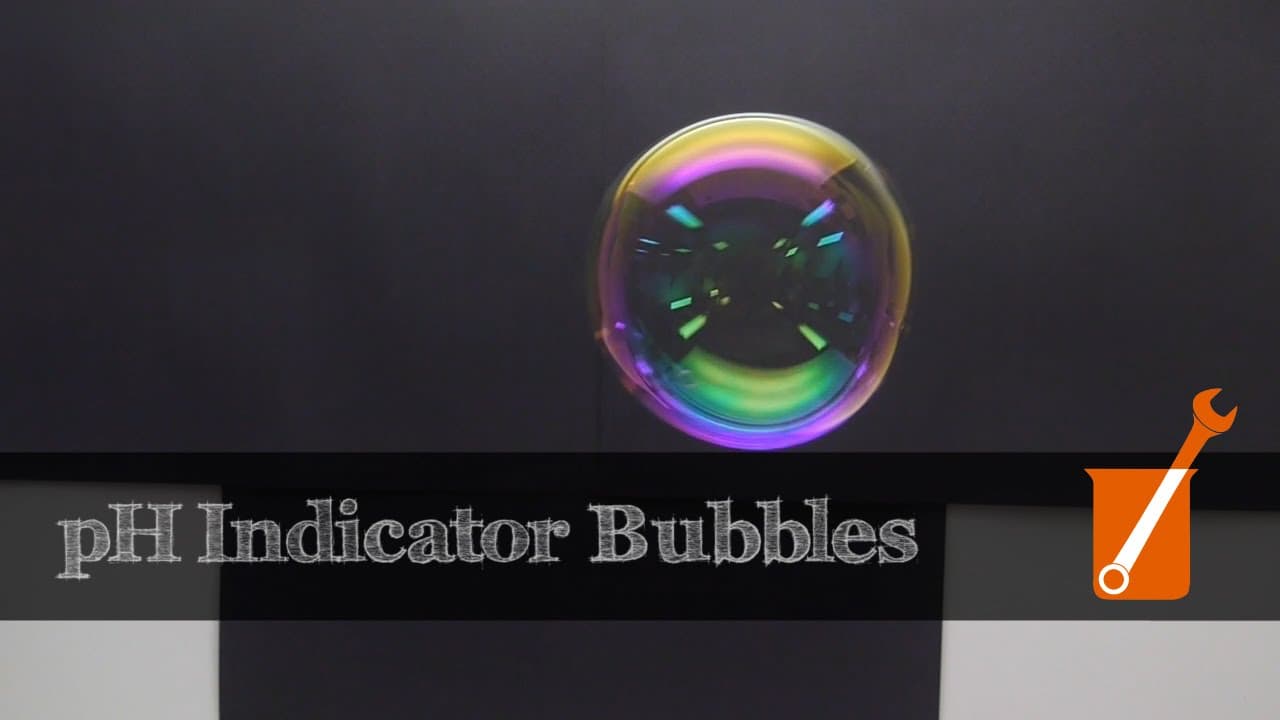
pH indicators can be used in soap bubbles to visually demonstrate color changes based on environmental gases. By using phenol red, bubbles can react to CO2 and ammonia, changing colors as their pH alters. Achieving clear, floating bubbles requires techniques like adding helium for neutral buoyancy, allowing for better observation of these effects.
Transcript
hey everyone I thought it would be interesting to make soap bubbles that contain a pH indicating dye the idea being that the pH indicator starts off one color and then as the bubble interacts with the gases in the environment it might change color so I was imagining sort of filling a container like this with co2 gas and then if the bubble starts ou... Read More
Key Insights
- 🫥 Concentrated pH indicator solution is essential for visible color changes in soap bubbles.
- 👁️🗨️ Commercial colored bubble solutions may require a high colorant concentration to show color.
- 🫢 Different gases like CO2 and ammonia can locally alter the pH of the bubble solution.
- 🤔 Plain soap bubbles lose color as they thin out due to thin film properties.
- 👁️🗨️ Adding helium can create neutrally buoyant bubbles for observation.
- 👁️🗨️ Experimentation and practice are necessary to achieve desired bubble behaviors.
- 👁️🗨️ Filming bubbles with color changes requires innovative methods like helium addition.
Install to Summarize YouTube Videos and Get Transcripts
Explore YouTube Video Summarizer or Get YouTube Transcript Extractor
Questions & Answers
Q: What was the main idea behind creating soap bubbles with pH indicator dye?
The main idea was to observe color changes in the soap bubbles as they interacted with various gases in the environment, showcasing pH changes through color variation.
Q: Why did the initial attempt with phenol red as the pH indicator fail?
The initial attempt failed because the phenol red solution was not concentrated enough, leading to a lack of prominent color changes in the bubbles.
Q: How did the experiment with CO2 and ammonia gas differ from the initial attempt?
The experiment with CO2 and ammonia gas aimed to change the local pH of the bubble solution to create multicolored bubbles, but the practical implementation faced challenges.
Q: What method was explored to make soap bubbles stay in one spot in space for filming?
Adding helium to the bubble was explored to achieve neutral buoyancy and make the bubble hang in mid-air, allowing for observation of color changes before popping.
Summary & Key Takeaways
-
Attempted to make soap bubbles with pH indicator dye to show color changes based on gas interaction.
-
Used phenol red as a pH indicator, boiled it down for concentrated solution.
-
Explored using CO2 and ammonia gas to change local pH for multicolored bubbles.
Read in Other Languages (beta)
Share This Summary 📚
Summarize YouTube Videos and Get Video Transcripts with 1-Click
Try YouTube Summary with ChatGPT & Claude or YouTube Transcript Generator
Explore More Summaries from Applied Science 📚
Summarize YouTube Videos and Get Video Transcripts with 1-Click
Try YouTube Summary with ChatGPT & Claude or YouTube Transcript Generator