How to Solve Systems of Equations by Elimination and Substitution
TL;DR
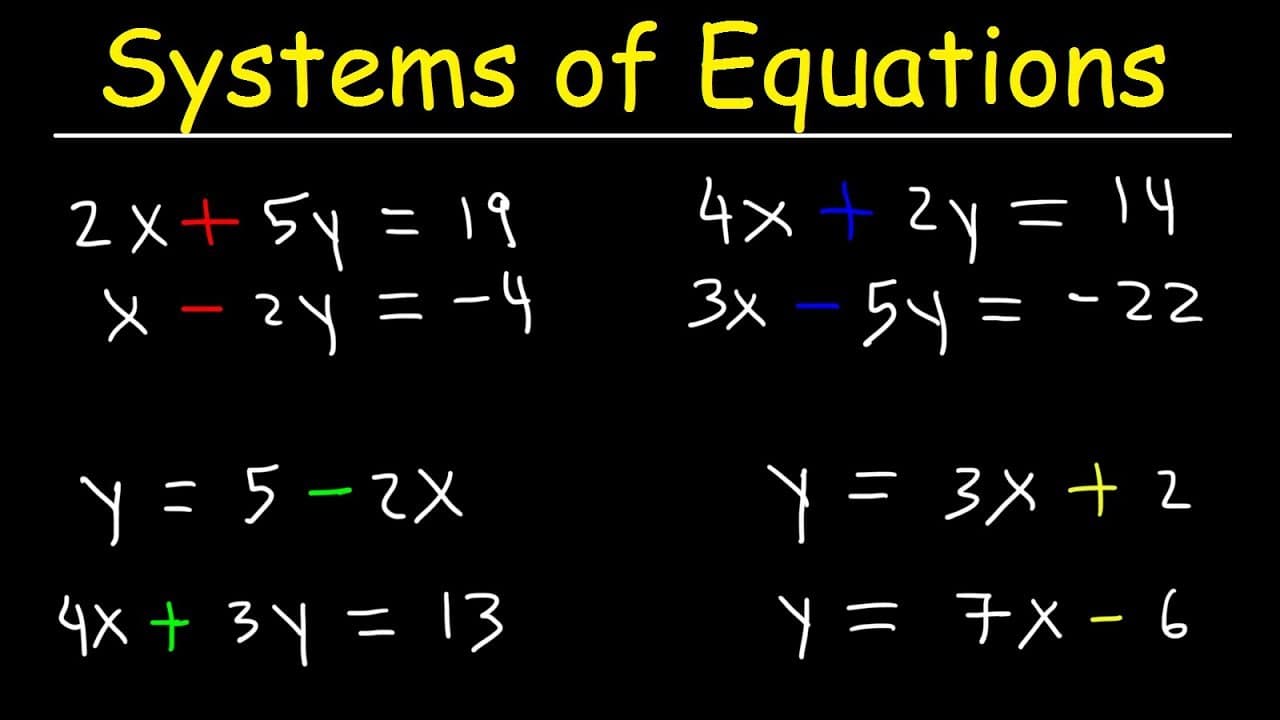
To solve systems of equations, use elimination to cancel one variable by adding/subtracting equations, and find the other variable's value. Alternatively, use substitution by solving one equation for a variable and plugging it into the other. Both methods provide a systematic approach for finding variable values in two equations.
Transcript
consider the following two equations two x plus three y is equal to eight and also five x minus three y is equal to negative one how can we solve these two equations using elimination which is also known as the addition method using elimination what you want to do is add the two equations 3y plus negative 3y these two cancel 2x plus 5x is 7x and 8 ... Read More
Key Insights
- 🪜 The elimination method involves adding or subtracting equations to cancel out one variable.
- ❓ The elimination method can be used with different coefficients by modifying one equation.
- ❓ The substitution method involves solving one equation for a variable and substituting it into the other equation.
- ❓ Both methods require multiple steps to solve for the variables in a system of equations.
- 🔌 It's important to check the solution by plugging the values back into the original equations.
- 💦 The elimination method is generally preferred when the coefficients are simpler to work with.
- ❓ The substitution method is useful when one equation is already solved for a variable.
- ❓ Both methods can be used to solve systems of equations with two or more variables.
Install to Summarize YouTube Videos and Get Transcripts
Explore YouTube Video Summarizer or Get YouTube Transcript Extractor
Questions & Answers
Q: How does the elimination method work when solving systems of equations?
The elimination method involves adding or subtracting the two equations to eliminate one variable. By choosing coefficients that cancel out one variable when added or subtracted, you can simplify the system of equations and solve for the remaining variable.
Q: Can the elimination method be used when the coefficients of the variables are different in the two equations?
Yes, the elimination method can still be used with different coefficients. You can modify one equation by multiplying it with a factor that makes the coefficient of one variable equal to the coefficient in the other equation. This will allow you to cancel out that variable when adding or subtracting the equations.
Q: What is the substitution method for solving systems of equations?
In the substitution method, one equation is solved for a variable in terms of the other variable. This expression is then substituted into the other equation. By substituting the value of one variable, you can solve for the other variable, and ultimately find the solution to the system of equations.
Q: What should be done when the variables have different coefficients in the given equations while using the substitution method?
When the variables have different coefficients, it is still possible to use the substitution method. You need to solve one equation for a variable and substitute the expression obtained into the other equation. The resulting equation can be simplified and solved to find the value of the remaining variable.
Summary & Key Takeaways
-
The content explains how to solve a system of two equations using the elimination method. It demonstrates the steps of adding the two equations, canceling terms, and solving for variables.
-
It provides an example where the elimination method is used to solve a system of equations with different coefficients. The steps involve modifying one equation to cancel out a variable before adding the equations and finding the values of x and y.
-
The video also covers the substitution method, where one equation is solved for a variable and then substituted into the other equation. Examples are given to illustrate the process.
Read in Other Languages (beta)
Share This Summary 📚
Summarize YouTube Videos and Get Video Transcripts with 1-Click
Try YouTube Summary with ChatGPT & Claude or YouTube Transcript Generator
Explore More Summaries from The Organic Chemistry Tutor 📚

Summarize YouTube Videos and Get Video Transcripts with 1-Click
Try YouTube Summary with ChatGPT & Claude or YouTube Transcript Generator