How Patience Shapes the Pursuit of Knowledge
TL;DR
Knowledge should produce humility, because even Musa and Khidr’s combined knowledge was compared with a bird’s tiny droplet beside the ocean of Allah’s knowledge. Musa’s journey also shows that intelligence alone does not sustain learning: patience, restraint, and a willingness to continue despite incomplete information determine how much a student can receive.
Transcript
So when they saw a man completely wrapped up, enveloped in a garment. So MS said to him, so he responded to him and he responded to him by saying and how do you people say salam where you come from? You just say salam. You don't introduce yourselves. So the man kind of was a little bit aggressive and said this is it. This is all the salam you guys ... Read More
Key Insights
- Knowledge is distributed by Allah among different people, as Khidr acknowledges Musa’s knowledge of revelation while explaining that he has received other knowledge Musa does not possess. Their meeting therefore begins with mutual limits, not with the claim that either person knows everything.
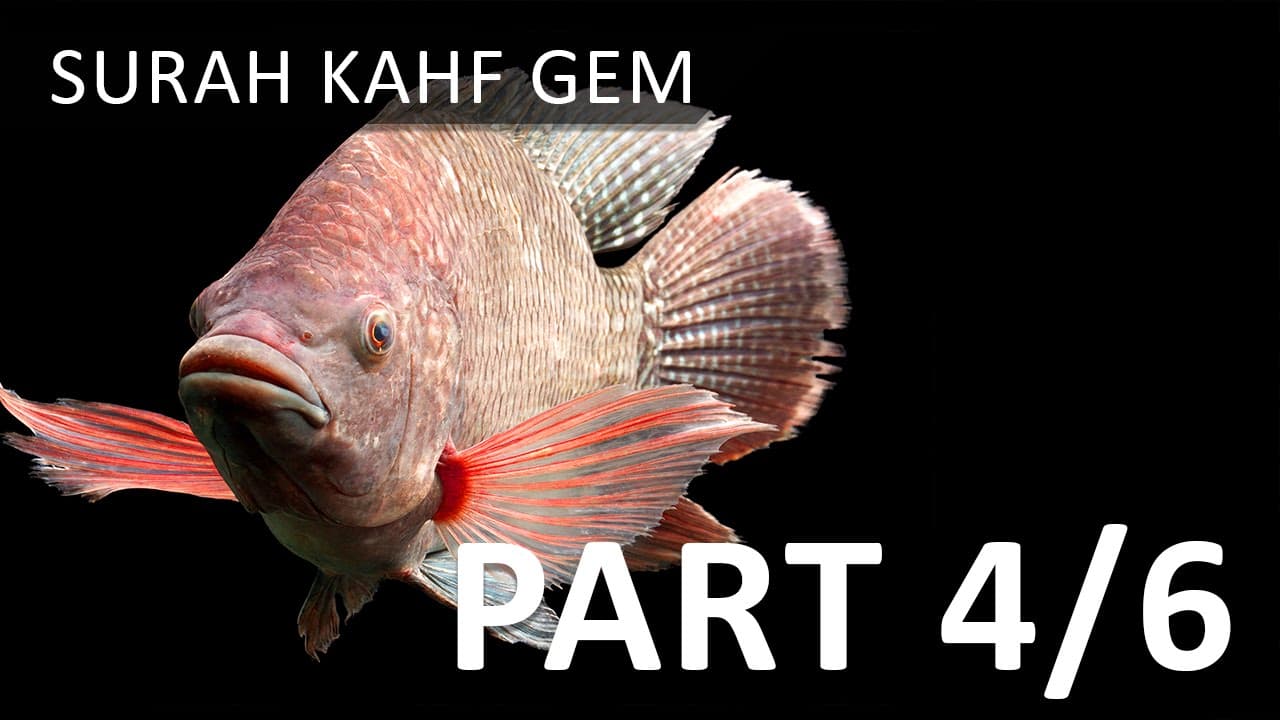
- Human knowledge is tiny compared with Allah’s knowledge. Khidr illustrates this by pointing to a sparrow dipping its beak into the ocean and comparing the bird’s droplet with the limited knowledge held by both men together beside what remains unknown to them.
- True knowledge produces humility rather than self-importance. The lesson is illustrated through the image of a fruit-bearing branch bending lower, suggesting that acquiring valuable knowledge should make a person more grounded, modest, and conscious of how much remains beyond personal understanding.
- Patience is especially difficult when information is incomplete. Khidr predicts that Musa cannot patiently endure actions whose full circumstances he has not encompassed, and Musa’s objections repeatedly arise from judging disturbing events according to what is immediately visible to him.
- Musa’s first objection follows Khidr’s intentional damage to a ship whose owners had generously allowed them aboard without compensation. Musa sees the act as a terrible betrayal that could sink the passengers, while Khidr responds by reminding him of the earlier warning about patience.
- Musa’s second objection follows the killing of a boy who appeared to be a pure soul and had not committed murder. The disturbing act prompts a stronger protest, after which Musa accepts that another question will give Khidr sufficient justification to end their companionship.
- Musa’s final objection concerns unpaid work rather than visible destruction. After a town refuses them food and hospitality, Khidr repairs a wall that is about to collapse, but Musa argues that he could have requested compensation for performing that beneficial service.
- A student’s temperament can determine the length of the learning journey. The account states that greater patience would have allowed Musa to remain with Khidr longer and receive more knowledge, showing that intelligence, memory, and comprehension are insufficient without restraint and endurance.
Install to Summarize YouTube Videos and Get Transcripts
Explore YouTube Video Summarizer or Get YouTube Transcript Extractor
Questions & Answers
Q: Why did Musa ask to follow Khidr?
Musa asked to follow Khidr so that Khidr could teach him some of the uprightness and guidance he had been taught. Khidr responded by distinguishing their areas of knowledge: Musa possessed knowledge Allah had given him that Khidr did not know, while Khidr possessed knowledge that Musa had never learned. The request therefore began a relationship centered on learning across different limits of understanding.
Q: Why did Khidr warn Musa that he would lack patience?
Khidr warned Musa because Musa would witness actions without possessing complete information about them. He asked how anyone could remain patient concerning something whose full news and meaning had not been encompassed. The warning identifies partial information as the central challenge: Musa would evaluate what he saw immediately, while the interpretation needed to understand it would only be disclosed later.
Q: What does the sparrow and ocean comparison mean?
The sparrow dipped its beak into the ocean once or twice while Musa and Khidr were aboard the ship. Khidr used that sight to compare their combined knowledge with the tiny droplet taken by the bird, set beside the vast knowledge of Allah that remained beyond them. The comparison teaches humility by emphasizing the extreme limits of what even knowledgeable people possess.
Q: Why did Musa object when Khidr damaged the ship?
Musa objected because the ship’s people had recognized Khidr and allowed the travelers aboard without charging them. Khidr then used an axe to loosen and remove a board, apparently damaging the vessel intentionally. Musa interpreted the act as harmful ingratitude that could sink the people aboard, so he called it terrible. Khidr responded by repeating that Musa could not remain patient with him.
Q: How did Musa respond after his first objection?
After Khidr reminded him of the warning, Musa asked not to be held accountable for what he had forgotten. He also asked Khidr not to make the consequences of his commitment too difficult for him. Forgetfulness was therefore Musa’s first defense after breaking the condition of patient observation, and the journey continued despite this initial failure to remain silent.
Q: What happened after Khidr killed the boy?
Khidr encountered a boy playing with other children, grabbed him by the head, and killed him by snapping his neck. Musa protested that Khidr had killed a pure soul who had not committed murder, calling the act completely unheard of. After another reminder from Khidr, Musa declared that any further question would fully justify ending their companionship.
Q: Why did Musa question Khidr’s repair of the wall?
Musa and Khidr reached a town whose inhabitants refused to provide them food or hospitality. Khidr nevertheless found a wall that was about to tip over and deliberately restored it. Musa did not condemn the repair itself, but argued that Khidr could have requested compensation for the work, especially after the townspeople had denied them basic hospitality.
Q: How can impatience limit a student’s learning?
The account concludes that Musa could have remained with Khidr longer and learned more if he had maintained patience. His questions activated the condition that ended their companionship before further experiences could occur. The lesson is that learning depends not only on intelligence, memory, and the ability to understand, but also on temperament, patience with a teacher, and acceptance that explanations may not arrive immediately.
Summary & Key Takeaways
-
Musa introduces himself and asks Khidr for permission to follow him so he can learn upright guidance. Khidr explains that each possesses knowledge Allah has not given the other, then warns that Musa will struggle to remain patient when confronted with events whose complete meaning and circumstances he does not yet know.
-
After boarding a ship without paying, Khidr compares their combined knowledge with the tiny amount of water taken by a sparrow from the ocean. He then damages the ship, causing Musa to object that such intentional harm could endanger its generous passengers. Musa answers Khidr’s reminder by pleading forgetfulness.
-
Khidr later kills a seemingly pure boy and repairs a wall for inhospitable townspeople without requesting payment. Musa objects both times, and their companionship ends according to his own stated condition. The account concludes that impatience shortened his opportunity to learn, showing how temperament can limit a capable student’s educational journey.
Read in Other Languages (beta)
Share This Summary 📚
Summarize YouTube Videos and Get Video Transcripts with 1-Click
Try YouTube Summary with ChatGPT & Claude or YouTube Transcript Generator
Explore More Summaries from Nouman Ali Khan - Official - Bayyinah 📚



Summarize YouTube Videos and Get Video Transcripts with 1-Click
Try YouTube Summary with ChatGPT & Claude or YouTube Transcript Generator