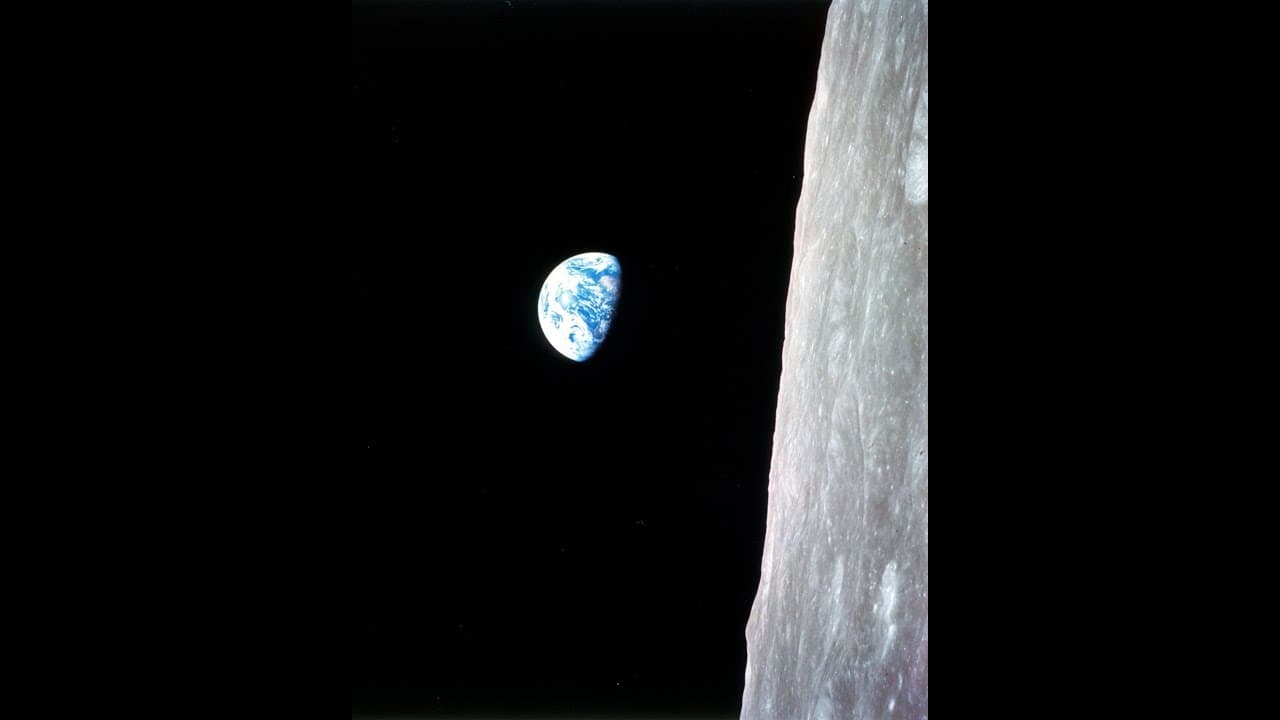
What if we had no Moon?
TL;DR
The absence of a moon on Earth would have drastic effects on tides, ocean currents, agriculture, climate stability, and the development of life, potentially rendering our planet lifeless.
Transcript
It stands out that the only inner rocky planet with a proper moon is earth. Mars’ moons are tiny and very much unlike our moon, more like asteroids. And Venus and Mercury lack a moon altogether. This may indicate that forming moons may not have been easy for inner solar system planets, and that’s if we can even call our moon a moon. The Earth-moon ... Read More
Key Insights
- 🖐️ Earth's moon plays a crucial role in the formation and distribution of tides, which have had a significant impact on the early spread of life on Earth.
- 😪 The moon's gravity has slowed down Earth's rotation, affecting circadian rhythms, sleep cycles, and agriculture practices.
- 🥮 The moon's influence on Earth's stability helps regulate climate and prevent extreme temperature variations.
Install to Summarize YouTube Videos and Get Transcripts
Explore YouTube Video Summarizer or Get YouTube Transcript Extractor
Questions & Answers
Q: How would the absence of a moon affect the tides on Earth?
While tides would not completely disappear without the moon, they would be muted and different. The moon's gravity plays a significant role in creating tides, and without it, the chemistry that led to the origin of life in tidal pools and the distribution of nutrients in the ocean would be altered.
Q: How would a moonless Earth impact agriculture and food production?
Agriculture heavily relies on seasons determined by the moon's presence. The absence of a moon would make agricultural planning, such as planting and harvesting, much more challenging. It would also affect the evolution of plant and animal life, potentially leading to more extreme seasons and altering the path of evolution.
Q: What would happen to Earth's climate stability without the moon?
The moon helps regulate Earth's rotation, preventing excessive wobbling and stabilizing the axis. Without the moon, Earth's polar caps would become highly unstable, resulting in rapid growth and retreat. This would cause erratic temperature changes worldwide, affecting weather patterns and potentially leading to extreme conditions like snowball earth scenarios.
Q: How would the disappearance of the moon impact biological life and navigation on Earth?
The magnetic field of Earth, influenced by the moon, would be different without its presence. This would affect navigation for species that rely on the magnetic field. In terms of biology, the absence of a moon could disrupt the balance between predators and prey, leading to changes in the animal kingdom's structure.
Summary & Key Takeaways
-
The lack of a moon would result in diminished and different tides, affecting the spread of early life in tidal pools and the distribution of nutrients in the ocean.
-
Earth's rotation would have been faster without the moon's gravitational influence, altering circadian rhythms, sleep cycles, and agriculture practices.
-
The absence of a moon would lead to unstable polar caps, extreme changes in temperature, disrupted seasons, and potential snowball earth scenarios.
Read in Other Languages (beta)
Share This Summary 📚
Summarize YouTube Videos and Get Video Transcripts with 1-Click
Try YouTube Summary with ChatGPT & Claude or YouTube Transcript Generator
Explore More Summaries from John Michael Godier 📚

Summarize YouTube Videos and Get Video Transcripts with 1-Click
Try YouTube Summary with ChatGPT & Claude or YouTube Transcript Generator