How Do New Airport Scanners Improve Security?
TL;DR
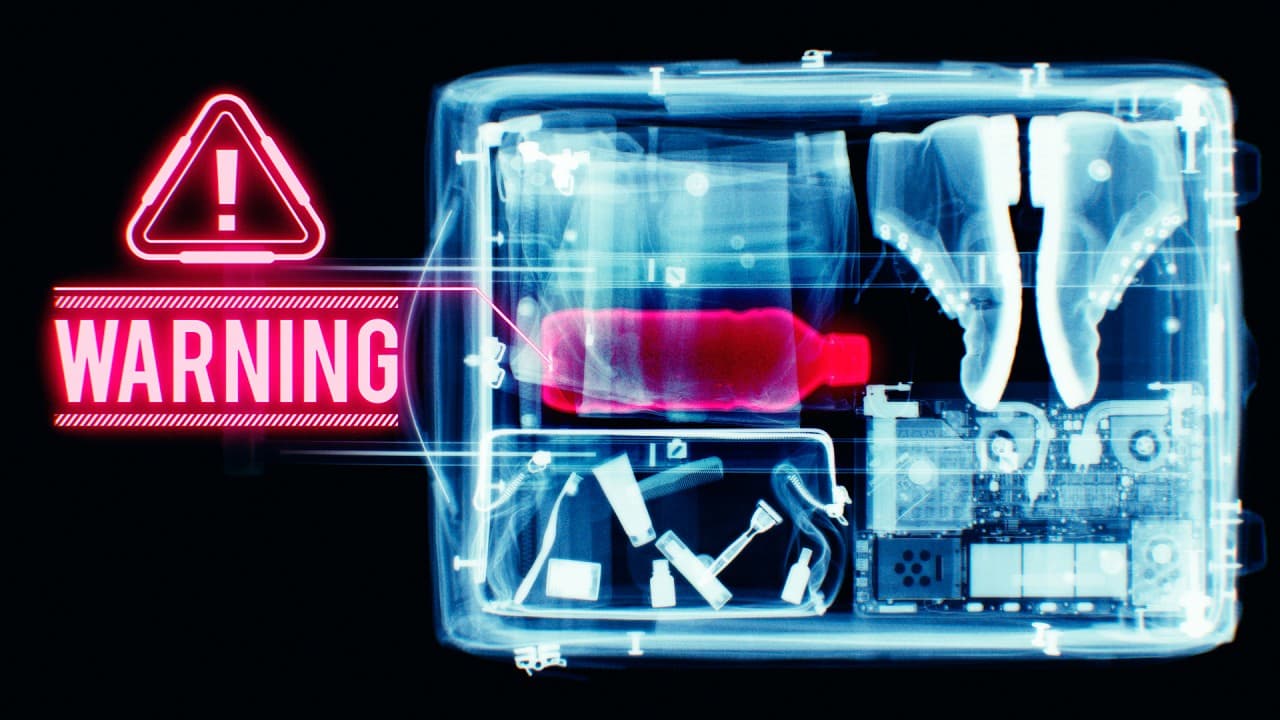
New airport security scanners use advanced CT technology to create 3D images of luggage, allowing for better detection of materials without removing items like laptops. This innovation reduces false positives and speeds up security checks. The scanners differentiate materials by analyzing density and atomic number, enabling safer and more efficient airport security processes.
Transcript
I just got this bottle of water through the TSA and feel like I am going to put on some kind of terror watchlist, but thanks to some new technologies this is actually becoming the new norm, and it’s helping make airport security wait times much shorter. Thanks to these things. Airport security scanners. Now, these may look like regular old scan... Read More
Key Insights
- New airport scanners utilize CT technology, creating 3D images of luggage contents.
- These scanners differentiate materials by analyzing density and atomic number.
- Dual energy x-ray scanners use high and low energy beams to identify material composition.
- False positives, like mistaking water for explosives, have been reduced with new technology.
- The scanners build a 3D model of items, estimating density to improve material identification.
- Multiple views of baggage enhance data collection, improving material discrimination.
- New technologies aim to reduce wait times and increase security efficiency at airports.
- Future scanners may use x-ray scattering and diffraction for molecular-specific analysis.
Install to Summarize YouTube Videos and Get Transcripts
Explore YouTube Video Summarizer or Get YouTube Transcript Extractor
Questions & Answers
Q: How do new airport scanners improve security checks?
New airport scanners use advanced CT technology to create 3D images of luggage, allowing security personnel to see inside bags without removing items like laptops. By analyzing the density and atomic number of materials, these scanners can differentiate between harmless and potentially dangerous substances, reducing false positives and speeding up the security process.
Q: What technology do the new airport scanners use?
The new airport scanners utilize CT (Computed Tomography) technology, which involves rotating x-ray emitters and detectors around luggage to create 3D images. This allows for a detailed analysis of the contents, enabling better material differentiation and reducing the need to remove items for inspection.
Q: Why were liquids like water previously banned in airport security?
Liquids such as water were previously banned because older x-ray scanners could not effectively differentiate between harmless liquids and potential explosives, leading to high false positive rates. This caused delays and increased security costs as bags had to be manually inspected to confirm their contents.
Q: How do new scanners differentiate between water and explosives?
New scanners differentiate between water and explosives by analyzing the density and atomic number of materials using dual energy x-ray beams. By firing high and low energy beams, they calculate mass attenuation ratios, which correlate to atomic numbers, allowing for more accurate material identification.
Q: What improvements do the new scanners offer over older models?
The new scanners offer several improvements over older models, including the ability to create 3D images of luggage contents, reducing the need to remove items for inspection. They also differentiate materials more accurately by analyzing density and atomic number, leading to fewer false positives and faster security checks.
Q: What is the role of density in the new scanning technology?
Density plays a crucial role in the new scanning technology as it helps differentiate materials. By taking multiple images and building a 3D model of items, the scanners estimate the density of materials, which, combined with atomic number analysis, improves the accuracy of identifying potentially dangerous substances.
Q: How does CT technology enhance airport security?
CT technology enhances airport security by providing detailed 3D images of luggage, allowing security staff to view contents without removing items. This technology improves material differentiation by analyzing density and atomic number, reducing false positives and expediting the security screening process.
Q: What future advancements are expected in airport scanning technology?
Future advancements in airport scanning technology may include the use of x-ray scattering and diffraction, which provide molecular-specific analysis. While currently too slow for regular screening, these methods are being tested in checked baggage halls and promise to further improve the efficiency and accuracy of airport security.
Summary & Key Takeaways
-
New airport security scanners employ CT technology to create detailed 3D images of luggage, allowing for better material differentiation without the need to remove items like laptops. This reduces false positives and speeds up security checks, making the process safer and more efficient.
-
The scanners use dual energy x-ray beams to analyze the density and atomic number of materials, enabling them to distinguish between similar-looking substances like water and explosives. This advancement in technology has been implemented in some airports, reducing wait times and improving overall security.
-
Future advancements in scanner technology may include x-ray scattering and diffraction, providing molecular-specific analysis. While currently too slow for regular screening, these innovations are being tested in checked baggage halls, promising further improvements in airport security efficiency.
Read in Other Languages (beta)
Share This Summary 📚
Summarize YouTube Videos and Get Video Transcripts with 1-Click
Try YouTube Summary with ChatGPT & Claude or YouTube Transcript Generator
Explore More Summaries from Real Engineering 📚






Summarize YouTube Videos and Get Video Transcripts with 1-Click
Try YouTube Summary with ChatGPT & Claude or YouTube Transcript Generator