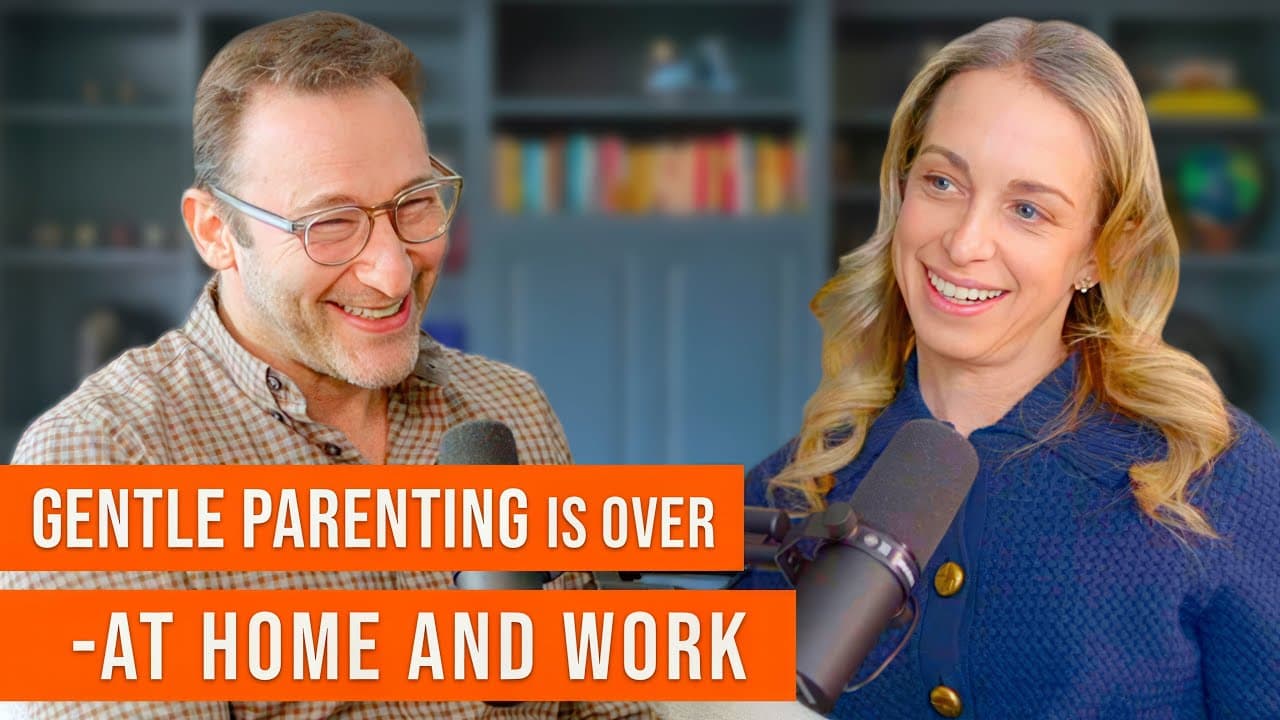
Dr. Becky Kennedy on Parenting Skills as Leadership Skills
TL;DR
Children and employees perceive tension and change even when leaders hide it, and a lack of information scares them more than the truth. Giving people a clear narrative, naming what you know and don't know, and validating their feelings builds trust. Parenting well and leading well rely on the same principle: sturdy leadership.
Transcript
someone feels your intention more than they feel your intervention intention is am my intention right now to teach and make better or is my intention to vomit my own frustration onto my child as a form of catharsis which is usually what we do feels so good though feels so good no it feels we do we do it work all the time we do all so good so good s... Read More
Key Insights
- Information does not scare kids as much as a lack of information does, because kids are expert perceivers whose survival depends on staying attuned to their parent and environment.
- Sturdy leadership is the shared skill behind good parenting and good management: setting boundaries, holding a sense of your own authority, staying connected, and seeing the good inside people.
- Uncertainty, not bad news, drives people into panic and looping. People can handle good news and bad news, but hiding and lying leaves them in a worse state and blocks their ability to ask questions.
- When people notice change and are given no story to explain it, they invent one, and that story is almost always that it is their own fault.
- Children are born good inside, with all the feelings and none of the skills, and that gap between intense feelings and absent skills explains essentially all bad behavior.
- Feelings are never the problem; the lack of skills to regulate them is. You cannot remove feelings, but leveling up skills changes behavior today and equips people for adulthood.
- People feel your intention more than your intervention, so ask whether your aim is to teach and improve or to vomit your own frustration onto someone as catharsis.
- Fault is not a useful framework. As the speaker's son said, sometimes bad things happen and it is nobody's fault, which reframes both parenting and leadership away from blame.
Install to Summarize YouTube Videos and Get Transcripts
Explore YouTube Video Summarizer or Get YouTube Transcript Extractor
Questions & Answers
Q: How to talk to kids during a crisis or traumatic event?
There are no perfect words for a wrong situation, so let go of finding them. Because a lack of information scares kids more than information, name what the child is noticing and say they are right to notice things have changed. Explain what is happening, for example that there is a fire but you are safe, that your number one job is to keep them safe, that you will share what you know and don't know, and that you will get through it together.
Q: Why does a lack of information scare children more than the truth?
Kids are expert perceivers of the world, even more than adults, because their evolution and survival depend on it. They rely on parents not just for food, shelter, and water but also love, so they stay especially attuned to whether their environment changed. When they notice something off, like black smoke or a crying parent, but are told nothing is wrong, they panic, cling, and act out because they have no narrative to understand what they sense.
Q: How are parenting skills the same as leadership skills?
The speaker argues Good Inside is a leadership approach, not just a parenting one, because both come down to sturdy leadership: setting boundaries, having a sense of your own authority, staying connected, and seeing the good inside people to bring it out. Whether you lead children, employees, or athletes, it is the same work of being responsible for those in your span of care and helping them rise and build confidence.
Q: Why is uncertainty worse for people than bad news?
People can deal with good news and people can deal with bad news, but it is uncertainty that causes insanity, rabbit holes, and looping. Withholding information also disallows questions, because if you give someone information, even bad news, they can ask a question, but if you give nothing, lie, and hide, it leaves them in an even worse state. This is true for adults, just more exaggerated in kids.
Q: What happens when people are not given a story to explain changes they notice?
When people notice things in their environment and are not given a story to understand them, one of two things happens. They either make up a story themselves, and almost always that story is that it is their own fault, or they are left in a terrifying state of noticing something is off without a narrative. This dynamic goes back to childhood and shapes how both kids and adults interpret unexplained tension around them.
Q: What are the two core principles behind children's behavior?
The first principle is that kids are born good inside; no baby wakes up intending to harm or hate their parents. The second, an inconvenient truth, is that they are born with all the feelings and none of the skills. That visual gap between intense feelings and absent regulation skills explains basically one hundred percent of children's bad behavior, and the same pattern shows up in adults who yell at a waiter or partner.
Q: Why is fault not a useful framework in parenting?
The speaker recounts her son saying, after a car scraped the garage, that sometimes bad things happen and it is nobody's fault. She finds this profound and says the obsession with fault, whether it is the kid's fault or the teacher's fault, is not a useful framework. Parenting has shifted from blaming the child and sending them to their room toward blaming others, but neither extreme is the Good Inside approach.
Q: Why teach skills instead of trying to remove children's feelings?
You cannot bring down or get rid of feelings, but if you level up skills, that changes behavior today. For generations the gap between feelings and skills was handled by sending kids away, as if the feelings were the problem, but feelings have never been the problem; the lack of skills is. Teaching skills gives kids the ultimate adult privilege of managing the entire range of feelings they will always have, which is teaching people how to be people.
Summary & Key Takeaways
-
During a crisis like the Los Angeles fires, there are no perfect words, but the guiding principle is that a lack of information terrifies kids more than information itself. Parents should name what a child is noticing, say they are right to notice it, and explain what is known and unknown.
-
The same approach applies to leadership. Employees are aware of executive tensions and change, so putting on smiley faces and hiding stress backfires. Good Inside is described not as a parenting approach but a leadership approach that helps people become sturdy leaders responsible for those in their care.
-
Parenting styles shifted from blaming the child to blaming others, but neither works. Kids are born good inside with all the feelings and none of the skills, so the answer is to teach skills rather than send feelings away, building people who can manage the full range of feelings for life.
Read in Other Languages (beta)
Share This Summary 📚
Summarize YouTube Videos and Get Video Transcripts with 1-Click
Try YouTube Summary with ChatGPT & Claude or YouTube Transcript Generator
Explore More Summaries from Simon Sinek 📚



Summarize YouTube Videos and Get Video Transcripts with 1-Click
Try YouTube Summary with ChatGPT & Claude or YouTube Transcript Generator