How Does Free Speech Evolve from Socrates to Social Media?
TL;DR
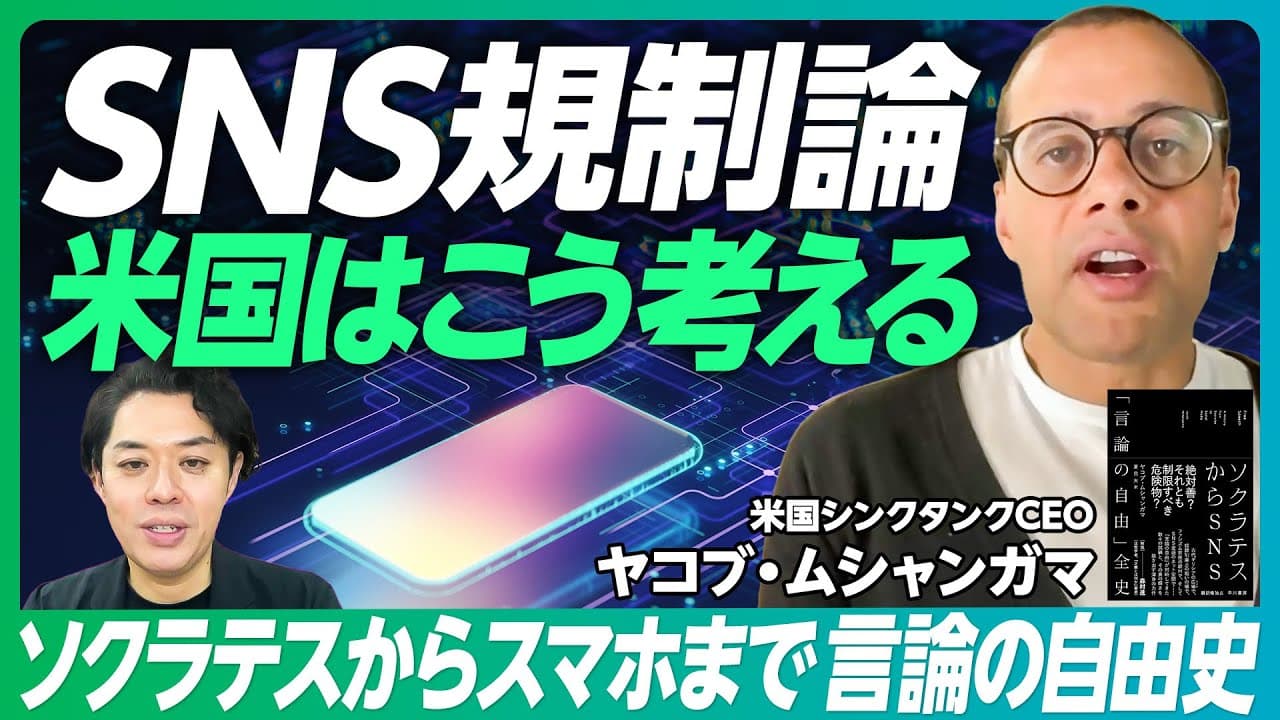
Free speech is fundamental to democracy and has deep historical roots, transcending Western ideology. Despite challenges such as disinformation and 'elite panic,' free speech remains crucial for democratic societies. The evolution of technology, from the printing press to social media, has expanded access to free speech, though it also presents new challenges in managing misinformation.
Transcript
I think free speech is um crucial obviously to to democracy uh and to the freedoms that we enjoy in democracy but it's also a very difficult concept uh and what I wanted to show with the book is first of all that the history of free speech has very deep roots but also that it's not exclusively a western uh idea and I you know Japan today is is a go... Read More
Key Insights
- Free speech is essential to democracy and the freedoms it provides.
- The history of free speech is not limited to Western cultures.
- Technological advances, like the printing press and social media, have transformed free speech accessibility.
- Current 'elite panic' results from social media and AI challenging traditional gatekeepers.
- Free speech is often taken for granted in established democracies.
- Disinformation is an age-old issue, not unique to modern social media.
- State-sponsored disinformation existed before social media and continues to evolve.
- Democracies risk undermining free speech by overreacting to misinformation.
Install to Summarize YouTube Videos and Get Transcripts
Explore YouTube Video Summarizer or Get YouTube Transcript Extractor
Questions & Answers
Q: How has technology impacted free speech historically?
Technology has significantly impacted free speech by broadening its reach and accessibility. The printing press, for example, allowed for the mass production of pamphlets and books, democratizing information dissemination. Similarly, social media has enabled individuals to share their voices globally without relying on traditional media gatekeepers. However, this increased reach also presents challenges in managing misinformation.
Q: What is 'elite panic' in the context of free speech?
'Elite panic' refers to the anxiety among traditional gatekeepers, such as media and political elites, about losing control over information dissemination due to new technologies like social media and AI. This panic often leads to attempts to restrict free speech to maintain authority, despite the broader democratization of information these technologies provide.
Q: Why is free speech considered crucial for democracy?
Free speech is fundamental to democracy as it allows for open debate, criticism of government, and the expression of diverse opinions. It underpins other democratic rights and freedoms, making the concept of democracy meaningless without it. In societies where free speech is restricted, democratic processes and human rights are often compromised.
Q: How do modern challenges like misinformation affect free speech?
Modern challenges like misinformation complicate the landscape of free speech by spreading false information rapidly through digital platforms. While misinformation can have negative effects, such as influencing public opinion and election outcomes, overreacting by restricting free speech can undermine democratic values and empower authoritarian regimes.
Q: Is disinformation a new phenomenon with social media?
Disinformation is not a new phenomenon and has been used throughout history, including by state actors. While social media has increased the speed and scope of disinformation dissemination, state-sponsored disinformation campaigns existed long before the digital age, using various methods to influence public perception and sow discord.
Q: How do different countries approach the issue of free speech?
Approaches to free speech vary significantly across countries. In established democracies, free speech is often taken for granted, while in authoritarian regimes, it is heavily restricted. Some countries, like Taiwan, use innovative methods to combat disinformation without resorting to censorship, whereas others may impose restrictions that can stifle free expression.
Q: What role does free speech play in fighting disinformation?
Free speech plays a crucial role in combating disinformation by allowing open debate and critical discussion. It enables fact-checking and the dissemination of accurate information, empowering citizens to discern truth from falsehood. Restricting free speech in the name of combating disinformation can backfire, leading to less informed societies and empowering authoritarian censorship.
Q: Why is it important to access diverse information sources, even if they include propaganda?
Accessing diverse information sources, including propaganda, is important for understanding different perspectives and forming a well-rounded view of global events. It helps individuals critically evaluate information and recognize biases. Restricting access to such sources can hinder this understanding and limit the ability to counteract misinformation effectively.
Summary & Key Takeaways
-
Free speech is vital for democracy, with a deep historical background that extends beyond Western ideologies. It faces challenges like disinformation and 'elite panic,' especially with the rise of social media. Despite these challenges, free speech remains a cornerstone of democratic societies.
-
Technological advancements, from the printing press to social media, have expanded the reach of free speech, allowing more voices to be heard. However, these advancements also bring new challenges in managing misinformation and disinformation, which have existed long before the digital age.
-
In established democracies, free speech is often taken for granted, while in countries with restrictive regimes, it is a critical issue. Overreacting to misinformation by restricting free speech can inadvertently aid authoritarian states, emphasizing the need for a balanced approach.
Read in Other Languages (beta)
Share This Summary 📚
Summarize YouTube Videos and Get Video Transcripts with 1-Click
Try YouTube Summary with ChatGPT & Claude or YouTube Transcript Generator
Explore More Summaries from PIVOT 公式チャンネル 📚

Summarize YouTube Videos and Get Video Transcripts with 1-Click
Try YouTube Summary with ChatGPT & Claude or YouTube Transcript Generator