How to Build a $9K/Month Marketplace Micro-SaaS
TL;DR
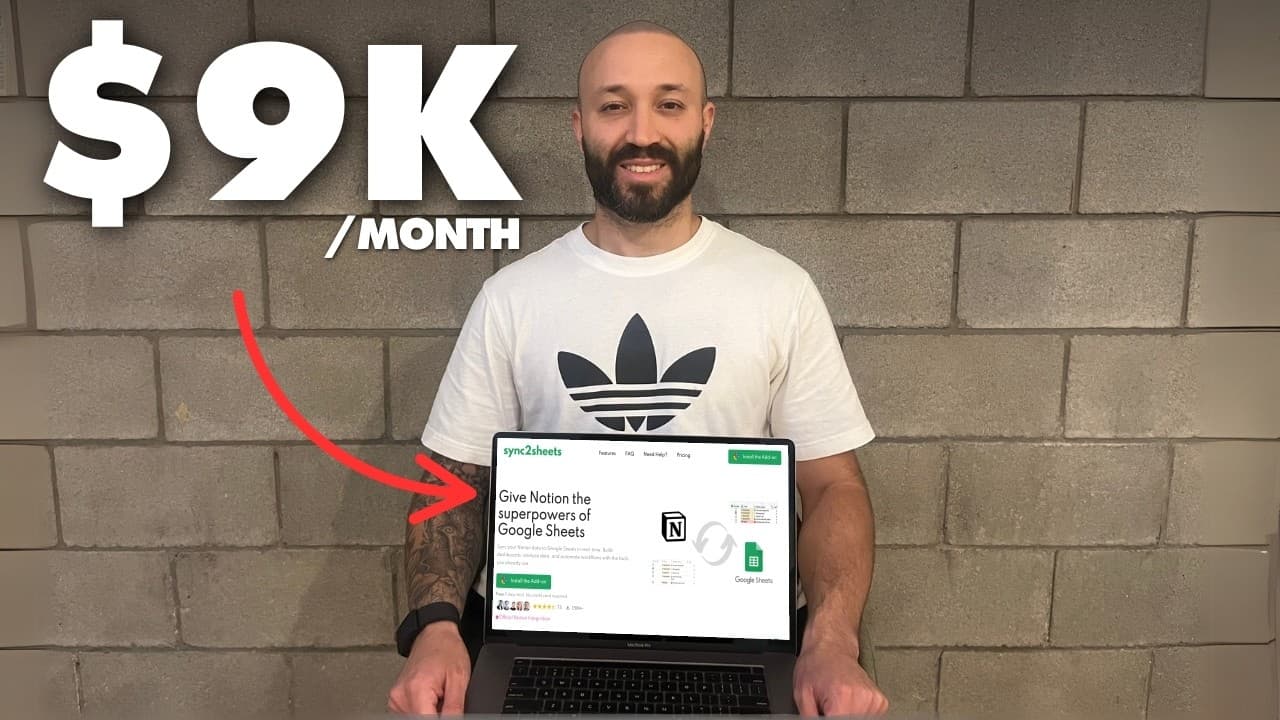
Start by identifying a narrow, recurring workflow that users already struggle to complete, then validate demand through community searches and early testers. Leandro built Sync2Sheets in two weeks, launched it through the Google Workspace Marketplace and relevant online groups, and grew the focused Notion-to-Google-Sheets integration to a reported $9,000 per month.
Transcript
My app does one thing and makes 9K a month. This is Leandro and he built an app that literally does just one thing. If you want to build a successful plugin, you need to understand this. But before the success, he was freelancing and doing side jobs until he came across a framework that changed everything. It has hundreds of business ideas waiting ... Read More
Key Insights
- Sync2Sheets is a narrowly focused Google Sheets add-on that synchronizes Notion databases with spreadsheets. Its single-purpose design attracted more than 70,000 users and over 450 paying customers, demonstrating that a micro-SaaS does not require a broad feature set to become a business.
- The original opportunity was identified through a gap between user demand and Notion's available capabilities. Leandro searched the Notion subreddit for terms including Sheets, Google Sheets, Excel, and CSV, then found many people trying to export Notion information for spreadsheet-based data work.
- The first MVP was built in two weeks using Google Apps Script and VS Code. Leandro's previous experience with the Google Sheets API accelerated development, while Stack Overflow and Google searches supplied the technical guidance needed without assistance from AI tools.
- The essential MVP function was transferring information from one service to another. Formatting was initially excluded, allowing Leandro to test the core value before adding conditional formatting, data validation, dropdown support, and synchronization behavior that preserved user control over columns.
- Idea validation begins with examining whether similar products already exist and whom they serve. Existing solutions and their pricing can indicate commercial potential, while a clear differentiating angle is necessary before entering a market where customers already have alternative products.
- Early users are an active source of product validation. Leandro recommends finding the first five testers through Reddit, X, Facebook groups, or LinkedIn groups, then letting their actual usage and feedback shape the application while development remains underway.
- Integration directories can reveal recurring business problems. Leandro suggests reviewing common Zapier pairings, such as QuickBooks and Google Sheets, because workflows requiring separate automations for creates, updates, and deletes may support a unified, purpose-built software product.
- Marketplace distribution gives a focused product access to users already searching for related functionality. Sync2Sheets received its first installs through the Google Workspace Marketplace, while relevant groups, Reddit conversations, direct messages, and landing-page chat helped recruit users and uncover their needs.
Install to Summarize YouTube Videos and Get Transcripts
Explore YouTube Video Summarizer or Get YouTube Transcript Extractor
Questions & Answers
Q: How did Sync2Sheets become a $9,000-per-month micro-SaaS?
Sync2Sheets addressed one specific workflow: synchronizing Notion databases with Google Sheets. Leandro validated the need by finding repeated requests on Reddit, built an MVP in two weeks, published it in the Google Workspace Marketplace, and recruited early users through online groups and direct conversations. The product eventually reached more than 70,000 users, over 450 paying customers, and a reported $9,000 per month.
Q: How can a founder find a profitable micro-SaaS idea?
A founder can look for repeated workflow problems where people already request custom solutions. Leandro suggests reviewing common Zapier application pairings and browsing Upwork jobs to see what customers are paying developers to build. He also records ideas that emerge from blog posts, X, and YouTube, paying particular attention when the same idea appears several times because repetition can indicate persistent demand.
Q: How did Leandro validate the Notion-to-Google-Sheets idea?
Leandro searched the Notion subreddit using keywords connected to the proposed integration, including Sheets, Google Sheets, Excel, and CSV. He found many users trying to export Notion information into spreadsheets so they could work with the data. That visible demand, combined with his Google Sheets API experience, gave him confidence to build an MVP and find beta testers.
Q: What should founders check before building a micro-SaaS?
Founders should first identify existing products that solve the same or a similar problem, determine whether those products serve enterprises, small businesses, or individuals, and examine their pricing. They should then define a credible point of differentiation. Leandro says that if he cannot find a distinct angle, he may choose another idea because entering the market without differentiation is difficult.
Q: How should a micro-SaaS MVP be scoped?
A micro-SaaS MVP should deliver the core outcome with as little additional functionality as possible. For Sync2Sheets, the initial requirement was simply transferring information into Google Sheets, without formatting or extra presentation features. After proving that function, Leandro added details users needed, including conditional formatting, data validation, dropdowns, and synchronization that continued working when columns were moved or hidden.
Q: How can founders recruit their first micro-SaaS users?
Leandro recommends finding the first five users through communities where the target audience already gathers, including Reddit, X, Facebook groups, and LinkedIn groups. For Sync2Sheets, he searched relevant keywords, joined conversations in Notion-focused groups, and contacted people through direct messages. Keeping users involved during development generated feedback about whether the application was solving the exact problem they experienced.
Q: Why are software marketplaces useful for solo developers?
Software marketplaces place an application where users already search for extensions related to the platform they use. After Leandro published Sync2Sheets in the Google Workspace Marketplace, people looking for Notion-related functionality could discover and try it. The marketplace became the product's first source of installs, while community outreach and direct conversations supplemented that built-in discovery channel.
Q: What tools were used to build the Sync2Sheets MVP?
Leandro built the add-on with Google Apps Script, which he described as a language for extending Google services such as Docs, Sheets, and Slides. He used VS Code as his coding editor and relied on prior experience with the Google Sheets API. The first version took two weeks, with Stack Overflow and Google searches providing development assistance rather than AI tools.
Summary & Key Takeaways
-
Leandro built Sync2Sheets, a focused add-on that transfers Notion database information into Google Sheets. He developed the MVP in two weeks after noticing repeated requests for this workflow on Reddit. The product later reached more than 70,000 users, over 450 paying customers, and a reported $9,000 in monthly revenue.
-
The idea emerged from Leandro's experience with the Google Sheets API and the release of Notion's official API. He searched the Notion subreddit for terms such as Google Sheets, Excel, and CSV. Repeated requests to export information gave him enough confidence to build a basic version and recruit beta testers.
-
His validation process begins with examining existing products, intended customer segments, and available pricing. A viable idea also needs a meaningful point of differentiation. He recommends finding five initial users through Reddit, X, Facebook groups, or LinkedIn groups, then involving those users while the product is still being developed.
Read in Other Languages (beta)
Share This Summary 📚
Summarize YouTube Videos and Get Video Transcripts with 1-Click
Try YouTube Summary with ChatGPT & Claude or YouTube Transcript Generator
Explore More Summaries from Starter Story 📚






Summarize YouTube Videos and Get Video Transcripts with 1-Click
Try YouTube Summary with ChatGPT & Claude or YouTube Transcript Generator