Why Do Vinyl and Aryl Halides Not React in SN1 or SN2?
TL;DR
Vinyl and aryl halides are unreactive in SN1 and SN2 reactions due to steric hindrance and the repulsion caused by the pi electron cloud. In SN2 mechanisms, nucleophiles struggle to approach the carbon because of these factors. Additionally, the resultant carbocation from an SN1 reaction is unstable on an SP carbon, making these reactions unfavorable.
Transcript
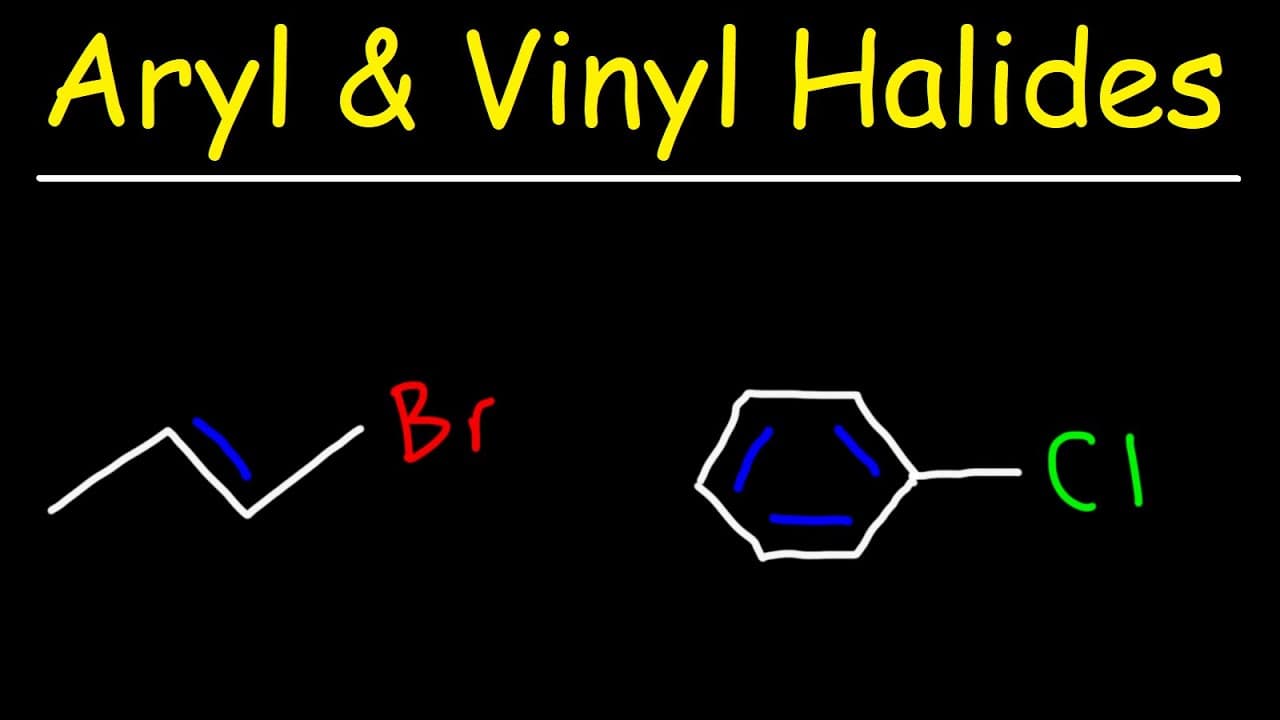
consider the reaction between one bromel propane and potassium hydroxide in water what's going to be the major product of that reaction and will it occur via the sn2 mechanism or the sn1 mechanism what would you say so this particular type of halide it's not a typical alkyl halide this is known as a vino halide the halogen is directly attached to a... Read More
Key Insights
- 🤨 Vinyl and aryl halides are unreactive toward SN1 and SN2 reactions due to steric factors and the repulsion from the pi electron cloud.
- 🈂️ The presence of a positive charge on an SP carbon in vinyl and aryl halides creates an unstable situation.
- 🤨 Nucleophiles have difficulty approaching the carbon in vinyl halides from the back due to hinderance from the double bond system and repulsion from the pi electron cloud.
Install to Summarize YouTube Videos and Get Transcripts
Explore YouTube Video Summarizer or Get YouTube Transcript Extractor
Questions & Answers
Q: Why do vinyl halides not work well in SN2 reactions?
Vinyl halides are unreactive in SN2 reactions due to steric factors, where the double bond system creates hinderance for the nucleophile approaching the carbon, and the repulsion from the pi electron cloud.
Q: Why are vinyl and aryl halides not suitable for SN1 reactions?
Vinyl and aryl halides do not work well in SN1 reactions because the resulting carbocation on the SP carbon is highly unstable, as the carbon with more s-character is closer to the nucleus and more electronegative, leading to an unfavorable positive charge on an electronegative atom.
Q: What factors hinder the nucleophile in SN2 reactions with vinyl halides?
The nucleophile is hindered by both steric factors, where the double bond system obstructs its approach, and the repulsion from the pi electron cloud.
Q: Why are positive charges on electrongative SP carbons highly unstable?
Positive charges on electrongative SP carbons are highly unstable because the SP carbon, with more s-character, is closer to the nucleus, making it more electronegative. Electronegative atoms strongly prefer to have negative charges rather than positive charges, creating an unstable situation.
Summary & Key Takeaways
-
Vinyl and aryl halides, which have a halogen directly attached to a carbon part of a double bond system, do not undergo SN1 or SN2 reactions.
-
SN2 reactions are hindered due to steric factors and the repulsion from the pi electron cloud.
-
SN1 reactions are not favorable as the resulting carbocation on the SP carbon is highly unstable.
Read in Other Languages (beta)
Share This Summary 📚
Summarize YouTube Videos and Get Video Transcripts with 1-Click
Try YouTube Summary with ChatGPT & Claude or YouTube Transcript Generator
Explore More Summaries from The Organic Chemistry Tutor 📚




Summarize YouTube Videos and Get Video Transcripts with 1-Click
Try YouTube Summary with ChatGPT & Claude or YouTube Transcript Generator