How to Optimize Sleep for Better Alertness
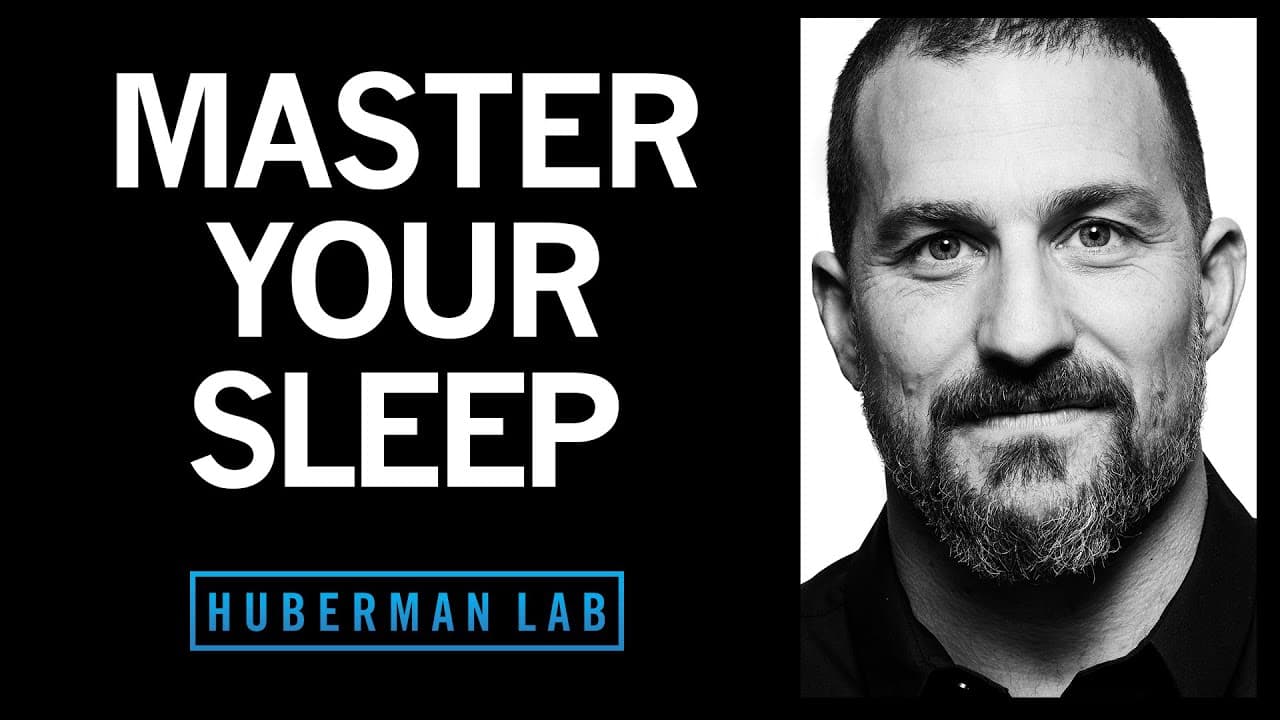
TL;DR
Prioritizing early morning sunlight exposure is essential for regulating your sleep-wake cycle. This simple practice helps establish healthy circadian rhythms, leading to improved focus and energy during waking hours. Avoid bright lights at night to support melatonin production and maintain better sleep quality.
Transcript
- Welcome to the Huberman Lab Podcast where we discuss science and science-based tools for everyday life. (energetic music) I'm Andrew Huberman and I'm a professor of neurobiology and ophthalmology at Stanford School of Medicine. Today's podcast episode is all about sleep, and we're also going to talk about the mirror image of sleep, which is wakef... Read More
Key Insights
- 😫 Sunlight exposure in the early morning is crucial for setting the circadian rhythm.
- 😪 Late-night light exposure disrupts sleep by inhibiting the release of sleep-inducing hormones.
- 🎴 Lighting location plays a role in activating or suppressing the circadian rhythm, with lower, dimmer lights being preferable.
- 🙂 Light exposure in the evening delays the sleep-wake cycle, making it harder to wake up early the next morning.
Install to Summarize YouTube Videos and Get Transcripts
Explore YouTube Video Summarizer or Get YouTube Transcript Extractor
Questions & Answers
Q: Why is light exposure important for sleep patterns?
Light exposure, especially sunlight, triggers the release of hormones that regulate the sleep-wake cycle, impacting our ability to fall asleep and wake up at the desired times.
Q: What is the best way to set the circadian rhythm?
Get sunlight exposure in the early morning to signal wakefulness and discourage exposure to bright lights, especially between 11:00 p.m. and 4:00 a.m., to maintain a healthy sleep pattern.
Q: Can light exposure at night affect sleep quality?
Yes, exposure to bright lights, including screens, suppresses the release of sleep-inducing hormones and can disturb the sleep-wake cycle, leading to difficulties falling asleep and disrupted sleep.
Q: Are there any alternatives to sunlight exposure for regulating sleep?
If natural sunlight is limited, artificial lights mimicking sunlight can be used. However, the effectiveness may vary, and prolonged exposure to artificial lights should be avoided before sleep.
Key Insights:
- Sunlight exposure in the early morning is crucial for setting the circadian rhythm.
- Late-night light exposure disrupts sleep by inhibiting the release of sleep-inducing hormones.
- Lighting location plays a role in activating or suppressing the circadian rhythm, with lower, dimmer lights being preferable.
- Light exposure in the evening delays the sleep-wake cycle, making it harder to wake up early the next morning.
- Proper light exposure can promote better sleep quality, mental health, metabolism, and focus.
Summary & Key Takeaways
-
Sleep and wakefulness are interconnected phases that govern our mental and physical health.
-
Light is the primary factor in setting the circadian rhythm, with sunlight being the most effective light source.
-
For optimal sleep patterns, it is crucial to get early morning sunlight exposure and avoid bright lights at night.
-
Timing of food intake and exercise can also influence sleep-wake rhythms.
Read in Other Languages (beta)
Share This Summary 📚
Summarize YouTube Videos and Get Video Transcripts with 1-Click
Try YouTube Summary with ChatGPT & Claude or YouTube Transcript Generator
Explore More Summaries from Andrew Huberman 📚



Summarize YouTube Videos and Get Video Transcripts with 1-Click
Try YouTube Summary with ChatGPT & Claude or YouTube Transcript Generator