Howard Lutnick on the U.S.-Taiwan Chip Deal
TL;DR
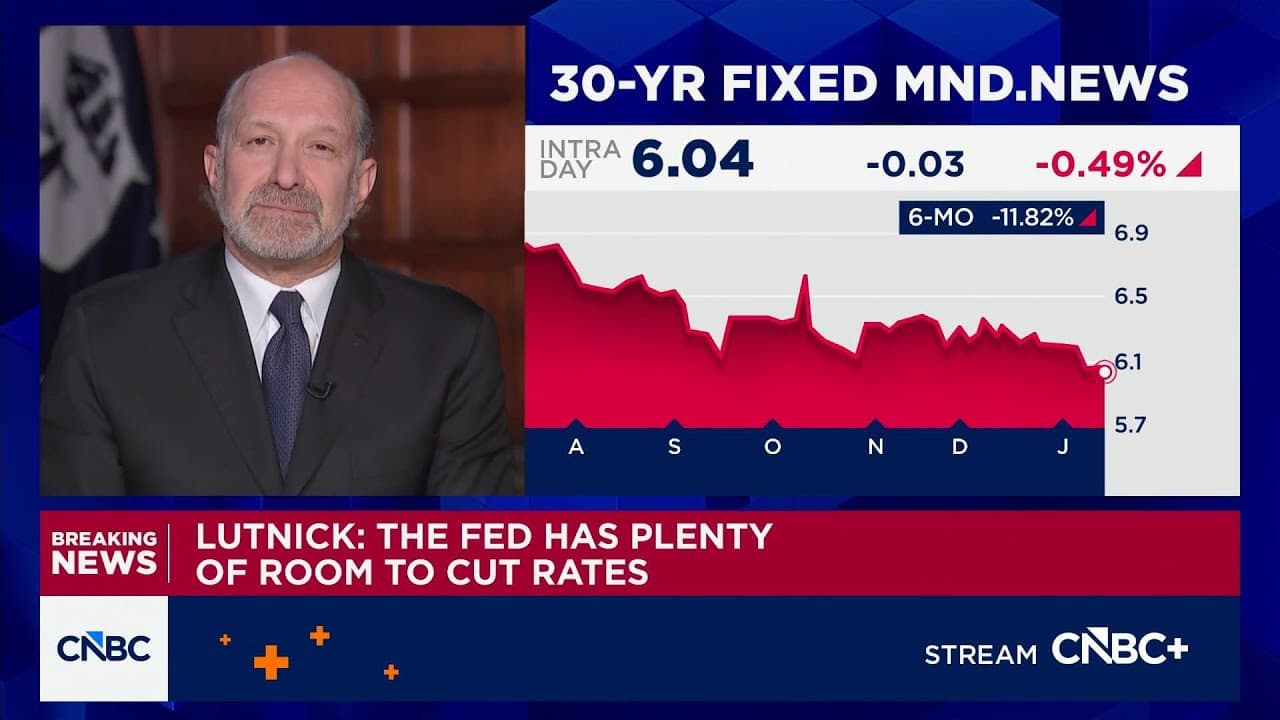
The U.S.-Taiwan trade deal pairs a lower 15% reciprocal tariff with commitments intended to move semiconductor production and its supporting supply chain to America. Commerce Secretary Howard Lutnick described $250 billion in direct company commitments and another $250 billion supplied by Taiwan’s government, while warning that semiconductor tariffs could reach 100% for companies that do not build in the United States.
Transcript
FROM YOUR NUMBERS. BUT THIS BODES WELL BECAUSE EVEN ON THE EARNINGS CALL, THE CEO OF TSMC SPOKE ABOUT IMPROVED PRODUCTIVITY BY BUILDING THESE FABS IN THE US. SO THIS IS GREAT NEWS. >> WELL LET'S GET MORE NOW ON THAT AND MUCH MORE. JOINING US NOW IS THE MAN WHO NEGOTIATED THIS DEAL. HOWARD LUTNICK IS THE US SECRETARY OF COMMERCE. SECRETARY LUTNICK, ... Read More
Key Insights
- The agreement represents $500 billion in stated commitments, according to Lutnick: $250 billion directly from companies and $250 billion supplied by Taiwan’s government to support smaller and medium-sized companies moving semiconductor supply-chain operations to America.
- TSMC’s previously announced $100 billion commitment in 2025 counts toward the $250 billion company commitment, according to Lutnick. He also said TSMC had purchased hundreds of acres adjacent to its existing property and could expand its American operations substantially.
- The semiconductor strategy extends beyond fabrication plants because chips require supporting components and connections for power, translation, and displays. Lutnick said hundreds of companies could move to the United States and form large semiconductor industrial parks containing more of the complete supply chain.
- Taiwan’s reciprocal tariff rate would decline from 20% to 15% under the agreement. Lutnick also said generic pharmaceuticals, aircraft parts, unavailable natural resources, and products not grown in the United States could receive tariff-free treatment.
- Approved semiconductor builders could import 2.5 times their planned American production without a semiconductor tariff while construction proceeds. Lutnick illustrated that a company building capacity for one million wafers could import 2.5 million wafers during the approved construction period.
- The administration’s stated objective is to move 40% of Taiwan’s semiconductor production and entire supply chain to the United States. Lutnick said companies that commit to approved American construction receive favorable import treatment, while those that do not build could face tariffs near 100%.
- Semiconductor reshoring is presented as a national security requirement because the United States should not depend on products delivered from a country 9,000 miles away. Lutnick also argued that expanded domestic semiconductor production would create hundreds of thousands of American jobs.
- Lutnick predicted that the U.S. economy would grow more than 5% in the first quarter of 2026. He argued that growth and lower interest rates could coexist with inflation running at 2.7%, citing rising American productivity and housing affordability as reasons to reduce rates.
Install to Summarize YouTube Videos and Get Transcripts
Explore YouTube Video Summarizer or Get YouTube Transcript Extractor
Questions & Answers
Q: What did the U.S.-Taiwan trade deal commit to semiconductor investment?
Howard Lutnick described commitments totaling $500 billion. He said $250 billion would come directly from companies, including credit for TSMC’s $100 billion commitment announced in 2025. Taiwan’s government would supply another $250 billion to help smaller and medium-sized companies bring semiconductor supply-chain operations to America, supporting broader domestic production rather than only individual fabrication facilities.
Q: How does the trade deal encourage semiconductor companies to build in America?
The deal offers tariff-free semiconductor imports during approved American construction projects. According to Lutnick, the Department of Commerce can approve a company’s plan and allow it to import 2.5 times the amount of production capacity it is building domestically. A company constructing capacity for one million wafers, for example, could import 2.5 million wafers while construction proceeds.
Q: What tariffs does Taiwan receive under the U.S. trade agreement?
Taiwan’s reciprocal tariff rate falls from 20% to 15%, according to Lutnick. He also said generic pharmaceuticals, aircraft parts, unavailable natural resources, and products that are grown abroad but not in the United States could receive tariff-free treatment. Semiconductor companies receive additional tariff relief when they commit to and receive approval for building production capacity in America.
Q: What happens if semiconductor companies do not build in the United States?
Lutnick said semiconductor tariffs would likely reach 100% for companies that do not build in America. The policy combines that potential tariff with an incentive for approved builders: they may bring semiconductors into the country without a tariff while constructing domestic capacity, up to 2.5 times the amount of production they commit to build in the United States.
Q: Why does the administration want semiconductor production moved to America?
Lutnick framed domestic semiconductor production as a national security requirement. He argued that the United States cannot rely on a country located 9,000 miles away to deliver products that are fundamental to national security. He also said reshoring fabrication and related suppliers could create hundreds of thousands of jobs and make America self-sufficient in semiconductor-building capacity.
Q: How much of Taiwan’s semiconductor industry could move to the United States?
The stated objective is to move 40% of Taiwan’s entire semiconductor supply chain and production into the United States. Lutnick said the effort would include TSMC as well as hundreds of supporting companies that provide the parts and connections chips require. He envisioned large American semiconductor industrial parks containing fabrication facilities and a wider network of supply-chain businesses.
Q: What did Howard Lutnick say about U.S.-China relations?
Lutnick said the semiconductor agreement was focused on American jobs and national security rather than being characterized as a move against China. He stated that President Trump had a strong personal relationship with President Xi and was driving the bilateral relationship. Lutnick also said Trump was planning to travel to China in April and that the planned meeting remained on track.
Q: What economic growth and interest-rate outlook did Howard Lutnick present?
Lutnick predicted U.S. economic growth above 5% in the first quarter of 2026. He argued that the economy could combine strong growth with lower interest rates because inflation was running at 2.7% and American productivity was increasing. He also said lower rates were necessary for housing affordability and rejected the idea that strong growth must require restrictive interest-rate policy.
Summary & Key Takeaways
-
Lutnick presented the agreement as a $500 billion effort to establish semiconductor manufacturing and its supporting supply chain in America. He said $250 billion would come directly from companies, while Taiwan’s government would supply another $250 billion to help small and medium-sized businesses move production and related capabilities to the United States.
-
Taiwan’s reciprocal tariff would fall from 20% to 15%, while qualifying generic pharmaceuticals, aircraft parts, unavailable natural resources, and certain goods not grown domestically could enter tariff-free. Approved semiconductor companies building American capacity could temporarily import 2.5 times their planned domestic production without paying a semiconductor tariff.
-
Lutnick connected semiconductor reshoring to national security, employment, and broader economic policy. He also predicted first-quarter 2026 growth above 5%, supported lower interest rates while inflation was running at 2.7%, and said President Trump was still planning an April trip to China for discussions with President Xi.
Read in Other Languages (beta)
Share This Summary 📚
Summarize YouTube Videos and Get Video Transcripts with 1-Click
Try YouTube Summary with ChatGPT & Claude or YouTube Transcript Generator
Explore More Summaries from CNBC Television 📚


Summarize YouTube Videos and Get Video Transcripts with 1-Click
Try YouTube Summary with ChatGPT & Claude or YouTube Transcript Generator