What Did Treasury Secretary Scott Bessent Say About Trade Deals?
TL;DR
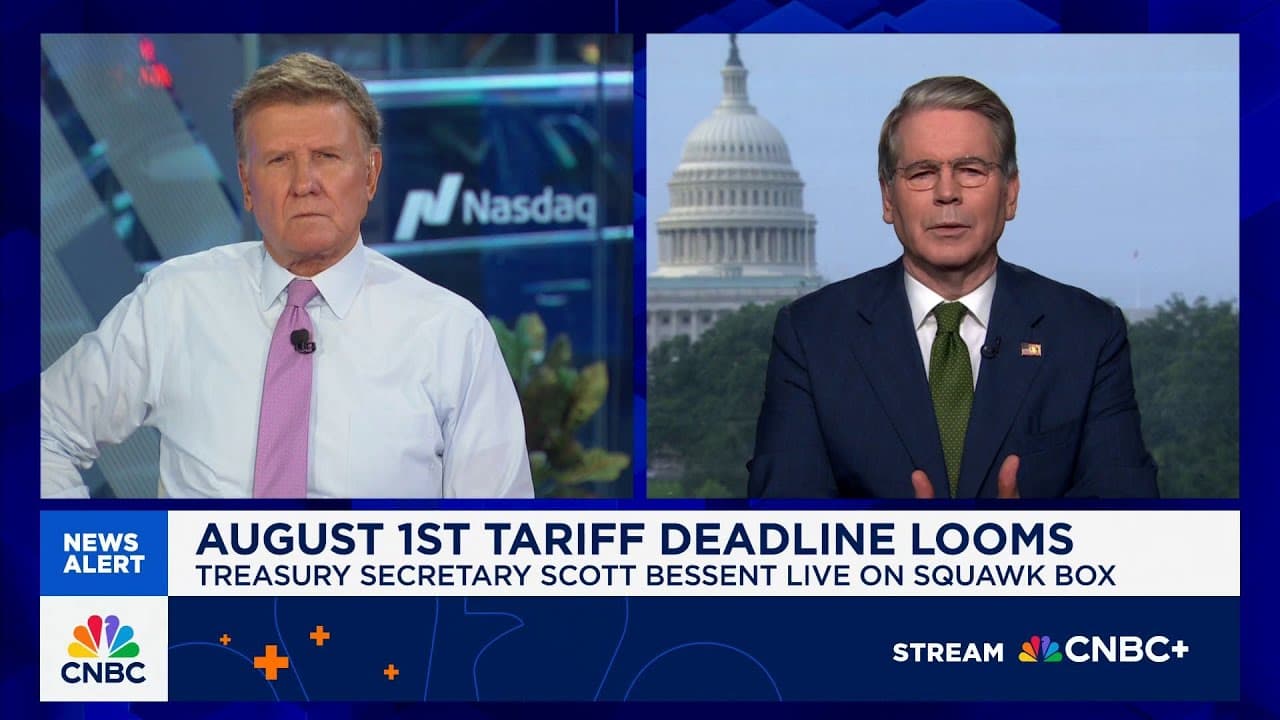
Treasury Secretary Scott Bessent discussed the U.S.-South Korea trade deal, highlighting significant tariff reductions and increased South Korean investment as a model for future agreements. He also addressed the complexities of negotiations with China and India and noted that the U.S. economy is preparing for potential growth due to capital expenditures and advancements in AI.
Transcript
Read and summarize the transcript of this video on Glasp Reader (beta).
Key Insights
- The U.S.-South Korea trade agreement involves significant tariff reductions and increased South Korean investment in the U.S., setting a precedent for future deals.
- Trade negotiations with China remain complex, involving strategic economic and military considerations, with ongoing discussions about tariffs and technology.
- India's slow progress in trade negotiations is attributed to its purchase of Russian oil, complicating its relationship with the U.S.
- The impact of tariffs on U.S. companies like Ford highlights unintended economic consequences, prompting discussions about potential carve-outs.
- The U.S. economy shows signs of potential acceleration, driven by capital expenditures and advancements in AI technology, despite current GDP growth concerns.
- Fed Chair Powell's future and potential replacements are under consideration, with upcoming vacancies on the Federal Reserve Board.
- The introduction of $1,000 baby bonds aims to increase financial asset ownership among Americans, complementing Social Security.
- Criticism of insider trading among U.S. senators underscores concerns about financial ethics and governance.
Install to Summarize YouTube Videos and Get Transcripts
Explore YouTube Video Summarizer or Get YouTube Transcript Extractor
Questions & Answers
Q: What is the significance of the U.S.-South Korea trade deal?
The U.S.-South Korea trade deal is significant because it reduces tariffs and increases South Korean investment in the U.S. This agreement is expected to boost U.S. exports, particularly in energy and agricultural products, by lowering trade barriers. It also sets a precedent for future trade deals, showcasing a cooperative approach to international trade that benefits both nations economically.
Q: How do the U.S.-China trade negotiations differ from others?
The U.S.-China trade negotiations are particularly complex due to the dual nature of the relationship, involving both economic and military considerations. Unlike other trade partners, China is both an economic and military rival, making negotiations akin to three-dimensional chess. Issues such as tariffs, technology, and rare earth minerals are central to discussions, requiring careful balancing of leverage and national security interests.
Q: What challenges do U.S. companies face due to tariffs?
U.S. companies, like Ford, face significant challenges due to tariffs, which can lead to increased costs and reduced profitability. For instance, Ford's reliance on imported parts resulted in substantial tariff-related expenses, erasing profits. These unintended consequences highlight the need for potential carve-outs or adjustments to tariff policies to mitigate negative impacts on domestic manufacturers striving to maintain U.S.-based production.
Q: What economic indicators suggest potential U.S. growth?
Potential U.S. economic growth is indicated by increased capital expenditures and advancements in AI technology. The recent tax reforms have provided certainty, encouraging investments in infrastructure and technology. The administration expects these factors to drive productivity gains and economic acceleration, despite current concerns over GDP growth. The anticipated AI-driven productivity boost is reminiscent of past economic expansions driven by technological advancements.
Q: What is the administration's stance on the future of Fed Chair Powell?
The administration is currently considering potential replacements for Fed Chair Powell, with two upcoming vacancies on the Federal Reserve Board. While Powell's term as chair ends in May, his seat extends for another two years. The administration aims to appoint individuals who will prioritize the American economy's best interests, amidst ongoing discussions about the Fed's role in managing inflation and economic growth.
Q: How do $1,000 baby bonds impact Americans?
The introduction of $1,000 baby bonds is designed to increase financial asset ownership among Americans, particularly those without existing financial assets. This program aims to provide every newborn with a stake in the market, promoting capitalism and financial inclusion. Over time, the compounding effect of these bonds is expected to complement Social Security, offering a substantial payout upon retirement and fostering economic stability.
Q: What ethical concerns are raised about U.S. senators?
Ethical concerns about U.S. senators focus on allegations of insider trading, with some senators reportedly achieving unusually high investment returns. The lack of strict insider trading regulations for senators raises questions about financial ethics and governance. Such practices undermine public trust and highlight the need for regulatory reforms to ensure transparency and accountability among public officials.
Q: What role does AI play in the U.S. economic outlook?
AI plays a crucial role in the U.S. economic outlook by driving productivity gains and technological advancements. The anticipated AI-driven productivity boost is expected to contribute to economic growth, similar to past expansions fueled by technological innovations. As companies invest in AI and related technologies, the administration anticipates increased efficiency and competitiveness, positioning the U.S. economy for sustained growth and development.
Summary & Key Takeaways
-
Treasury Secretary Scott Bessent discusses the U.S.-South Korea trade deal, which includes tariff reductions and increased South Korean investment in the U.S., serving as a model for future agreements. The deal aims to boost U.S. exports and reduce trade barriers.
-
Negotiations with China are complex, involving both economic and military considerations. The discussions focus on tariffs, technology, and rare earth minerals, with the U.S. seeking to balance leverage and national security interests.
-
The U.S. economy is poised for potential growth, driven by capital expenditures and AI advancements. Despite concerns over GDP growth, the administration anticipates an economic acceleration, supported by tax reforms and productivity gains.
Read in Other Languages (beta)
Share This Summary 📚
Summarize YouTube Videos and Get Video Transcripts with 1-Click
Try YouTube Summary with ChatGPT & Claude or YouTube Transcript Generator
Explore More Summaries from CNBC Television 📚

Summarize YouTube Videos and Get Video Transcripts with 1-Click
Try YouTube Summary with ChatGPT & Claude or YouTube Transcript Generator