How Does AI Increase Work and Mental Fatigue?
TL;DR
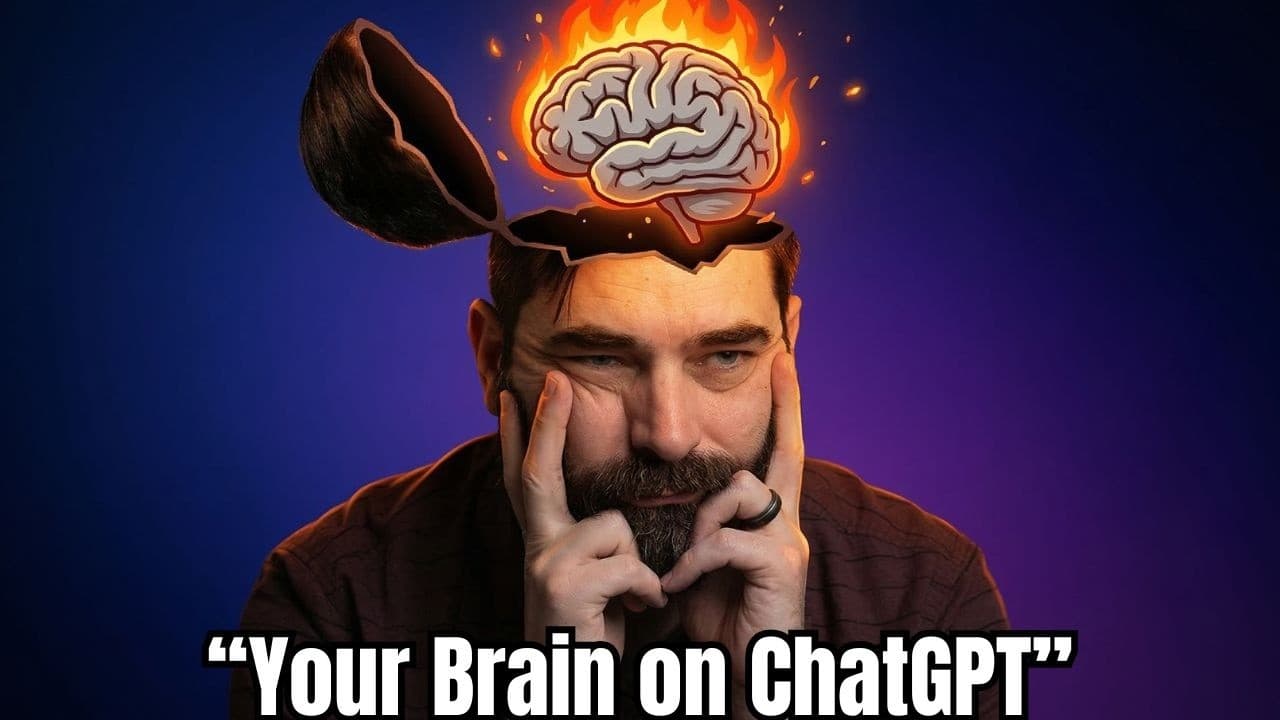
AI can make individual tasks faster while increasing total workload, context switching, review duties, and mental fatigue. Workers often use saved time to accept more responsibilities, maintain several active threads, and continue prompting during breaks or evenings, which weakens recovery. The suggested risk is not AI use itself, but allowing greater capacity to become continuous work and escalating expectations.
Transcript
So, I've been talking about AI for a long time now, like sixish years at this point. Lately, I've been feeling like less energized by it. I almost feel like even though I have all of these things that make me more productive and make me be able to produce a lot more things and I can do more than I've ever been able to do, I actually feel like I'm w... Read More
Key Insights
- AI productivity is not the same as reduced workload. The cited workplace study found that employees worked faster, handled a broader range of tasks, and extended work into more hours, producing greater output while also increasing cognitive fatigue and the risk of burnout.
- Saved time is often converted into additional work. When AI shortens a task, workers may stack new responsibilities onto their schedules instead of using the extra capacity for rest, deeper thought, or shorter working hours, allowing work to expand beyond its previous boundaries.
- AI can broaden job responsibilities by filling knowledge gaps. Product managers and designers began writing code, researchers attempted engineering work, and employees handled tasks that previously would have been outsourced, deferred, avoided, or assigned to colleagues with different expertise.
- Easy prompting can weaken the boundary between work and recovery. Employees submitted prompts during lunch or continued working in the evening because each interaction felt quick, but these small actions created more continuous involvement and reduced the restorative value of natural pauses.
- AI-assisted multitasking increases coordination demands. Workers can run coding, research, and brainstorming activities in separate windows, but the human must still track every thread, switch contexts, review outputs, and make decisions even though the AI itself does not become tired.
- Faster production can normalize higher expectations without explicit management pressure. When increased output becomes visible in everyday work, managers and workers may both adjust their assumptions about an acceptable pace, causing a temporary productivity surge to become a demanding new baseline.
- AI changes creative work into supervisory work. The workflow increasingly becomes prompting, waiting, reading, judging correctness and safety, checking architectural fit, fixing errors, and repeating, which can feel less energizing than directly making code, videos, or other creative work.
- Rapid AI development creates a fear-driven learning treadmill. Constant announcements about models, agents, frameworks, protocols, marketplaces, and new workflows can make users feel that continuous monitoring is necessary to remain relevant, adding information overload to an already intensified workload.
Install to Summarize YouTube Videos and Get Transcripts
Explore YouTube Video Summarizer or Get YouTube Transcript Extractor
Questions & Answers
Q: How can AI increase workload while making tasks faster?
AI can shorten individual tasks while encouraging workers to complete more tasks, accept broader responsibilities, and remain engaged for more hours. In the cited workplace study, employees used AI to enter areas they previously would have outsourced, deferred, or avoided. Saved time therefore became additional capacity rather than rest, allowing work to expand until the faster pace produced fatigue, burnout risk, and weaker decision-making.
Q: Why does AI-assisted work cause mental fatigue?
AI-assisted work can create mental fatigue because the human remains responsible for coordination, context switching, review, and judgment. A person may manage coding in one window, research in another, and brainstorming in a third. Although each output arrives faster, the user must understand every thread, verify the results, resolve problems, and make repeated decisions, concentrating demanding cognitive work into a more continuous schedule.
Q: How does AI blur the boundary between work and personal time?
AI makes many work actions feel small enough to perform during moments that previously served as breaks. Workers may submit a prompt during lunch or continue prompting at home because the interaction seems quick and effortless. Repeating these actions throughout the day creates continuous involvement with work, removes natural pauses, and reduces the sense of recovery that downtime once provided.
Q: Why does context switching become worse with AI tools?
AI tools allow several tasks to progress at the same time, but each task still requires human attention. A worker may touch six different problems in one day instead of spending the day deeply focused on one design problem. Moving repeatedly between those problems requires rebuilding context, evaluating different outputs, and making unrelated decisions, creating a coordination cost that the AI does not experience.
Q: How does AI change a creator's or engineer's role?
AI can shift the role from direct creation toward supervision and quality control. Instead of primarily thinking through a problem, building the result, testing it, and shipping it, the worker prompts a system, waits, reads the output, checks correctness and safety, evaluates whether it fits the intended architecture, fixes mistakes, and reprompts. The transcript characterizes creation as energizing and continuous review as draining.
Q: Why do productivity expectations rise after adopting AI?
Productivity expectations can rise because faster output becomes visible and gradually feels normal. Managers may observe that more work is being shipped, while workers also judge themselves against their new capacity. Even without a boss explicitly demanding more, both sides can adjust their baseline. The initial productivity gain then becomes an expected pace, leaving less room for reflection, pauses, or slower deep work.
Q: What did the cited workplace research find about AI use?
The cited Harvard Business Review research followed an approximately 200-employee United States technology company for eight months, where AI use was offered but not mandated. Employees worked faster, expanded the scope of their duties, and extended work across more hours. Product managers, designers, researchers, and others attempted unfamiliar responsibilities, while prompting during breaks and managing multiple threads contributed to workload creep and cognitive fatigue.
Q: Why can keeping up with AI developments become exhausting?
Keeping up can become exhausting because new models, coding agents, subagents, skills, software development kits, command-line tools, frameworks, protocols, marketplaces, and acquisitions appear rapidly. Social posts can also suggest that anyone not adopting the newest orchestration methods is becoming obsolete. For someone who spends three to four hours each day following AI news and tools, this creates a persistent fear-of-missing-out treadmill.
Summary & Key Takeaways
-
An eight-month study inside a United States technology company with about 200 employees found that optional AI tools intensified work. Employees completed tasks faster, expanded into responsibilities once handled by others, worked across more hours, and lost natural pauses, creating risks such as workload creep, cognitive fatigue, burnout, and weaker decisions.
-
AI reduced the time required for individual tasks, but workers responded by adding more tasks instead of preserving the saved time. Easier prompting encouraged work during lunch and evenings, while simultaneous coding, research, and brainstorming created several active threads. This faster rhythm normalized higher expectations even without direct demands from managers.
-
AI also changed the nature of knowledge work from creating to supervising. Users increasingly prompt, wait, evaluate, verify, correct, and reprompt, becoming reviewers of a continuous production line. Combined with rapid industry developments and fear of becoming obsolete, this coordination burden can leave people more productive yet more mentally drained.
Read in Other Languages (beta)
Share This Summary 📚
Summarize YouTube Videos and Get Video Transcripts with 1-Click
Try YouTube Summary with ChatGPT & Claude or YouTube Transcript Generator
Explore More Summaries from Matt Wolfe 📚





Summarize YouTube Videos and Get Video Transcripts with 1-Click
Try YouTube Summary with ChatGPT & Claude or YouTube Transcript Generator