What Is Mutual Assent in Contract Law?
TL;DR
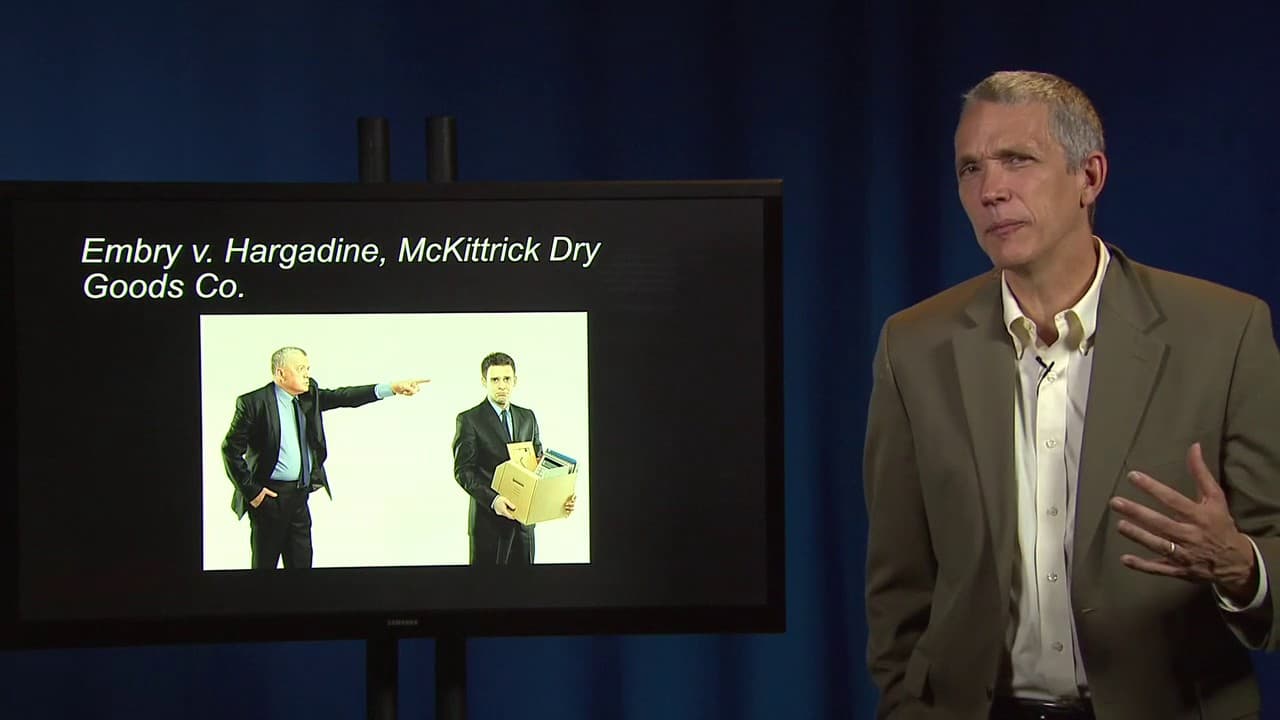
Mutual assent is the agreement between parties to form a contract, typically achieved through offer and acceptance. It is essential for contract formation, as indicated by the Uniform Commercial Code provisions. The Embry v. Harga Dine case illustrates that a reasonable interpretation of communication can imply a contract, regardless of one party's actual intent.
Transcript
today we explore the concept of mutual assent by examining the case of Embry versus harga dime and some relevant provisions of the Uniform Commercial Code mutual assent describes an agreement between two parties that intend to form a contract before we take a look at Embry let's discuss why mutual assent is such an important concept as you know par... Read More
Key Insights
- 🥳 Mutual assent is a vital concept in contract law, representing the agreement between parties to form a contract.
- 👋 The UCC provisions, such as those regarding contract formation and firm offers, provide important guidelines for mutual assent in the sale of goods.
- 😑 The Embry v. Harga Dine case highlights that the expressed intention of parties, rather than their subjective intent, determines the existence of a contract.
Install to Summarize YouTube Videos and Get Transcripts
Explore YouTube Video Summarizer or Get YouTube Transcript Extractor
Questions & Answers
Q: What is mutual assent and why is it important for contract formation?
Mutual assent refers to the agreement between two parties to form a contract. It is important because it signifies the intent of parties to be bound by contractual obligations.
Q: What are the elements of mutual assent?
Mutual assent consists of two components: offer and acceptance. The offer is made by the offeror, and acceptance is made by the offeree, indicating their agreement to the terms of the contract.
Q: How does the Uniform Commercial Code (UCC) address mutual assent?
The UCC has provisions that govern mutual assent, including UCC 2-204, which states that an agreement for the sale of goods can be formed through conduct or behavior, not just in writing. UCC 2-205 covers firm offers that are irrevocable for a specified period, and UCC 2-206 allows acceptance by any reasonable means unless indicated otherwise.
Q: Can a contract be implied even if one party did not intend to contract?
Yes, the Embry v. Harga Dine case illustrates that a contract can be implied in fact if there is an objective manifestation of consent and a reasonable interpretation of words and conduct suggest a promise, regardless of the party's subjective intent.
Summary & Key Takeaways
-
Mutual assent is the agreement between two parties to form a contract, and it involves negotiations on various terms.
-
The Uniform Commercial Code has provisions that govern mutual assent, such as contract formation, firm offers, and acceptance through any reasonable means.
-
The Embry v. Harga Dine case explores the question of whether a reasonable interpretation of words and conduct can imply a contract, even if one party did not intend to contract.
Read in Other Languages (beta)
Share This Summary 📚
Summarize YouTube Videos and Get Video Transcripts with 1-Click
Try YouTube Summary with ChatGPT & Claude or YouTube Transcript Generator
Explore More Summaries from YaleCourses 📚




Summarize YouTube Videos and Get Video Transcripts with 1-Click
Try YouTube Summary with ChatGPT & Claude or YouTube Transcript Generator