How Does Australia Plan to Manage Migration?
TL;DR
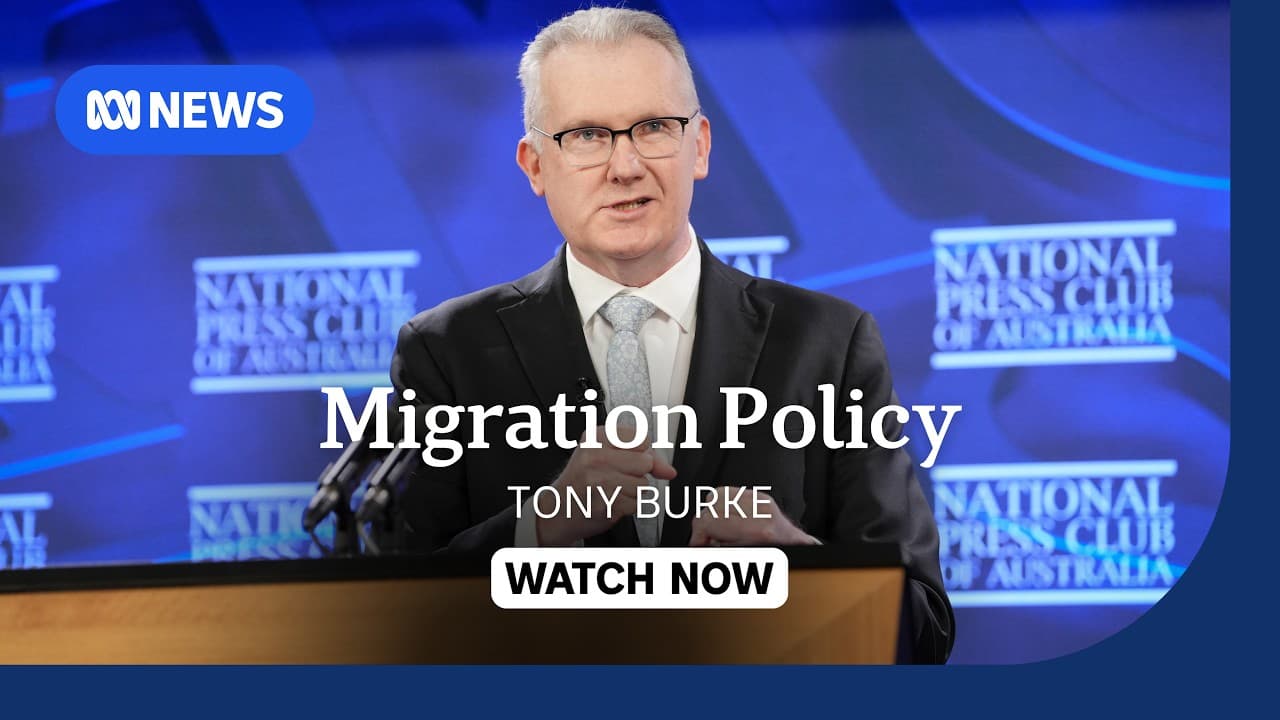
Australia's Immigration Minister Tony Burke outlined plans to overhaul the migration system, emphasizing a balanced approach to who arrives, stays, and leaves. Key changes include stricter visa conditions and processing priorities to align with economic needs while ensuring integrity and fairness in the system.
Transcript
Today at the National [music] Press Club, Home Affairs Minister Tony Burke. He'll unveil the federal [music] government's highly anticipated migration overhaul, including how Labor will meet its target to cut net overseas migration. Tony Burke with today's National Press Club address. [music] >> [bell] >> Hello and welcome to the National Press Clu... Read More
Key Insights
- Australia's migration system is being overhauled to better manage who arrives, stays, and leaves.
- Net overseas migration is targeted to be reduced to 225,000 by 2028.
- Temporary visa conditions will become stricter to prevent visa hopping.
- Visitor visas will include a 'no further stay' condition to ensure temporary purposes.
- Student visas will require progression to higher qualifications to remain in Australia.
- Working holiday visas will be capped to control the number of backpackers staying longer.
- Legislation is needed for more comprehensive reforms, but current changes focus on economic needs.
- Stronger compliance measures are being introduced to ensure visa overstayers leave Australia.
Install to Summarize YouTube Videos and Get Transcripts
Explore YouTube Video Summarizer or Get YouTube Transcript Extractor
Questions & Answers
Q: How will Australia's new migration policies affect temporary visa holders?
Temporary visa holders in Australia will face stricter conditions under new migration policies. Visitor visas will include a 'no further stay' condition, meaning holders must leave without applying for another visa while in Australia. Student visas will require progression to higher qualifications to remain, and working holiday visas will have caps to limit extended stays. These changes aim to prevent visa hopping and ensure compliance.
Q: What are the key changes to student visas in Australia?
Key changes to student visas in Australia include a requirement for international students to progress to higher qualifications, such as moving from a bachelor's to a master's degree, to remain in the country. Additionally, future international students will not be allowed to bring family members with them, except in certain cases like PhD courses or specific regional agreements. These measures aim to prevent visa hopping and align with economic needs.
Q: Why is Australia implementing a 'no further stay' condition on visitor visas?
Australia is implementing a 'no further stay' condition on visitor visas to ensure that these visas are used for genuine temporary purposes. This condition prevents visitors from applying for another visa while in Australia, addressing issues of visa overstaying and ensuring that the migration system maintains its integrity. This change aims to streamline the visa process and reduce the number of overstayers.
Q: How will working holiday visas be affected by Australia's migration changes?
Working holiday visas in Australia will be affected by new caps, limiting the number of second-year visas to 45,000 and third-year visas to 5,000. These caps aim to control the number of backpackers who extend their stay by completing regional work requirements. The changes are part of a broader effort to manage net overseas migration and reduce pressure on housing and services.
Q: What is the purpose of Australia's migration overhaul?
The purpose of Australia's migration overhaul is to better manage the flow of migrants in line with economic needs, reduce pressure on housing and services, and ensure the integrity of the migration system. By implementing stricter visa conditions and processing priorities, the government aims to align migration with labor market demands, reduce visa hopping, and achieve a net overseas migration target of 225,000 by 2028.
Q: How will Australia's migration changes impact the economy?
Australia's migration changes are designed to support the economy by ensuring that migration aligns with labor market needs. By prioritizing visas for skilled workers in critical sectors such as construction, agriculture, and healthcare, the government aims to address skill shortages and support economic growth. The changes also seek to balance migration levels with housing supply to alleviate pressure on services and infrastructure.
Q: What compliance measures are being introduced to ensure visa overstayers leave Australia?
Australia is introducing stronger compliance measures to ensure visa overstayers leave the country. This includes reverting to pre-2015 policies where overstayers may be taken to immigration detention centers until they book a flight home. The government plans to hire additional compliance officers and provide more detention beds to manage this process, aiming to encourage voluntary departures and maintain the integrity of the migration system.
Q: What challenges does Australia face in implementing comprehensive migration reforms?
Australia faces challenges in implementing comprehensive migration reforms due to the need for legislative changes, which require bipartisan support. While the government has introduced several administrative changes to manage migration, more comprehensive reforms addressing the demand-driven system and other issues require new legislation. Political negotiations and public opinion also play a role in shaping the scope and timing of these reforms.
Summary & Key Takeaways
-
Australia is reforming its migration program to better manage who arrives, stays, and leaves. Temporary visas, including visitor, student, and working holiday visas, will face stricter conditions to prevent visa hopping and ensure compliance. The government aims to reduce net overseas migration to 225,000 by 2028.
-
Key changes include a 'no further stay' condition on visitor visas, progression requirements for student visas, and caps on working holiday visas. These measures aim to align migration with economic needs and reduce pressure on housing and services.
-
Minister Tony Burke emphasized the importance of maintaining integrity and fairness in the migration system, acknowledging that further legislative changes are needed for a more comprehensive approach. Compliance measures will be strengthened to ensure overstayers leave Australia promptly.
Read in Other Languages (beta)
Share This Summary 📚
Summarize YouTube Videos and Get Video Transcripts with 1-Click
Try YouTube Summary with ChatGPT & Claude or YouTube Transcript Generator
Explore More Summaries from ABC News (Australia) 📚





Summarize YouTube Videos and Get Video Transcripts with 1-Click
Try YouTube Summary with ChatGPT & Claude or YouTube Transcript Generator