How to build a founder brand that fuels multiple businesses
TL;DR
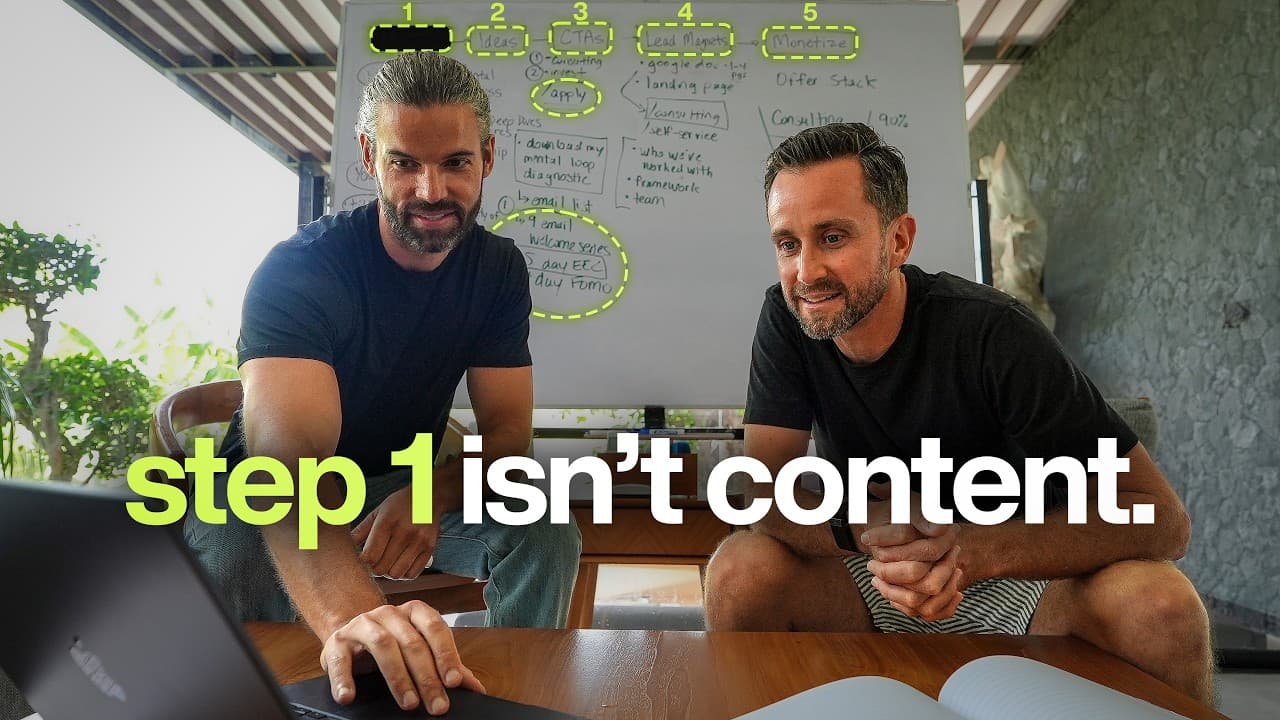
The core idea is to monetize content by building a founder brand that feeds several ventures. Start with mapping the money first, then create an apply page with four entry points, plus a video sales letter and qualifying application. This creates a straight path from first post to a booked strategy call and scalable revenue.
Transcript
What we want to do is create content that feels like insanely generous, spreads more across not just business owners, but even their companies. Eventually, they choose to work with us. The best way to do this, right, is to have, all right, today we're taking a $6 million consulting business and we're going to go and build the whole social media mac... Read More
Key Insights
- A founder brand can carry multiple business units by centralizing the marketing and value proposition.
- The monetization sequence starts with money mapping before content creation to ensure a clear revenue path.
- An apply page with four entry points directs different types of prospects (consulting, tech product, investments, partnerships).
- A single landing page acts as a billboard with a sales letter explaining track record and how it works to convert visitors.
- A VSL and an optimized apply process are used to qualify leads before scheduling strategy calls.
- Re engagement emails are used to recover abandoned applications and maximize conversions.
- Platform choice should align with founder strengths and long term enthusiasm to sustain content production.
- The system emphasizes converting traffic into paying clients and reinvesting proceeds into content and audience growth whenever possible.
- More videos from this channel:
- More from this channel: Matt Gray
Install to Summarize YouTube Videos and Get Transcripts
Explore YouTube Video Summarizer or Get YouTube Transcript Extractor
Questions & Answers
Q: What is the first step in the monetization sequence for unlocking growth via a founder brand?
The first step is to map the money before content. This means outlining how revenue will flow from the brand to the various divisions and services, ensuring there is a clear, testable path from content to sales before building out content or engaging audiences.
Q: How should the apply page be structured according to the video?
The apply page should offer four ways in and direct prospects to self select whether they want consulting, a tech product, investment, or partnerships. It should include a strong value proposition, evidence of track record, and a clear next step, typically a strategy call, with an optional form to qualify leads.
Q: What role does a VSL play in the described system?
The VSL serves as the core sales vehicle on the landing page, outlining who you are, what you have achieved, how the process works, and the results others have had. It helps visitors understand the value, builds trust, and motivates them to take action by watching the video and then applying.
Q: Why is it important to have a landing page with no navigation?
A no navigation landing page minimizes distractions and keeps visitors focused on the core message and the form. The goal is to guide them from headline to watching the video to applying, without options that pull attention away or reduce the likelihood of completing the form.
Q: What is the purpose of re engagement emails in this system?
Re engagement emails are used to reconnect with people who started the application but did not complete it. They remind them of the opportunity, provide additional value, and increase chances of completing the form and moving closer to a strategy call.
Q: How is founder distribution fit addressed in content strategy?
Founder distribution fit emphasizes choosing platforms that match the founder’s strengths and enthusiasm. If someone is good on camera, focus on YouTube or Instagram; if they prefer writing, lean into LinkedIn and newsletters. The aim is sustainable, long term content that resonates with the target audience.
Q: What does the system suggest about multi brand strategy for the founder?
The system suggests using a single founder brand that services all brands and ventures. This creates one time effort with multiple times impact, enabling faster leverage of IP and making it easier to scale the entire portfolio while maintaining a unified message.
Q: What should the primary call to action on the main page be, and why?
The primary call to action should be to apply or book a strategy call, routed through an optimized landing page that presents the value proposition, proof, and process. This direct path helps ensure qualified conversations and efficient use of time for both the founder and potential clients.
Summary & Key Takeaways
-
The video outlines a step by step process to monetize content through a founder brand that supports multiple brands and ventures. It emphasizes aligning monetization infrastructure with content, and using an apply flow to pre-qualify leads before strategy calls. The approach focuses on long term, scalable growth rather than short term vanity metrics.
-
It recommends platform fit based on founder strengths, encouraging focus on channels where the founder is most comfortable, like LinkedIn for writing or YouTube for video, to sustain long term activity.
-
It demonstrates a concrete system called the profitable personal brand playbook, including landing pages without navigation, a VSL, and an application process designed to filter for qualified clients before calls.
Read in Other Languages (beta)
Share This Summary 📚
Summarize YouTube Videos and Get Video Transcripts with 1-Click
Try YouTube Summary with ChatGPT & Claude or YouTube Transcript Generator
Explore More Summaries from Matt Gray 📚
Summarize YouTube Videos and Get Video Transcripts with 1-Click
Try YouTube Summary with ChatGPT & Claude or YouTube Transcript Generator