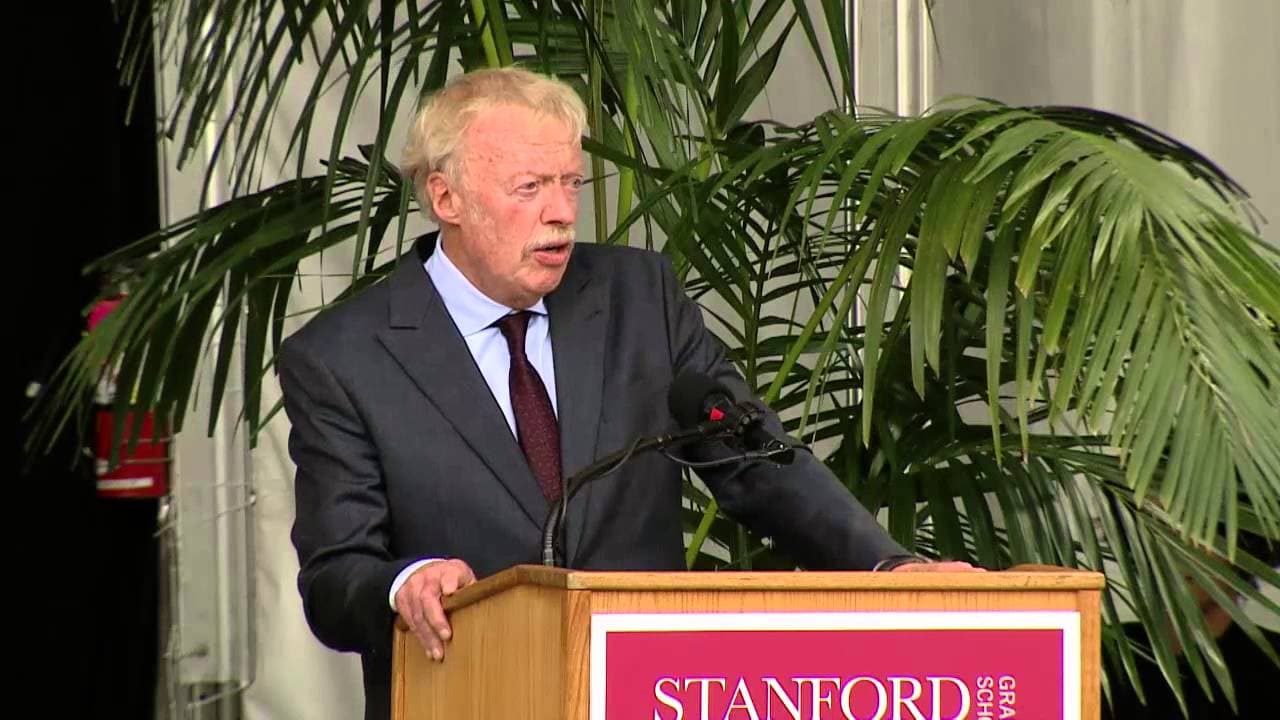
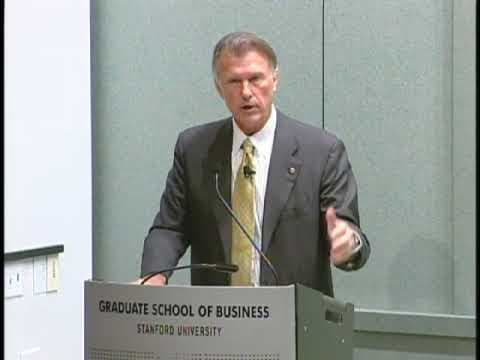
Stanford Graduate School of Business Graduation Remarks by Phil Knight, MBA '62
TL;DR
Phil Knight shares his journey from a shy Stanford graduate to the co-founder of Nike, emphasizing the importance of seeking a calling, not just a career. He recounts challenges faced in building Nike, such as financial struggles and legal battles, and highlights the value of mentorship, perseverance, and creativity in achieving success.
Transcript
thank you thank you Dean saloner graduat family friends faculty Dean Jos The Honorable condalisa rice I'm sorry that RJ Miller could not be here today he would be the one person in this Gathering that would refer to me as that young man I graduated from this school in 1962 more than half a century ago it was a time when jet travel was just beginnin... Read More
Key Insights
- Phil Knight graduated from Stanford in 1962 and co-founded Nike, initially facing financial struggles and legal challenges.
- Knight emphasizes seeking a calling over just a career, advocating for finding purpose and passion in one's work.
- Mentorship played a crucial role in Knight's journey, with various influential figures providing guidance and support.
- Nike's early days involved creative problem-solving, including navigating customs duties and financial constraints.
- Knight highlights the importance of teamwork, stating that two nines working together can outperform two tens working individually.
- He advises not to shy away from seeking help and learning from others, as wisdom is a lifelong pursuit.
- Knight reflects on the significance of returning to one's roots and the impact of formative experiences on personal growth.
- He concludes with the mantra from his Stanford class: 'The only time you must not fail is the last time you try.'
Install to Summarize YouTube Videos and Get Transcripts
Explore YouTube Video Summarizer or Get YouTube Transcript Extractor
Questions & Answers
Q: How did Phil Knight start Nike?
Phil Knight started Nike after graduating from Stanford, inspired by a business plan he wrote in an entrepreneurship class. He traveled to Japan to negotiate with a shoe company, Onitsuka, to distribute their shoes in the U.S. With a $500 investment from himself and his coach, Bill Bowerman, they began selling athletic shoes, eventually growing the company into the global brand Nike.
Q: What challenges did Nike face in its early years?
In its early years, Nike faced significant financial struggles, legal battles, and challenges with customs duties. The company had to creatively solve problems, such as negotiating with Japanese manufacturers and dealing with U.S. shoe manufacturers lobbying against them. Despite these obstacles, Nike's persistence and innovative strategies helped it overcome these hurdles and achieve success.
Q: What role did mentorship play in Phil Knight's career?
Mentorship was crucial in Phil Knight's career, providing guidance and support from influential figures like Frank Shallenberger, who inspired his business plan, and various business leaders who offered advice and connections. Knight emphasizes the importance of seeking help and learning from others, as wisdom is a lifelong pursuit essential for personal and professional growth.
Q: How did Nike handle financial constraints in its early days?
Nike handled financial constraints by creatively managing resources, such as partnering with Nissho Iwai, a large Japanese trading company, to secure financing and manufacturing. Knight and his team also made personal financial sacrifices, reinvesting earnings and leveraging personal assets. Their persistence and strategic partnerships helped them navigate financial challenges and grow the company.
Q: What is the significance of teamwork according to Phil Knight?
Phil Knight emphasizes that teamwork is crucial for success, stating that two nines working together can outperform two tens working individually. Collaboration and collective effort are vital for overcoming challenges and achieving common goals. Knight's experience with Nike highlights the importance of building a strong, cohesive team dedicated to the company's mission and vision.
Q: How did Nike overcome legal challenges with customs duties?
Nike overcame legal challenges with customs duties by engaging in a prolonged battle against U.S. customs regulations that threatened their business. They hired a lobbyist, Jay Edwards, to represent their interests and worked tirelessly to negotiate a settlement. Their persistence and strategic legal maneuvers ultimately reduced the customs duties significantly, allowing Nike to continue growing.
Q: What advice does Phil Knight give to graduates?
Phil Knight advises graduates to seek a calling rather than just a job or career, emphasizing the importance of finding purpose and passion in their work. He encourages them to embrace challenges, seek wisdom through mentorship and learning, and persist in their efforts. Knight's insights highlight the value of creativity, teamwork, and resilience in achieving long-term success.
Q: What is the mantra from Phil Knight's Stanford class?
The mantra from Phil Knight's Stanford class is, 'The only time you must not fail is the last time you try.' This phrase encapsulates the importance of persistence and resilience in the face of challenges. Knight's journey with Nike exemplifies this mantra, as he overcame numerous obstacles and setbacks to build a successful global brand, demonstrating the power of perseverance.
Summary
This video is a commencement speech given by the co-founder of Nike, Phil Knight, at the Stanford Graduate School of Business. He shares his personal journey and experiences, highlighting the challenges he faced in building the company and the lessons he learned along the way.
Questions & Answers
Q: Why did Phil Knight give this commencement speech at the Stanford Graduate School of Business?
Phil Knight mentions that he was asked by the Dean to give this speech, although he is unsure why. He suggests that his journey might be relevant in terms of attitude and philosophy, and he also feels a personal connection to the school as it is where his entrepreneurial aspirations began.
Q: What was Phil Knight's mindset when he first arrived at Stanford Graduate School of Business?
Phil Knight describes himself as shy, insecure, and unsure of what he wanted to do with his life. He had a desire to figure things out and find his purpose.
Q: What was Phil Knight's experience selling encyclopedias after graduating from Stanford?
After graduating from Stanford, Phil Knight's first job was selling encyclopedias door-to-door in Honolulu. However, he clarifies that he never actually closed a sale during this time. He reflects on how this experience pushed him to find a different path for himself.
Q: What challenges did Phil Knight face when trying to distribute Japanese shoes in the United States?
Phil Knight talks about his experience trying to distribute Tiger athletic shoes in the US. He faced language barriers, navigational challenges, and even arrived at the wrong location for a business meeting. Despite these setbacks, he was able to successfully secure a deal to distribute the shoes.
Q: How did Nike come up with its brand name?
Phil Knight explains that they held a contest among their employees to suggest brand names. Jeff Johnson, their first employee, submitted the name "Nike." Although Phil Knight admits that he didn't love the name initially, it grew on them and eventually became the iconic brand it is today.
Q: What challenges did Nike face during the Great ASP customs battle?
Phil Knight explains that an obscure customs code dating back to the 1930s led to a huge invoice for pass-through customs duties. Nike fought against this demand, which threatened their business, through legal battles and lobbying efforts. After three years, they settled the case for a much lower amount and continued to thrive.
Q: Who were some of the key people who helped Nike along the way?
Phil Knight mentions several individuals who provided invaluable support to Nike, including Chuck Robinson, Jill Conway, Dick Donahue, Tom Paine, and Masaru Hiyama. These individuals offered guidance, connections, and mentorship that played a significant role in Nike's success.
Q: What lessons did Phil Knight learn in his journey with Nike?
Phil Knight shares several lessons he learned throughout his journey with Nike. He emphasizes the importance of seeking wisdom, being open to help, and not being afraid to take risks. He also highlights the significance of managing creativity, prioritizing ability and desire over money and power, and embracing struggle as a part of the artistic process.
Q: What advice does Phil Knight have for the graduates?
Phil Knight encourages the graduates to seek a calling rather than just a job or career. He urges them to continue their search for wisdom and to not be afraid to ask for help. He also advises them to embrace the struggle and take chances in order to fully realize their potential.
Q: How does Phil Knight envision the future of the graduates?
Phil Knight imagines that in ten years' time, one of the graduates will be delivering the commencement speech to the next class. He acknowledges the challenges and responsibilities that come with success and encourages the graduates to make the most of their talents and opportunities while staying humble and open-minded.
Takeaways
Phil Knight's commencement speech offers valuable insights into his journey with Nike and the lessons he learned along the way. He emphasizes the importance of seeking wisdom, being open to help, and embracing the struggle. He encourages the graduates to find their calling, take chances, and prioritize ability and desire over money and power. Overall, his speech serves as an inspirational reminder that success comes from perseverance, creativity, and a willingness to learn and grow.
Summary & Key Takeaways
-
Phil Knight, co-founder of Nike, shares his journey from a shy Stanford graduate to leading a global brand. He emphasizes seeking a calling, not just a career, and highlights the importance of mentorship and perseverance. Knight recounts early challenges, such as financial struggles and legal battles, showcasing creative problem-solving and teamwork as keys to success.
-
Knight reflects on the role of mentorship and the value of learning from others, citing influential figures who guided him. He stresses the importance of teamwork and creativity, sharing how Nike overcame financial and legal hurdles. Knight's story underscores the significance of returning to one's roots and the impact of formative experiences.
-
Concluding with a mantra from his Stanford class, Knight advises graduates to persist and seek wisdom throughout their careers. He encourages embracing challenges and pursuing a calling with passion, highlighting that success often requires taking risks and learning from failures. Knight's insights offer valuable lessons for aspiring entrepreneurs.
Read in Other Languages (beta)
Share This Summary 📚
Summarize YouTube Videos and Get Video Transcripts with 1-Click
Try YouTube Summary with ChatGPT & Claude or YouTube Transcript Generator
Explore More Summaries from Stanford Graduate School of Business 📚

Summarize YouTube Videos and Get Video Transcripts with 1-Click
Try YouTube Summary with ChatGPT & Claude or YouTube Transcript Generator