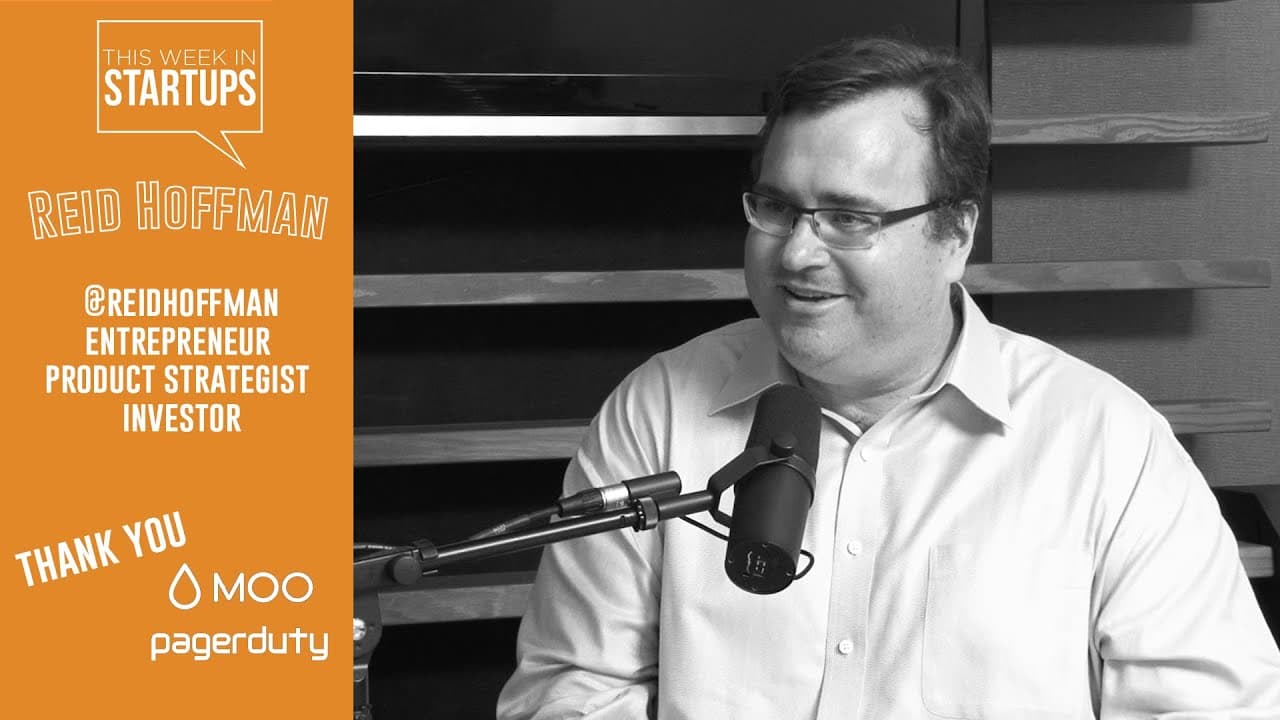
Reid Hoffman on best strategies, valuable lessons, the PayPal mafia & creating early social networks
TL;DR
Reid Hoffman reveals that LinkedIn was conceived as a platform for public professional identities during a 2000 meeting with key figures from PayPal. He emphasizes the importance of addressing distribution challenges and adapting strategies based on past failures in entrepreneurship. LinkedIn's success stemmed from recognizing the demand for a more effective recruitment solution, leading to early corporate interest that exceeded expectations.
Transcript
hey everybody welcome to this week in startups it's me your host jason calacanis we've been doing this show for five years and boy am i tired uh but today is gonna be epic this is one of the guests you've been asking for for years and we're lucky enough enough to have literally the guy who invented the social category long before mark zuckerberg wa... Read More
Key Insights
- 🧑🏭 Reid emphasizes focusing on product distribution as a critical factor for startup success.
- 🍝 Learning from past failures and adapting strategies based on lessons learned are crucial in entrepreneurship.
- 🉐 Knowledge and experience gained from early-stage investments can provide valuable insights for future investment decisions.
- 🎙️ More videos with Reid Hoffman:
Install to Summarize YouTube Videos and Get Transcripts
Explore YouTube Video Summarizer or Get YouTube Transcript Extractor
Questions & Answers
Q: How did LinkedIn originate and what was the initial purpose of the platform?
LinkedIn was born out of an idea to provide a platform for public professional identity, connecting individuals for various purposes, including job searches and networking.
Q: What was Reid Hoffman's experience with angel investing in companies like Instagram and Facebook?
Reid shares insights into his angel investments, including Instagram's quick success and the valuation growth of his early-stage investments.
Q: How did Reid approach the development of LinkedIn and the strategic decisions that led to its success?
Reid discusses the focus on product distribution, the importance of continuous learning, and the evolution of LinkedIn's business model over time.
Q: What impact did Reid Hoffman's involvement in social net and his experience with failures have on his entrepreneurial journey?
Reid reflects on the lessons learned from his failed startup, SocialNet, and how those experiences shaped his approach to building successful ventures like LinkedIn.
Summary
In this video, Jason Calacanis interviews Reid Hoffman, the founder of LinkedIn. They discuss the origins of LinkedIn, the challenges they faced, and the strategies they used to achieve success. Reid also shares his insights on entrepreneurship and the importance of taking risks.
Questions & Answers
Q: What is LinkedIn's current scale?
LinkedIn has over 330 million users globally, ranging from high school students to CEOs. It is available in every country.
Q: How did Reid come up with the idea for LinkedIn?
The idea for LinkedIn originated during a meeting with Peter Thiel, Max Levchin, Luke Nosek, and Reid Hoffman. They were trying to fix PayPal's financial issues and also discussed other potential ideas. Reid pitched the idea of an internet platform that would provide individuals with a public professional identity and help them find jobs and professional connections.
Q: How was LinkedIn's idea received at the time?
People at the time were skeptical about the idea of a professional social network, as there were only message boards and online forums for social networking. However, Reid and his team saw the potential for a platform that would connect professionals and provide value in various ways.
Q: How did Reid and his team address the challenge of building a valuable product from scratch?
They focused on building critical mass by encouraging users to invite their contacts to join LinkedIn. They developed tactics like uploading address books to show users who else was on the platform, which increased engagement and facilitated network growth.
Q: When did Reid figure out LinkedIn's monetization strategy?
The monetization strategy was clear from the beginning. They knew that recruiting and job-seeking were high-stakes problems with significant revenue potential. They focused on improving these aspects of the platform and monetized them successfully.
Q: What were some of the challenges and lessons learned from building LinkedIn and SocialNet?
Reid highlighted several valuable lessons for entrepreneurs. One lesson was to think long-term and short-term simultaneously, focusing on both product development and financing strategies. He also emphasized the importance of product distribution and making the product distinct and appealing. Additionally, he discussed the role of surprise and delight in capturing users' attention and differentiating a product.
Q: How did Reid feel after the failure of SocialNet?
Reid viewed SocialNet as a learning experience and saw it as one step in his entrepreneurial journey. He understood that failure was a possibility and was prepared to learn from it and move on to the next venture.
Q: Did Reid have any specific lessons or mistakes from SocialNet that stuck with him?
Reid highlighted the importance of product differentiation and thinking about how the product can be paradigm-shifting and capture users' attention. He also mentioned the need to focus on product distribution, as it often presents greater challenges than product development.
Q: When did LinkedIn start monetizing and what strategies did they use?
LinkedIn started monetizing from the beginning by focusing on recruiting and job-seeking as revenue streams. They understood the value of these services and worked on improving them to attract users and generate revenue.
Q: What was the creative process behind LinkedIn's success and monetization strategies?
Reid and his team had a clear vision from the beginning, and they understood the problems they wanted to solve. They focused on the unique value proposition of providing a public professional identity and facilitating connections. They also analyzed the market and identified recruiting and job-seeking as the initial revenue streams.
Q: How did Reid view the concept of luck in LinkedIn's success?
Reid acknowledged that luck played a role in their success. While they had a solid plan and executed well, they also recognized that they had competitors in the market. They were fortunate that their competitors didn't come up with better ideas or execute faster, allowing LinkedIn to become a leader in the industry.
Takeaways
Building a successful company requires a combination of vision, execution, and a bit of luck. Reid Hoffman's experience with LinkedIn showcases the importance of understanding market needs, focusing on valuable product features, and developing effective distribution strategies. It also highlights the necessity of learning from failures and being adaptable in the entrepreneurial journey.
Summary & Key Takeaways
-
Reid Hoffman discusses how LinkedIn was founded during an off-site meeting with Peter Thiel, Max Levchin, and others in 2000.
-
The idea of LinkedIn emerged as a public professional identity platform to connect people and facilitate job searches.
-
Reid reflects on his investments in companies like Instagram and Facebook and his approach to entrepreneurship.
Read in Other Languages (beta)
Share This Summary 📚
Summarize YouTube Videos and Get Video Transcripts with 1-Click
Try YouTube Summary with ChatGPT & Claude or YouTube Transcript Generator
Explore More Summaries from This Week in Startups 📚





Summarize YouTube Videos and Get Video Transcripts with 1-Click
Try YouTube Summary with ChatGPT & Claude or YouTube Transcript Generator