How to Make Aniline Safely and Efficiently
TL;DR
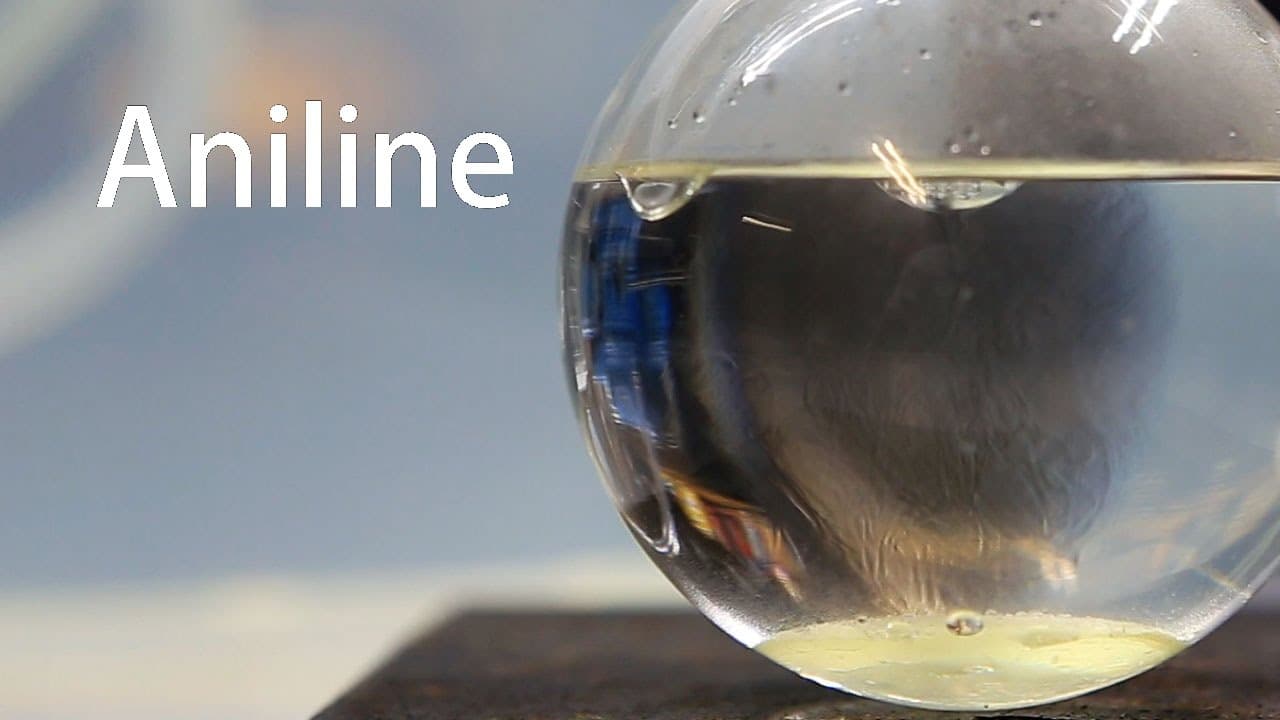
To make aniline, react nitrobenzene with tin and hydrochloric acid, followed by neutralizing with sodium hydroxide. The process involves steam distillation and salt extraction to purify the product, yielding approximately 78%. Handle all chemicals, especially the toxic ones, with care throughout the procedure.
Transcript
the major use of Adaline is in the production of polyurethane polymers however it's also used for many other things and it's even used for the production of dyes its major use by the dye industry is for the production of indigo which is used to dye jeans blue although I might explore these uses in the future my major purpose of making Adaline is fo... Read More
Key Insights
- 🤱 Adaline is widely used in the production of polyurethane polymers, indigo dye, and phenol hydrazine for cattle feed.
- 😒 The production process involves the use of toxic chemicals, requiring careful handling and safety measures.
- 😆 Reactions with hydrochloric acid, tin, and sodium hydroxide are key steps in the production process.
- 😤 Steam distillation and salt extraction are used to collect and purify the Adaline.
- ❓ The yield of Adaline obtained from the process can vary, and in this analysis, it was approximately 78%.
- 🤙 The production process also produces a toxic byproduct called alene.
- ❓ Remnants in the distillation flask can sometimes result in colorful residues.
Install to Summarize YouTube Videos and Get Transcripts
Explore YouTube Video Summarizer or Get YouTube Transcript Extractor
Questions & Answers
Q: What are the primary uses of Adaline?
Adaline is primarily used in the production of polyurethane polymers, indigo dye for jeans, and phenol hydrazine for cattle feed.
Q: Is the production process of Adaline dangerous?
Yes, the production process involves the use of toxic chemicals such as nitrobenzene and produces a toxic byproduct called alene. Careful handling and safety measures are necessary.
Q: What chemicals are used in the production of Adaline?
The chemicals used in the production of Adaline include nitrobenzene, hydrochloric acid, tin, table salt, sodium hydroxide, and dichloromethane.
Q: How is Adaline obtained from the production process?
Adaline is obtained through a series of reactions with hydrochloric acid, tin, and sodium hydroxide. It is then collected through steam distillation and extracted using salt and dichloromethane.
Summary & Key Takeaways
-
Adaline is commonly used in the production of polyurethane polymers, indigo dye for jeans, and phenol hydrazine for cattle feed.
-
The production process involves the use of toxic chemicals such as nitrobenzene and produces a toxic byproduct called alene.
-
The process includes reactions with hydrochloric acid, tin, and sodium hydroxide, as well as steam distillation and salt extraction.
-
The yield of aniline obtained from the process was approximately 78%.
Read in Other Languages (beta)
Share This Summary 📚
Summarize YouTube Videos and Get Video Transcripts with 1-Click
Try YouTube Summary with ChatGPT & Claude or YouTube Transcript Generator
Explore More Summaries from NileRed 📚
Summarize YouTube Videos and Get Video Transcripts with 1-Click
Try YouTube Summary with ChatGPT & Claude or YouTube Transcript Generator