How Does a D&D Campaign Last for 40 Years?
TL;DR
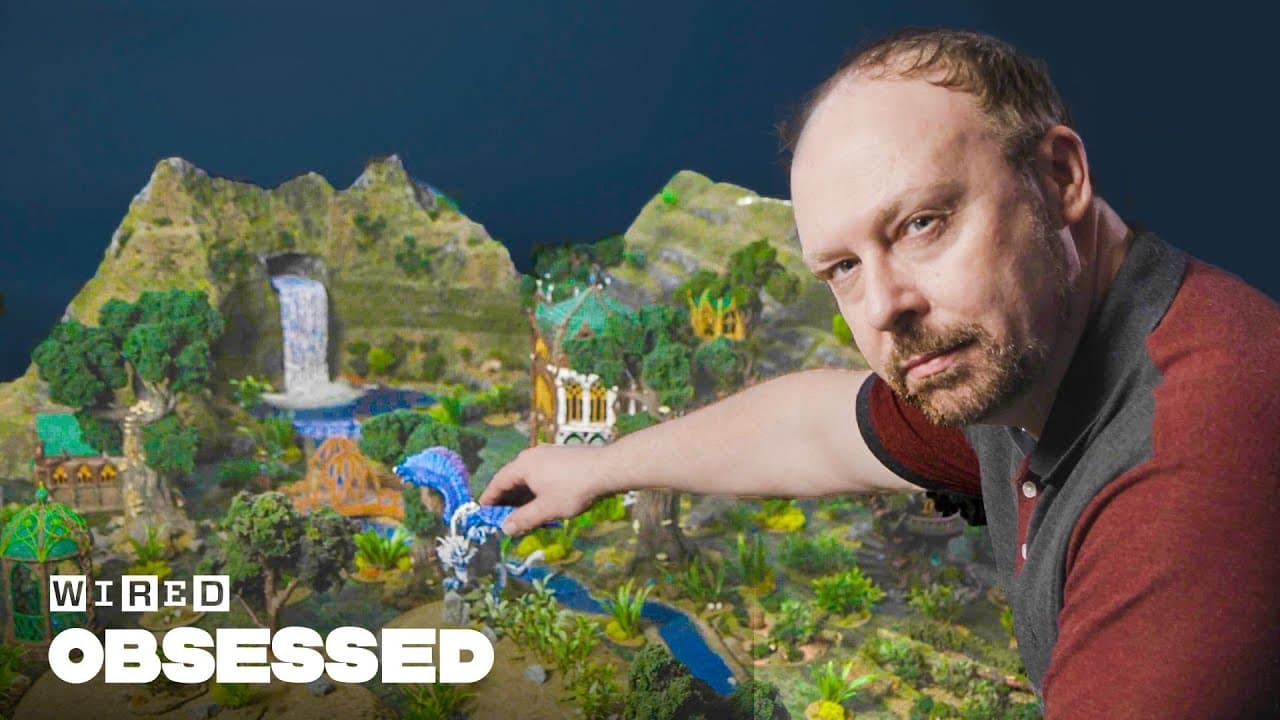
Robert Wardhaugh keeps a Dungeons & Dragons campaign alive through deep historical worldbuilding, fast homebrew rules, lasting player access, and meaningful consequences. After 40 years and an estimated 20,800 hours of play, the campaign encompasses more than 50 players, roughly 500 created characters, thousands of interconnected plots, and a vast physical collection built to support wherever the players travel.
Transcript
- [Narrator] Remember that game of D&D you started when you were 11? What if it never stopped? - My name is Robert Wardhaugh. I am a history professor at the University of Wester Ontario. I am a dungeon master for a campaign that has been going on for 40 years. - [Narrator] What began in secret with a few friends has turned into a game that takes u... Read More
Key Insights
- Robert Wardhaugh has run one Dungeons & Dragons campaign for 40 years, investing an estimated 20,800 hours based on playing 10 hours per week across 52 weeks each year. He calculates that commitment as roughly 1.24 million minutes.
- The campaign occupies Wardhaugh's entire basement and has influenced major personal decisions, including choosing a house with suitable gaming space. Maintaining the campaign is not a side activity for him, but a central consideration in how he organizes his life.
- Wardhaugh's collection includes around 30,000 hand-painted figurines representing heroes, monsters, rulers, wizards, demons, and many other characters. He often spends two to four hours on an average day painting figures, and players may neither touch nor take them home.
- The terrain system is designed to represent almost anywhere the party chooses to travel, including mountains, deserts, winter landscapes, waterways, and historically distinct towns. Wardhaugh prepares settings ranging from Roman and Anglo-Saxon communities to African and medieval settlements.
- The campaign world is an alternative fantasy version of historical Earth, allowing Wardhaugh to incorporate real history, philosophy, and religion alongside invented races, nations, cultures, and mythologies. His work as a history professor directly supports the world's unusual depth and flexibility.
- The campaign includes more than 50 players and approximately 500 characters created since its beginning. Individual story arcs may span generations, allowing descendants of an original character to inherit responsibilities and eventually control institutions such as the Roman Empire.
- Wardhaugh's homebrew rules prioritize fast, continuous play instead of frequent pauses to consult standard rules. He began by following the published system, then filled its gaps with custom mechanics suited to features and situations that ordinary Dungeons & Dragons rules did not cover.
- Character death is intentionally consequential because Wardhaugh wants genuine emotion and tension at the table. A player whose character dies without another available character is removed from the game, making long-developed relationships, risks, and losses feel permanent rather than easily reset.
Install to Summarize YouTube Videos and Get Transcripts
Explore YouTube Video Summarizer or Get YouTube Transcript Extractor
Questions & Answers
Q: How has a Dungeons & Dragons campaign lasted for 40 years?
Robert Wardhaugh has sustained the campaign by treating it as a continuing world rather than a temporary quest. He offers players long-term participation, builds story arcs that can span generations, uses quick homebrew rules, and constantly expands the physical and narrative setting. Major personal choices, including selecting a house with adequate gaming space, have also been made with the campaign's survival in mind.
Q: How much time has Robert Wardhaugh spent playing Dungeons & Dragons?
Wardhaugh estimates that he has played for 20,800 hours across the campaign's 40-year history. His calculation assumes 10 hours of play each week, multiplied by 52 weeks per year and then by 40 years. He converts that total to approximately 1.24 million minutes, although he presents the minute figure as his own estimate rather than an independently verified measurement.
Q: What makes Robert Wardhaugh's D&D world different?
The setting combines fantasy with an alternative version of historical Earth. If players travel to a place such as Athens, Wardhaugh can incorporate relevant history, philosophy, and religion into their experience. He also creates original races, nations, cultures, and mythologies. This mixture allows the campaign to draw from existing human history while continually adding new material suited to its evolving stories.
Q: How many players and characters are in the 40-year D&D campaign?
Wardhaugh tracks the adventures of more than 50 players, and approximately 500 characters have been created and played since the campaign began. New participants are invited with the expectation that they may continue playing until Wardhaugh dies. Characters and their descendants can participate across multiple generations, producing overlapping personal, political, romantic, revenge, and quest-based storylines that may continue for decades.
Q: Why does Robert Wardhaugh use homebrew D&D rules?
Wardhaugh developed homebrew rules after finding gaps in the original system and needing mechanics for aspects of his world that ordinary Dungeons & Dragons rules did not address. His system is designed to be fast and free-flowing, so players do not repeatedly stop to check rules. He also notes that the early dungeon master guidance encouraged applying the published rules loosely.
Q: What happens when a character dies in Robert Wardhaugh's campaign?
Character death has permanent consequences because Wardhaugh does not want play to resemble a game with a simple reset button. If a character dies and the player has no other characters, that player is out of the campaign. The rule creates fear, excitement, and emotional investment, and Wardhaugh has seen grown men weep after losing characters they had developed over long periods.
Q: Why does the campaign require so many figurines and terrain pieces?
Wardhaugh wants to represent wherever the players decide to go, so he maintains terrain for green landscapes, mountains, winter regions, deserts, waterways, villages, and towns from different historical settings. His collection of around 30,000 painted figurines supplies monsters, heroes, rulers, wizards, and other inhabitants. Together, these materials let him adapt the tabletop presentation to unexpected player choices.
Q: What does the long-running D&D campaign mean to Robert Wardhaugh?
Wardhaugh says the game represents friendship more than anything else. It also connects different periods of his life, including his daughter's childhood and adulthood. She began playing as a fairy when she was around six or seven and still played at age 20. He views the campaign as something resembling life itself, continuing without a predetermined ending and likely ending when he dies.
Summary & Key Takeaways
-
Robert Wardhaugh, a history professor at the University of Western Ontario, has run the same Dungeons & Dragons campaign for 40 years. He estimates that playing 10 hours weekly across 52 weeks for 40 years totals 20,800 hours, or approximately 1.24 million minutes, with major life decisions supporting the game.
-
The campaign combines an alternative fantasy version of historical Earth with original races, nations, cultures, and mythologies. More than 50 players participate in adventures that can span generations, while thousands of subplots unfold alongside the main quest. Players may control both individual characters and powerful institutions such as the Roman Empire.
-
Wardhaugh supports the campaign with around 30,000 painted figurines, extensive terrain, and a customized rule system designed for speed. Character death carries lasting consequences and can remove a player who has no remaining characters. Beneath its complexity and emotional stakes, the continuing game primarily represents friendship and shared history.
Read in Other Languages (beta)
Share This Summary 📚
Summarize YouTube Videos and Get Video Transcripts with 1-Click
Try YouTube Summary with ChatGPT & Claude or YouTube Transcript Generator
Explore More Summaries from WIRED 📚




Summarize YouTube Videos and Get Video Transcripts with 1-Click
Try YouTube Summary with ChatGPT & Claude or YouTube Transcript Generator