What Is Fatty Acid Synthesis and When Does It Occur?
TL;DR
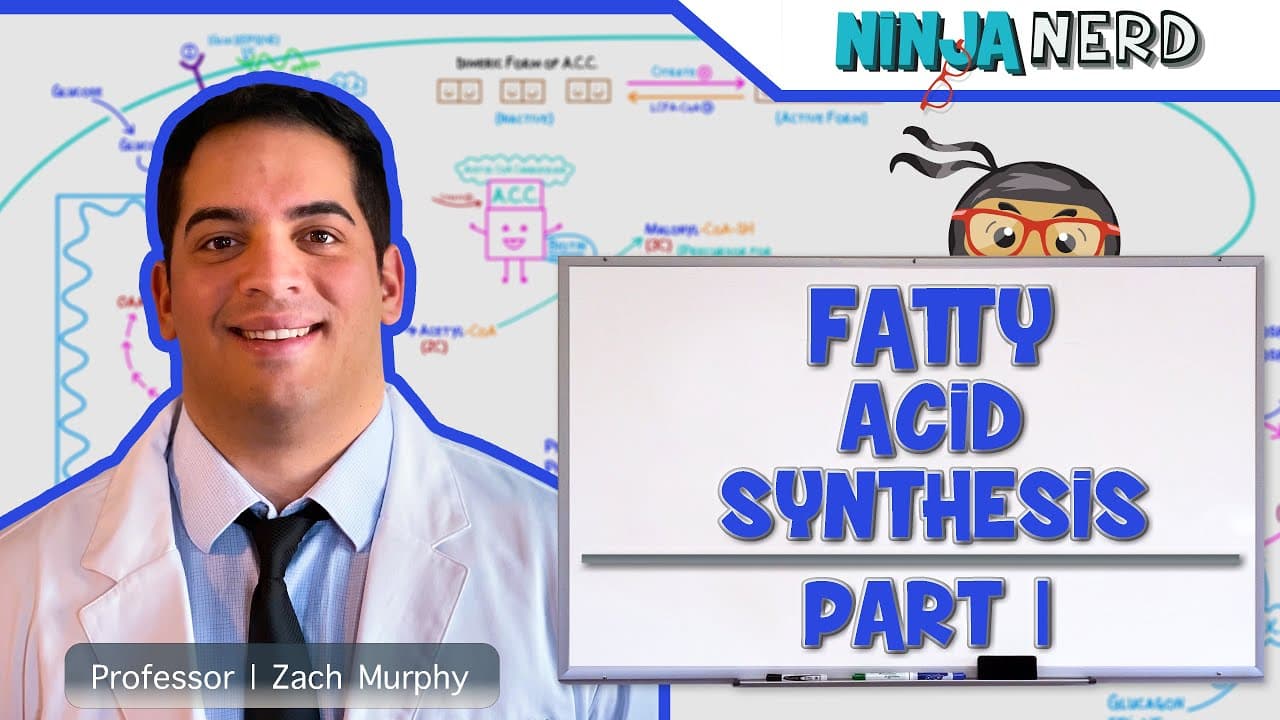
Fatty acid synthesis primarily occurs in the fed state when blood glucose levels are high, facilitated by the hormone insulin. Citrate plays a vital role by converting into oxaloacetate and acetyl CoA, while long-chain fatty acids with CoA can inhibit the process. This pathway involves key enzymes, including acetyl CoA carboxylase, and requires NADPH for synthesis.
Transcript
i knizner is in this video we're going to talk about fatty acid synthesis okay so let's start it off first off why is this fatty acid synthesis occurring and it can occur in various different tissues now we're going to talk about it preferentially in the liver but it can happen in other tissues just so you know but we're going to start this process... Read More
Key Insights
- 🥙 Fatty acid synthesis occurs during the fed state and is regulated by insulin.
- ❓ Citrate is an important molecule that stimulates fatty acid synthesis.
- 🎢 Long-chain fatty acids with CoA inhibit fatty acid synthesis.
- 🖐️ The enzyme acetyl CoA carboxylase plays a crucial role in the process.
- 🪡 NADPH, generated from the pentose phosphate pathway, is needed for fatty acid synthesis.
- 🎢 Phospho protein phosphatases activate acetyl CoA carboxylase by removing phosphates.
- ❓ Fatty acid synthesis is an intricate process involving multiple enzymatic reactions and regulatory mechanisms.
Install to Summarize YouTube Videos and Get Transcripts
Explore YouTube Video Summarizer or Get YouTube Transcript Extractor
Questions & Answers
Q: When does fatty acid synthesis occur?
Fatty acid synthesis occurs during the fed state when blood glucose levels are high or when there is an excess of cellular ATP.
Q: What is the main hormone involved in regulating fatty acid synthesis?
Insulin is the main hormone that stimulates fatty acid synthesis by regulating specific enzymes.
Q: What role does citrate play in fatty acid synthesis?
Citrate is converted into oxaloacetate and acetyl CoA, which are important components for fatty acid synthesis.
Q: How is fatty acid synthesis regulated?
Fatty acid synthesis is regulated by both hormonal factors, such as insulin, and allosteric regulators, such as citrate and long-chain fatty acids.
Key Insights:
- Fatty acid synthesis occurs during the fed state and is regulated by insulin.
- Citrate is an important molecule that stimulates fatty acid synthesis.
- Long-chain fatty acids with CoA inhibit fatty acid synthesis.
- The enzyme acetyl CoA carboxylase plays a crucial role in the process.
- NADPH, generated from the pentose phosphate pathway, is needed for fatty acid synthesis.
- Phospho protein phosphatases activate acetyl CoA carboxylase by removing phosphates.
- Fatty acid synthesis is an intricate process involving multiple enzymatic reactions and regulatory mechanisms.
- Understanding fatty acid synthesis is essential for comprehending lipid metabolism and related health conditions.
Summary & Key Takeaways
-
Fatty acid synthesis occurs during the fed state when blood glucose levels are high, and it can happen in various tissues.
-
Insulin is the main hormone responsible for stimulating fatty acid synthesis by regulating specific enzymes.
-
Citrate plays a crucial role in the process, as it is converted into two components: oxaloacetate and acetyl CoA.
Read in Other Languages (beta)
Share This Summary 📚
Summarize YouTube Videos and Get Video Transcripts with 1-Click
Try YouTube Summary with ChatGPT & Claude or YouTube Transcript Generator
Explore More Summaries from Ninja Nerd 📚





Summarize YouTube Videos and Get Video Transcripts with 1-Click
Try YouTube Summary with ChatGPT & Claude or YouTube Transcript Generator