What Are Conflicts of Interest and How Do They Affect Us?

TL;DR
Conflicts of interest can significantly distort our perception and lead to biased advice, as individuals may be incentivized to act in their own interests rather than ours. Recognizing our own biases is crucial to preventing poor decision-making and undesirable outcomes. Understanding these dynamics can help us make better choices in personal and professional contexts.
Transcript
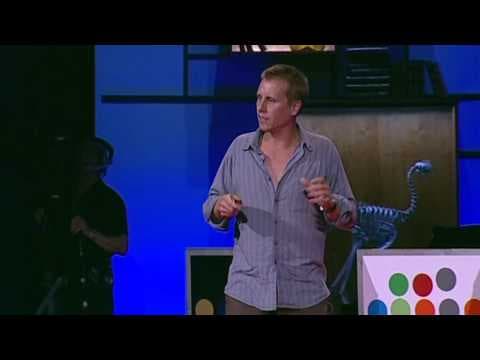
So, I was in the hospital for a long time. And a few years after I left, I went back, and the chairman of the burn department was very excited to see me -- said, "Dan, I have a fantastic new treatment for you." I was very excited. I walked with him to his office. And he explained to me that, when I shave, I have little black dots on the left side o... Read More
Key Insights
- 💡 People in positions of authority or expertise can have biased incentives that lead them to give advice that is not in our best interest. We can't always trust their recommendations.
- 🎙️ More videos with Dan Ariely:
Install to Summarize YouTube Videos and Get Transcripts
Explore YouTube Video Summarizer or Get YouTube Transcript Extractor
Questions & Answers
Q: How can conflicts of interest impact the quality of advice or decisions?
Conflicts of interest can lead individuals to prioritize their own interests over providing unbiased advice or making fair decisions. In the case of the doctor, their desire to complete a research paper skewed their perspective on the necessity of the cosmetic procedure. Similarly, the speaker's bias almost resulted in the exclusion of a participant in his experiment, compromising the validity of the results. These examples highlight how conflicts of interest can cloud judgment and hinder unbiased decision-making.
Summary & Key Takeaways
-
The speaker shares a personal story about a doctor who tried to convince him to undergo a cosmetic procedure, highlighting the dangers of conflicts of interest.
-
He also reflects on an experiment he conducted where he almost excluded a participant due to their poor performance, but realized that it was due to his own bias and reran the experiment.
-
The speaker emphasizes the need to recognize conflicts of interest in ourselves and others and take steps to prevent biased decision-making.
Read in Other Languages (beta)
Share This Summary 📚
Summarize YouTube Videos and Get Video Transcripts with 1-Click
Try YouTube Summary with ChatGPT & Claude or YouTube Transcript Generator
Explore More Summaries from TED 📚


Summarize YouTube Videos and Get Video Transcripts with 1-Click
Try YouTube Summary with ChatGPT & Claude or YouTube Transcript Generator