How Do Sinking Funds Work in a Monthly Budget?
TL;DR
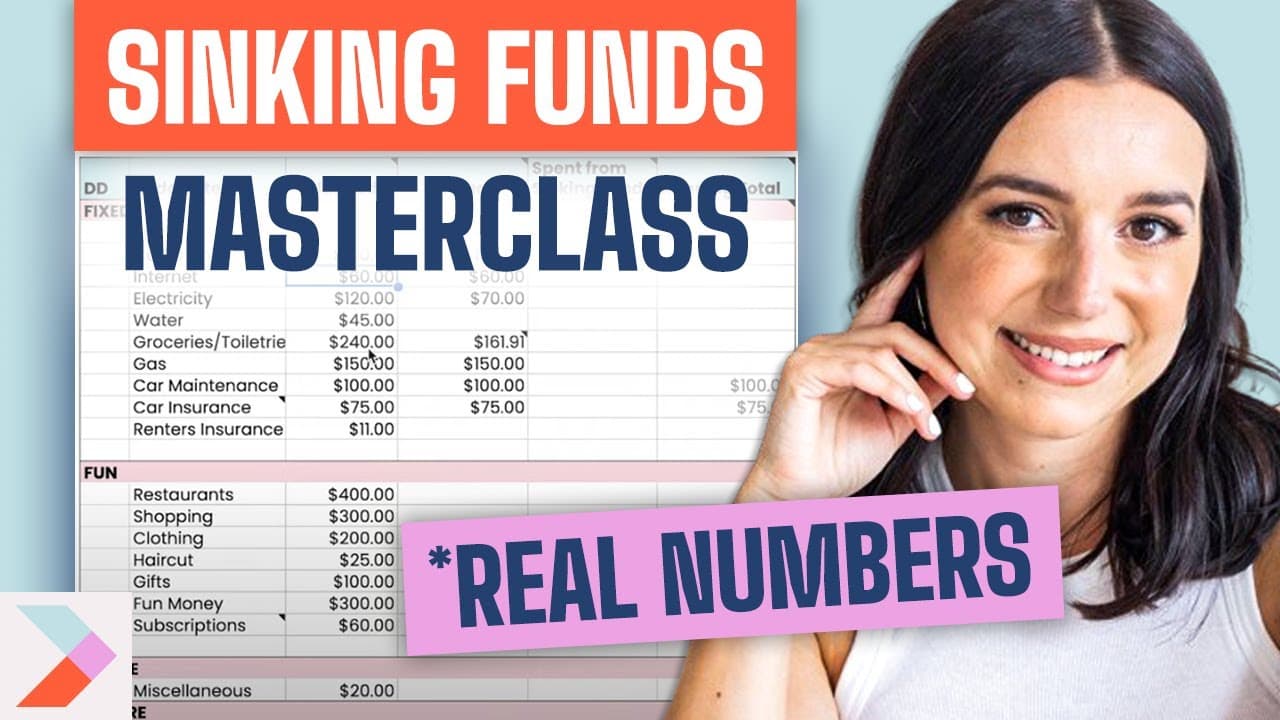
Sinking funds work by setting aside money each month for a particular expense or savings goal, so the money is ready when needed. They can cover irregular bills, such as a $500 car insurance premium every 6 months, or goals such as a trip to Thailand in 8 months. Read on for the spreadsheet steps, account options, and monthly contribution example.
Transcript
a syncing fund helps you set aside money each month for a particular expense or savings goal throughout the year perfect the act of syncing funds in this video I'm going to be sharing why syncing funds are a GameChanger for your budget some examples of how to use them and put them into action using my budget spreadsheet hey guys welcome back to the... Read More
Key Insights
- 🥅 Syncing funds help manage irregular expenses like bills and savings goals effectively.
- 🔄 Utilize syncing funds for financial stability and avoid budget stress.
- 🤑 Budgeting spreadsheets can incorporate syncing funds for seamless money management.
- 🤑 Setting aside money monthly for bills or savings goals ensures preparedness.
- 😨 Syncing funds can be used for various expenses like car insurance or vacation savings.
- ✋ High yield savings accounts are recommended for managing syncing fund savings.
- 🚨 Overdrafts in syncing funds require adjustments in the budget, not emergency fund usage.
Install to Summarize YouTube Videos and Get Transcripts
Explore YouTube Video Summarizer or Get YouTube Transcript Extractor
Questions & Answers
Q: What is a sinking fund?
A sinking fund is money set aside each month for a particular expense or savings goal throughout the year. It helps you prepare before a bill is due or a planned purchase occurs.
Q: What are the two ways to use a sinking fund?
The two uses described are paying bills and funding savings goals. Bills can include irregular expenses, while savings goals can include vacations, replacement cars, down payments, clothing, entertainment, or shopping.
Q: How do sinking funds help with irregular bills?
You contribute money every month instead of waiting until the bill is due and scrambling to fit it into that month's budget. When payment time arrives, you transfer the saved money back into checking and pay the bill.
Q: What bills can be managed with sinking funds?
Examples include car insurance premiums paid every 6 months, a water bill paid every other month, and annual subscriptions. The transcript specifically mentions Amazon Prime, apps, and home security services.
Q: How much should you save monthly for a $500 car insurance premium due every 6 months?
Dividing $500 by 6 months gives about $83.33 per month. The example rounds that contribution to an even $84 per month so the premium builds up over time.
Q: Do all sinking funds need a definitive end date?
No. Large goals such as a trip to Thailand in 8 months or a replacement car in 3 years have clear target dates, but an ongoing clothing fund does not need one.
Q: Where should sinking fund money be kept?
Justine suggests using a high yield savings account for money that will build over time. For an expense paid every other month, the money can remain in checking if it is clearly earmarked and tracked in the budget.
Q: How do you record sinking funds in the budget spreadsheet?
Enter the monthly contribution under the plan section, then record the transfer to savings under actual so that money is no longer available for other spending. When the bill is paid, enter it under spent from sinking funds rather than actual, and ensure the running-total formula updates each month.
Summary & Key Takeaways
-
Definition: A sinking fund sets aside money each month for a particular expense or savings goal throughout the year.
-
Compare: Sinking funds can prepare for irregular bills or build money toward savings goals.
-
Number: A $500 car insurance premium due every 6 months requires about $83.33 per month, rounded to $84 per month in the example.
-
Number: The clothing fund example sets aside $50 every single month and lets the balance build over time.
-
Number: Dated goals include a trip to Thailand in 8 months and a replacement car in 3 years.
-
Tool: The Debt Free Millennials monthly budget spreadsheet tracks planned contributions, actual transfers, spending from sinking funds, and running totals.
-
Step 1: Duplicate the monthly budget template to create an editable copy for your own budget.
-
Step 2: Enter the monthly sinking fund contribution under the plan section.
-
Step 3: Transfer the contribution from checking to savings and record it under actual.
-
Step 4: Record a completed bill payment under spent from sinking funds, then confirm the running-total formula updates every single month.
Read in Other Languages (beta)
Share This Summary 📚
Summarize YouTube Videos and Get Video Transcripts with 1-Click
Try YouTube Summary with ChatGPT & Claude or YouTube Transcript Generator
Explore More Summaries from Debt Free Millennials 📚




Summarize YouTube Videos and Get Video Transcripts with 1-Click
Try YouTube Summary with ChatGPT & Claude or YouTube Transcript Generator