How to Make and Study Effective Flashcards
TL;DR
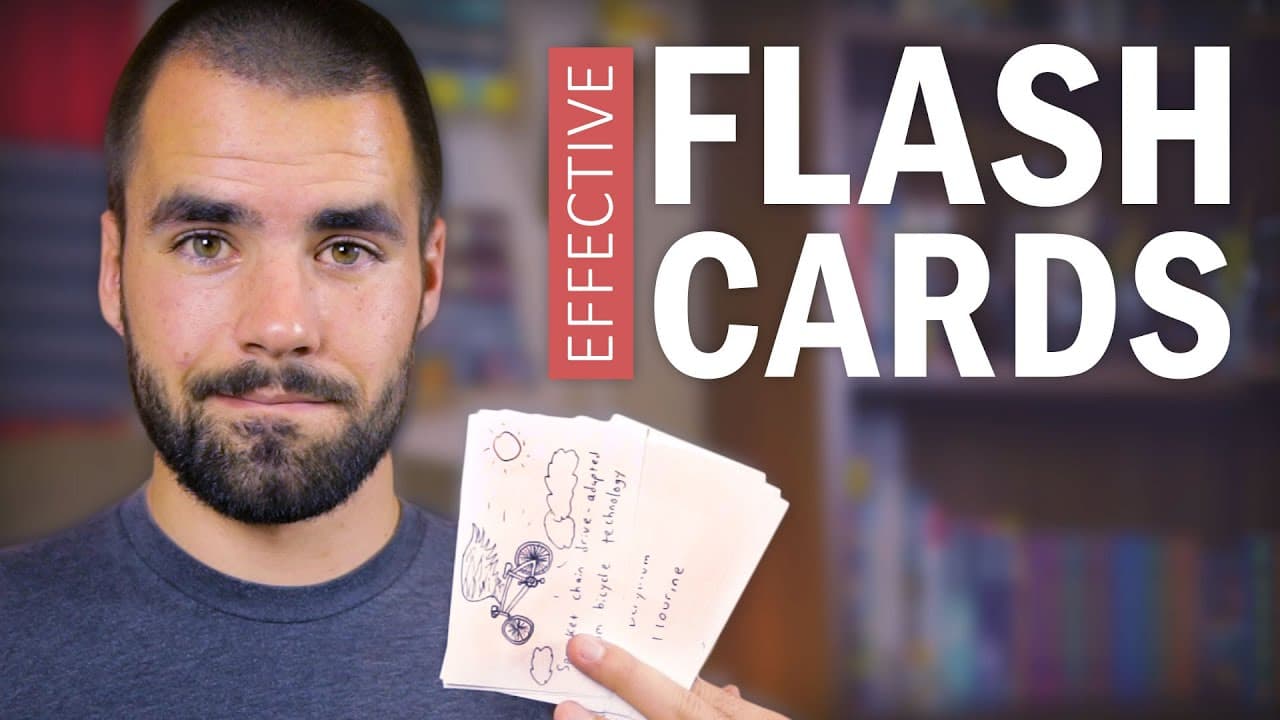
To create effective flashcards, focus on making your own, include pictures, and use mnemonic devices. When studying, say answers out loud, review from both sides, and understand the limitations of flashcards as a learning tool compared to other methods.
Transcript
This is a flashcard. More specifically, it's a bad flashcard. And by the end of this video, you're gonna understand exactly why because today, we're talking about how to make effective flashcards and how to study them more efficiently. Now, flashcards are an incredibly powerful learning tool because they promote active recall, the process of active... Read More
Key Insights
- 🧠 Flashcards are a powerful learning tool that promotes active recall by retrieving memories from the brain.
- 💄 Making your own flashcards engages the learning process and creates unique neural pathways.
- 🖼️ Adding pictures to flashcards improves memorization and makes them more memorable.
- 🦻 Mnemonic devices help create associations and aid in flashcard retention.
- 🧑🏭 Having one question or fact per flashcard avoids illusions of competence and ensures accurate understanding.
- 🍳 Breaking down complex concepts into simpler questions improves understanding and retention.
- 🙃 Studying flashcards from both sides creates neural pathways that work in both directions.
Install to Summarize YouTube Videos and Get Transcripts
Explore YouTube Video Summarizer or Get YouTube Transcript Extractor
Questions & Answers
Q: Why is making your own flashcards more effective than using pre-made flashcards?
Making your own flashcards engages the learning process and allows for the creation of unique neural pathways. It helps with information intake, word creation, and strengthens retention.
Q: How can adding pictures to flashcards improve memorization?
Pictures are remembered more easily than words, thanks to the picture superiority effect. By adding pictures to flashcards, you make them more memorable and enhance recall.
Q: What are mnemonic devices, and how can they be used on flashcards?
Mnemonic devices are tools that help create associations between pieces of information in the mind. By using associative imagery or acronyms, flashcards can be more easily remembered.
Q: Why is it important to have only one question or fact per flashcard?
Having only one question or fact per flashcard eliminates illusions of competence. Our brains can confuse recognition with recall. By focusing on one piece of information, it ensures efficient studying and avoids misunderstandings.
Summary & Key Takeaways
-
Flashcards are a powerful learning tool that promotes active recall, but the quality of flashcards can vary.
-
Making your own flashcards is more effective as it engages the learning process and creates unique neural pathways.
-
Tips for making better flashcards include adding pictures, using mnemonic devices, asking one question or fact per card, and breaking down complex concepts into simpler questions.
-
Tips for studying flashcards include saying answers out loud, studying from both sides of the cards, and understanding when to use flashcards as a learning tool.
Read in Other Languages (beta)
Share This Summary 📚
Summarize YouTube Videos and Get Video Transcripts with 1-Click
Try YouTube Summary with ChatGPT & Claude or YouTube Transcript Generator
Explore More Summaries from Thomas Frank 📚





Summarize YouTube Videos and Get Video Transcripts with 1-Click
Try YouTube Summary with ChatGPT & Claude or YouTube Transcript Generator