GraphQL Crash Course #5 - Resolver Functions
TL;DR
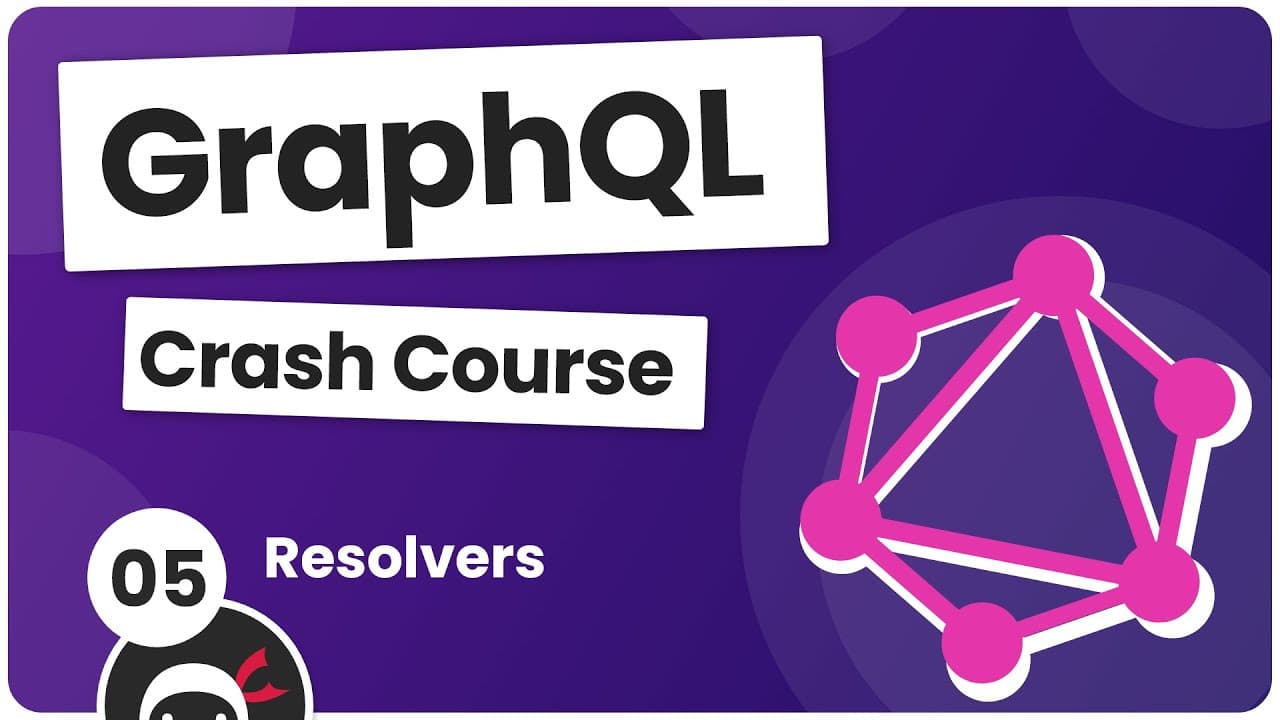
This lesson covers how to create resolver functions for different types in a GraphQL server and how to fetch data from a local variable.
Transcript
right then so in the last lesson we made our type definitions to describe the data on the graph and also specify the entry points to the graph using the special query type and we pass those into the Apollo server so it knows how to set the graph up next up we need to make some resolver functions which allow us to decide how we respond two queries t... Read More
Key Insights
- 🛟 Resolver functions are used in GraphQL servers to fetch and return the requested data.
- 🏪 In this lesson, the data for the resolver functions is stored in a local variable, but it can be sourced from a database as well.
- 🫚 Resolver functions are created for each field in the root query type of the GraphQL schema.
- 🛟 Apollo server automatically filters the returned data based on the specific fields requested in the query.
- 🍵 Resolver functions can be customized to handle related or nested data retrieval from different data sources.
- 💨 GraphQL server provides an easy way to test and explore queries using tools like Apollo Explorer.
Install to Summarize YouTube Videos and Get Transcripts
Explore YouTube Video Summarizer or Get YouTube Transcript Extractor
Questions & Answers
Q: How do resolver functions work in a GraphQL server?
Resolver functions in a GraphQL server are responsible for fetching the requested data from a data source and returning it as a response. Each resolver function is associated with a specific field in the schema and is executed when that field is queried.
Q: Where is the data stored for the resolver functions in this lesson?
The data for the resolver functions in this lesson is stored in a local variable in a separate file called underscore_db.js. This file contains arrays of data for reviews, games, and authors.
Q: Can the data source for the resolver functions be a database instead of a local variable?
Yes, the data source for the resolver functions can be a database instead of a local variable. The resolver functions can be modified to fetch data from a database by replacing the data retrieval logic with database queries.
Q: How does Apollo server handle field selection in resolver functions?
Apollo server automatically handles field selection in resolver functions. When a user requests specific fields in a query, Apollo server filters the returned data according to those fields, even if the resolver function returns the complete data.
Key Insights:
- Resolver functions are used in GraphQL servers to fetch and return the requested data.
- In this lesson, the data for the resolver functions is stored in a local variable, but it can be sourced from a database as well.
- Resolver functions are created for each field in the root query type of the GraphQL schema.
- Apollo server automatically filters the returned data based on the specific fields requested in the query.
- Resolver functions can be customized to handle related or nested data retrieval from different data sources.
- GraphQL server provides an easy way to test and explore queries using tools like Apollo Explorer.
- Query variables are used to fetch specific instances of data, such as a single review, author, or game.
Summary & Key Takeaways
-
In this lesson, the instructor explains the process of creating resolver functions for different types in a GraphQL server.
-
The data for the resolver functions is stored in a local variable in a separate file.
-
The resolver functions are created for the root query type, including reviews, games, and authors.
-
The resolver functions fetch the corresponding data from the local variable and return it as a response.
Read in Other Languages (beta)
Share This Summary 📚
Summarize YouTube Videos and Get Video Transcripts with 1-Click
Try YouTube Summary with ChatGPT & Claude or YouTube Transcript Generator
Explore More Summaries from Net Ninja 📚



Summarize YouTube Videos and Get Video Transcripts with 1-Click
Try YouTube Summary with ChatGPT & Claude or YouTube Transcript Generator